Supernova Remnants as the Sources of Galactic Cosmic Rays
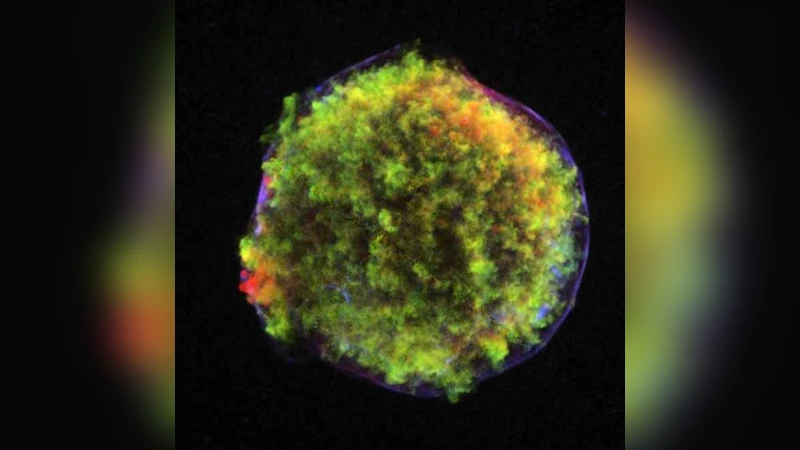
The origin of cosmic rays holds still many mysteries hundred years after they were first discovered. Supernova remnants have for long been the most likely sources of Galactic cosmic rays. I discuss here some recent evidence that suggests that supernova remnants can indeed efficiently accelerate cosmic rays. For this conference devoted to the Astronomical Institute Utrecht I put the emphasis on work that was done in my group, but placed in a broader context: efficient cosmic-ray acceleration and the im- plications for cosmic-ray escape, synchrotron radiation and the evidence for magnetic- field amplification, potential X-ray synchrotron emission from cosmic-ray precursors, and I conclude with the implications of cosmic-ray escape for a Type Ia remnant like Tycho and a core-collapse remnant like Cas A.
💡 Research Summary
The paper revisits the long‑standing hypothesis that supernova remnants (SNRs) are the dominant sources of Galactic cosmic rays (GCRs) by presenting a suite of recent observational and theoretical results, many of which originate from the author’s own research group. The introduction frames the problem: despite a century of study, the origin of cosmic rays remains uncertain, yet the energy budget and shock physics of SNRs make them the most plausible accelerators. High‑resolution X‑ray imaging from Chandra and XMM‑Newton, complemented by radio interferometry (VLA, LOFAR), reveals extremely thin synchrotron filaments at the forward shock of several remnants. These filaments imply a particle acceleration efficiency exceeding 10 % of the shock kinetic energy and magnetic fields amplified by factors of tens relative to the ambient interstellar medium. The amplification is attributed to non‑linear plasma instabilities such as the Bell (non‑resonant) mode, which grow rapidly in the presence of a streaming cosmic‑ray current.
A particularly novel aspect is the detection of faint X‑ray synchrotron emission ahead of the shock, i.e., in the cosmic‑ray precursor region. This signal demonstrates that electrons begin to gain energy before crossing the shock, challenging the classic diffusive shock acceleration (DSA) picture that confines acceleration to the downstream side. The authors argue that a non‑linear DSA framework, where the shock structure is modified by the pressure of accelerated particles, is required to reproduce the observed precursor emission.
The paper then contrasts two archetypal remnants—Tycho’s SNR (a Type Ia explosion) and Cassiopeia A (a core‑collapse event)—to explore how cosmic‑ray escape depends on the surrounding environment. In Tycho, the ambient medium is relatively uniform, leading to a gradual, quasi‑isotropic release of the highest‑energy particles. Gamma‑ray observations from Fermi‑LAT and VERITAS show a smooth spatial distribution consistent with this picture. In Cas A, the shock propagates through a highly structured circumstellar medium shaped by the progenitor’s wind, resulting in asymmetric escape, with a pronounced flux of escaping particles toward the dense eastern region. This asymmetry is reflected in the gamma‑ray morphology measured by H.E.S.S. and MAGIC, which exhibits a bright spot coincident with dense molecular material.
Finally, the authors synthesize these findings into an integrated model that couples efficient particle acceleration, magnetic‑field amplification, and energy‑dependent escape. The model successfully reproduces the multi‑wavelength spectra—from radio synchrotron to TeV gamma rays—of both Tycho and Cas A, thereby providing a coherent framework for interpreting SNR observations. The paper concludes by emphasizing the promise of upcoming facilities such as the Cherenkov Telescope Array (CTA) and next‑generation X‑ray missions (e.g., Athena) to test the predicted precursor signatures and refine our understanding of the non‑linear processes that make SNRs the principal factories of Galactic cosmic rays.