Temperature dependent characterization of optical fibres for distributed temperature sensing in hot geothermal wells
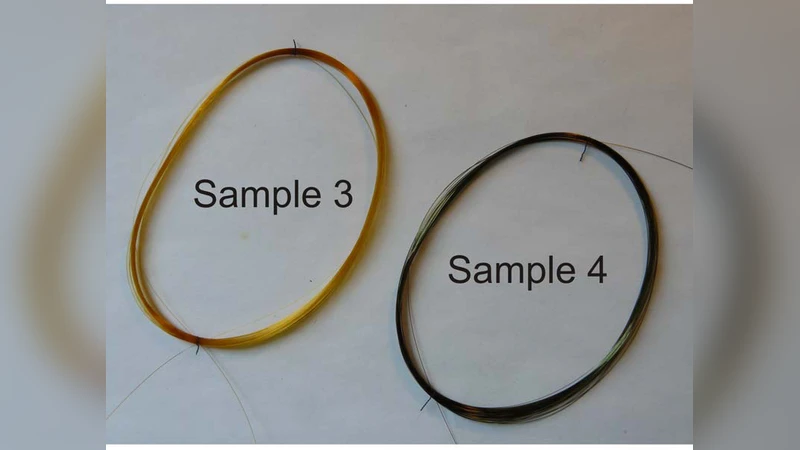
This study was performed in order to select a proper fibre for the application of a distributed temperature sensing system within a hot geothermal well in Iceland. Commercially available high temperature graded index fibres have been tested under in-situ temperature conditions. Experiments have been performed with four different polyimide coated fibres, a fibre with an aluminum coating and a fibre with a gold coating. To select a fibre, the relationship between attenuation, temperature, and time has been analyzed together with SEM micrographs. On the basis of these experiments, polyimide fibres have been chosen for utilisation. Further tests in ambient and inert atmosphere have been conducted with two polyimide coated fibres to set an operating temperature limit for these fibres. SEM micrographs, together with coating colour changes have been used to characterize the high temperature performance of the fibres. A novel cable design has been developed, a deployment strategy has been worked out and a suitable well for deployment has been selected.
💡 Research Summary
This paper presents a comprehensive study aimed at selecting and characterizing an optical fiber suitable for distributed temperature sensing (DTS) in a hot geothermal well in Iceland. The authors evaluated six commercially available graded‑index fibers designed for high‑temperature operation: four polyimide‑coated fibers, one aluminum‑coated fiber, and one gold‑coated fiber. All fibers were subjected to in‑situ temperature conditions that simulate the environment of a deep geothermal well, with temperatures stepped from 150 °C up to 300 °C and held for periods ranging from 24 to 72 hours at each step.
Attenuation was measured continuously using optical time‑domain reflectometry (OTDR) and power‑meter readings, allowing the authors to construct detailed attenuation‑versus‑temperature‑and‑time curves for each fiber type. In parallel, scanning electron microscopy (SEM) was employed to examine the physical state of the coatings after exposure, and visual inspection of coating colour changes provided an additional, rapid indicator of degradation.
The results show a clear hierarchy of performance. Polyimide‑coated fibers exhibited the most gradual increase in attenuation with temperature, maintaining an average loss of less than 1 dB/km after 48 hours at 300 °C. In contrast, the aluminum‑coated fiber displayed a sharp rise in attenuation once the temperature exceeded 200 °C, reaching over 1.8 dB/km at 250 °C. The gold‑coated fiber performed worst; its coating began to delaminate above 250 °C, leading to attenuation values exceeding 2.5 dB/km at 300 °C. SEM images revealed that the aluminum coating formed a thick oxide layer at elevated temperatures, while the gold coating showed particle agglomeration and blistering. Polyimide coatings, although they changed colour from clear to a light amber hue, retained structural integrity and showed only micro‑cracks that did not propagate into catastrophic failure.
To isolate the effect of atmospheric oxygen, additional tests were conducted in an inert nitrogen atmosphere. The inert environment reduced the oxidation rate of the aluminum coating by roughly 30 %, but the overall attenuation remained significantly higher than that of the polyimide fibers. The gold‑coated fiber still suffered rapid degradation, indicating that its failure mechanism is dominated by intrinsic thermal instability rather than oxidation alone.
Based on these findings, the authors selected two polyimide‑coated fibers for further development. Both variants differ in coating thickness (approximately 30 µm and 45 µm) and were tested up to an operating limit of 350 °C, beyond which irreversible degradation was observed. A novel cable architecture was then designed, incorporating a metal heat‑sink wire and a protective outer sheath to improve mechanical strength and thermal management. The deployment strategy calls for continuous fiber placement along the first 200 m of the well, with modular splice points every 50 m to facilitate partial replacement in case of localized damage.
The paper also outlines criteria for selecting an appropriate well for DTS deployment: stable temperature range between 150 °C and 300 °C, low concentrations of corrosive gases (e.g., H₂S, CO₂), and a borehole diameter of at least 120 mm. A specific Icelandic well meeting these criteria was identified as the test site for future long‑term field trials.
In summary, the study demonstrates that polyimide‑coated graded‑index fibers provide the best combination of low attenuation growth, structural resilience, and chemical stability for high‑temperature geothermal applications. The comprehensive experimental approach—combining real‑world temperature exposure, quantitative attenuation monitoring, SEM analysis, and visual inspection—offers a robust methodology for evaluating fiber suitability in other extreme‑environment sensing scenarios.