Contractile units in disordered actomyosin bundles arise from F-actin buckling
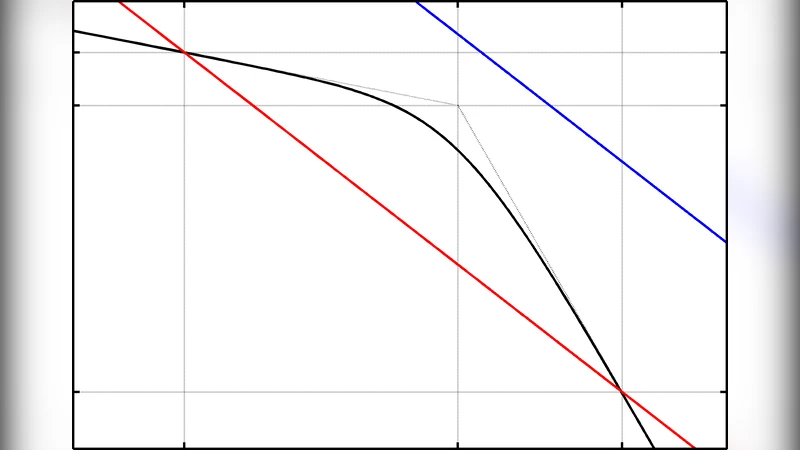
Bundles of filaments and motors are central to contractility in cells. The classic example is striated muscle, where actomyosin contractility is mediated by highly organized sarcomeres which act as fundamental contractile units. However, many contractile bundles in vivo and in vitro lack sarcomeric organization. Here we propose a model for how contractility can arise in actomyosin bundles without sarcomeric organization and validate its predictions with experiments on a reconstituted system. In the model, internal stresses in frustrated arrangements of motors with diverse velocities cause filaments to buckle, leading to overall shortening. We describe the onset of buckling in the presence of stochastic actin-myosin detachment and predict that buckling-induced contraction occurs in an intermediate range of motor densities. We then calculate the size of the “contractile units” associated with this process. Consistent with these results, our reconstituted actomyosin bundles contract at relatively high motor density, and we observe buckling at the predicted length scale.
💡 Research Summary
The paper addresses a fundamental question in cell mechanics: how actomyosin bundles that lack the highly ordered sarcomeric architecture of striated muscle can still generate contractile force. The authors propose that heterogeneity in myosin motor velocities creates internal “frustration” within a disordered filament network. When motors with different preferred speeds bind to the same F‑actin filament, the resulting non‑uniform tension compresses sections of the filament. If the compressive stress exceeds a critical value, the filament buckles according to Euler‑buckling theory. Each buckled segment behaves as an autonomous contractile unit; successive buckling and relaxation events produce stepwise shortening of the entire bundle.
A quantitative model is constructed in which the bundle is treated as a one‑dimensional continuum. Myosin heads are assigned a distribution of velocities (v_i) and a stochastic binding probability. The local tension (\sigma(x)) is expressed as a sum over motors weighted by their velocity deviation from the mean. The model incorporates stochastic detachment ((k_{\text{off}})) and reattachment ((k_{\text{on}})) rates, allowing the system to reach a dynamic steady state where tension builds up and is intermittently released. The critical buckling length (L_c = \pi\sqrt{EI/\sigma_c}) emerges from the balance of filament bending rigidity (EI) and critical compressive stress (\sigma_c). Importantly, the analysis predicts a non‑monotonic dependence of contractile efficiency on motor density: at low densities the tension never reaches (\sigma_c); at very high densities the bundle remains under constant tension, suppressing buckling; only at an intermediate density range (≈10³–10⁴ µm⁻² for the parameters used) does buckling occur repeatedly, giving rise to maximal shortening. The model also predicts the average size of a contractile unit to be on the order of a few hundred nanometers, set by the interplay of motor density, velocity spread, and filament rigidity.
To test these predictions, the authors reconstituted actomyosin bundles in vitro using purified actin filaments and skeletal muscle myosin II. By varying myosin concentration they created three regimes: low, intermediate, and high motor density. High‑speed fluorescence microscopy revealed that bundles at intermediate density contracted by 5–10 % and displayed periodic, localized bends of 0.3–0.7 µm in length. In the low‑density condition, bundles showed negligible contraction and no buckling, while at high density the bundles remained largely static and straight, consistent with the model’s prediction that excessive motor crowding prevents buckling. Moreover, fluorescence intensity analysis showed that buckled regions coincided with locally higher myosin density, supporting the idea that velocity heterogeneity concentrates stress in specific filament segments.
The discussion extends the relevance of this buckling‑driven mechanism to various cellular structures that lack sarcomeres, such as stress fibers, the cytokinetic contractile ring, and cortical actomyosin networks. The authors argue that even in relatively ordered structures, small variations in motor speed or load‑dependent stepping could generate localized buckling, thereby redistributing tension and enhancing overall contractility. The identified “contractile unit” length provides a new mesoscopic scale bridging molecular motor activity and cellular‑scale force generation.
In conclusion, the study combines theoretical modeling with rigorous reconstitution experiments to demonstrate that F‑actin buckling, induced by heterogeneous myosin activity, can serve as the fundamental driver of contraction in disordered actomyosin bundles. This mechanism explains how cells achieve contractile function without sarcomeric organization and offers a quantitative framework for interpreting contractility in a broad range of physiological and synthetic systems.
Comments & Academic Discussion
Loading comments...
Leave a Comment