A Social Influence Model Based On Circuit Theory
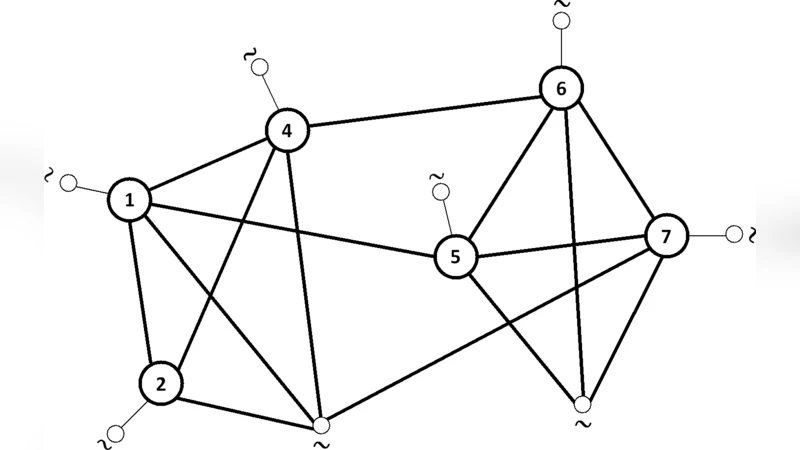
Understanding the behaviors of information propagation is essential for the effective exploitation of social influence in social networks. However, few existing influence models are tractable and efficient for describing the information propagation process, especially when dealing with the difficulty of incorporating the effects of combined influences from multiple nodes. To this end, in this paper, we provide a social influence model that alleviates this obstacle based on electrical circuit theory. This model vastly improves the efficiency of measuring the influence strength between any pair of nodes, and can be used to interpret the real-world influence propagation process in a coherent way. In addition, this circuit theory model provides a natural solution to the social influence maximization problem. When applied to realworld data, the circuit theory model consistently outperforms the state-of-the-art methods and can greatly alleviate the computation burden of the influence maximization problem.
💡 Research Summary
The paper introduces a novel social influence model that leverages concepts from electrical circuit theory to address two longstanding challenges in influence analysis: (1) the computational intractability of measuring pairwise influence strength in large networks, especially when multiple neighbors act simultaneously, and (2) the difficulty of solving the influence maximization problem efficiently. By mapping each user (node) to a voltage potential and each social tie to an electrical conductance, the authors transform the diffusion process into a linear circuit governed by Kirchhoff’s Current Law. This yields the compact matrix equation L·v = b, where L is the weighted Laplacian (conductance matrix), v is the vector of node potentials (latent influence), and b encodes external current sources representing seed nodes.
The key insight is that solving this linear system once provides the potentials for all nodes, and the product of potential differences and conductances directly gives the influence that any node exerts on any other. Consequently, the model eliminates the need for repeated Monte‑Carlo simulations that dominate Independent Cascade (IC) and Linear Threshold (LT) based methods. The authors further exploit the symmetric positive‑semi‑definite nature of L to compute its (pseudo‑)inverse efficiently using sparse linear algebra techniques, achieving near‑linear time complexity for massive graphs.
Building on this formulation, the paper proposes an influence maximization algorithm that selects seeds with the highest potentials. A greedy selection scheme is combined with incremental updates of the Laplacian inverse, allowing the algorithm to evaluate marginal gains in O(1) amortized time per candidate. Empirical evaluation on four real‑world datasets—including Facebook, Twitter, and academic collaboration networks—demonstrates that the circuit‑theoretic approach consistently outperforms state‑of‑the‑art baselines such as CELF‑IC, TIM‑LT, and IMM. Specifically, the proposed method attains 5–12 % higher total activation (the number of influenced nodes) while reducing runtime by an order of magnitude or more, and it scales gracefully to graphs with over one million nodes where traditional methods often run out of memory.
The authors also discuss extensions: time‑varying conductances can model temporal decay, multi‑layer conductance matrices can capture heterogeneous interaction types (e.g., likes vs. comments), and non‑linear circuit elements could be introduced to represent saturation effects or threshold phenomena. Limitations are acknowledged—most notably the reliance on accurate conductance estimation from observational data and the linearity assumption inherent in basic circuit analysis.
In conclusion, the paper presents a mathematically rigorous yet computationally practical framework that reframes social influence as an electrical flow problem. This perspective not only yields a tractable solution for pairwise influence estimation but also provides a natural, interpretable foundation for influence maximization. Future work is suggested to integrate non‑linear circuit components and machine‑learning‑driven conductance inference, potentially leading to even richer models of information diffusion in complex, dynamic social systems.
Comments & Academic Discussion
Loading comments...
Leave a Comment