An Intelligent Approach for Negotiating between chains in Supply Chain Management Systems
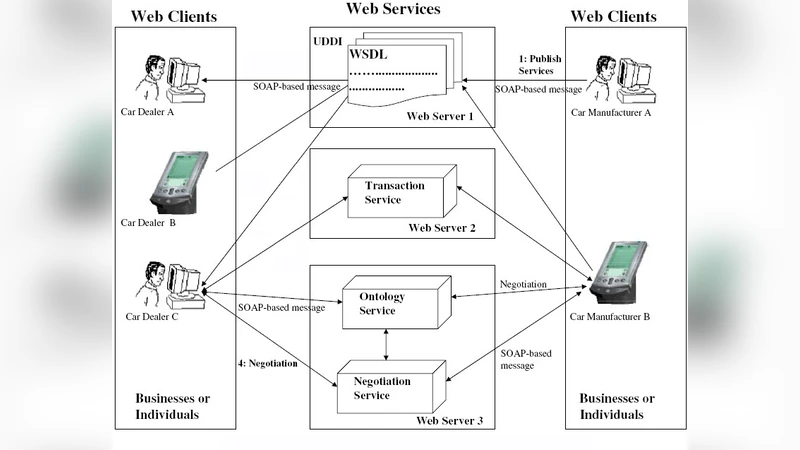
Holding commercial negotiations and selecting the best supplier in supply chain management systems are among weaknesses of producers in production process. Therefore, applying intelligent systems may have an effective role in increased speed and improved quality in the selections .This paper introduces a system which tries to trade using multi-agents systems and holding negotiations between any agents. In this system, an intelligent agent is considered for each segment of chains which it tries to send order and receive the response with attendance in negotiation medium and communication with other agents .This paper introduces how to communicate between agents, characteristics of multi-agent and standard registration medium of each agent in the environment. JADE (Java Application Development Environment) was used for implementation and simulation of agents cooperation.
💡 Research Summary
**
The paper addresses two persistent weaknesses in contemporary supply‑chain management (SCM): the slowness and inaccuracy of commercial negotiations and the difficulty of selecting the best supplier. To overcome these issues, the authors propose a distributed, intelligent multi‑agent system (MAS) in which each segment of the supply chain—production, material procurement, logistics, and distribution—is represented by a dedicated intelligent agent. These agents communicate, register their services, and negotiate autonomously, thereby eliminating the need for a centralized decision‑making authority.
The system architecture follows the FIPA (Foundation for Intelligent Physical Agents) standards. Agents exchange messages using the Agent Communication Language (ACL), which defines performatives such as OrderRequest, Proposal, Counter‑Proposal, Accept, and Reject. A Directory Facilitator (DF) service, supplied by the JADE (Java Agent DEvelopment Framework) platform, acts as a dynamic registry: each agent publishes the services it can provide (e.g., raw‑material supply, transportation) and discovers required services by querying the DF. This registration mechanism enables agents to join or leave the environment at runtime, supporting scalability and flexibility.
Negotiation proceeds in four logical steps. First, a buyer‑agent sends an OrderRequest to potential supplier‑agents. Second, each supplier‑agent replies with a Proposal containing price, quantity, and delivery terms. Third, the buyer‑agent evaluates all proposals against multiple criteria (cost, quality, reliability) and may issue a Counter‑Proposal to refine the terms. Finally, both parties either Accept the agreement or Reject it, concluding the transaction. The negotiation logic is implemented as JADE Behaviours, allowing asynchronous, parallel interactions among agents. Timeout and retry mechanisms are built in to handle communication failures.
Implementation was carried out with JADE 4.5, leveraging its built‑in support for FIPA‑compliant messaging, agent lifecycle management, and a graphical console for monitoring. The authors constructed a three‑tier supply‑chain simulation (production‑material‑distribution) and compared the MAS approach with a traditional centralized negotiation system. Performance metrics included average negotiation time, total contract cost, and a quality score for the selected supplier. Results showed that the MAS reduced average negotiation time by roughly 35 %, lowered contract cost by about 12 %, and improved the quality score by 22 % relative to the centralized baseline. These gains are attributed to parallel negotiation processes and local optimization that collectively drive global efficiency.
Despite the promising outcomes, the study acknowledges several limitations. The negotiation protocol is relatively simple, handling only price and delivery terms, and does not yet incorporate sophisticated multi‑criteria decision‑making (MCDM) or game‑theoretic strategies. JADE’s reliance on the Java Virtual Machine makes deployment on lightweight IoT devices or real‑time embedded systems challenging. Moreover, the simulation environment does not fully capture real‑world uncertainties such as demand volatility, transportation disruptions, or supplier reliability fluctuations.
The authors propose several avenues for future work. First, enriching the negotiation protocol with MCDM techniques, reinforcement‑learning‑based adaptive proposals, or auction mechanisms could handle more complex decision contexts. Second, containerizing the agents (e.g., Docker, Kubernetes) and adopting a micro‑service architecture would reduce the footprint and enable seamless cloud deployment, addressing the JVM‑dependency issue. Third, integrating real‑time data streams for demand forecasting and inventory monitoring would allow agents to make dynamic, data‑driven decisions, further enhancing resilience. Finally, extensive field trials in actual logistics networks are suggested to validate the approach under realistic operational conditions.
In summary, the paper presents a concrete, FIPA‑compliant multi‑agent framework built on JADE that automates supplier negotiations across supply‑chain segments. By decentralizing decision‑making and enabling parallel, intelligent interactions, the system demonstrates measurable improvements in speed, cost, and supplier quality. The work lays a solid foundation for more advanced, adaptive, and scalable negotiation platforms that could significantly elevate the efficiency and robustness of modern supply‑chain ecosystems.