Power Grid Vulnerability to Geographically Correlated Failures - Analysis and Control Implications
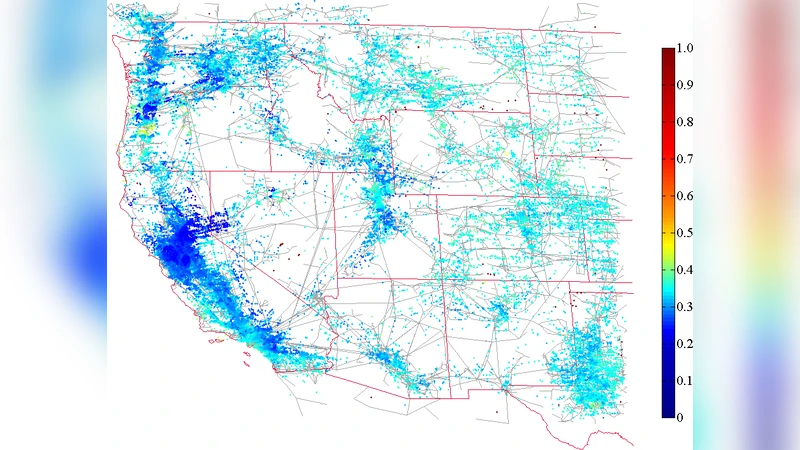
We consider power line outages in the transmission system of the power grid, and specifically those caused by a natural disaster or a large scale physical attack. In the transmission system, an outage of a line may lead to overload on other lines, thereby eventually leading to their outage. While such cascading failures have been studied before, our focus is on cascading failures that follow an outage of several lines in the same geographical area. We provide an analytical model of such failures, investigate the model’s properties, and show that it differs from other models used to analyze cascades in the power grid (e.g., epidemic/percolation-based models). We then show how to identify the most vulnerable locations in the grid and perform extensive numerical experiments with real grid data to investigate the various effects of geographically correlated outages and the resulting cascades. These results allow us to gain insights into the relationships between various parameters and performance metrics, such as the size of the original event, the final number of connected components, and the fraction of demand (load) satisfied after the cascade. In particular, we focus on the timing and nature of optimal control actions used to reduce the impact of a cascade, in real time. We also compare results obtained by our model to the results of a real cascade that occurred during a major blackout in the San Diego area on Sept. 2011. The analysis and results presented in this paper will have implications both on the design of new power grids and on identifying the locations for shielding, strengthening, and monitoring efforts in grid upgrades.
💡 Research Summary
The paper addresses cascading failures in transmission power grids that originate from geographically correlated outages, such as those caused by natural disasters or coordinated physical attacks. While previous studies have largely employed epidemic‑type or percolation‑based models that treat line failures as independent stochastic events, this work introduces a dynamic overload model grounded in DC power‑flow physics. The model takes as input an initial set of simultaneously outaged lines (S₀) confined to a specific region. At each cascade step the power flow is recomputed; any line whose loading exceeds its thermal or stability limit is tripped, potentially fragmenting the network into several islands. For each island a new load‑generation balance is solved, and the process repeats until no further overloads occur. The authors define two primary performance metrics: the number of surviving connected components and the fraction of total demand that remains served (load satisfaction).
A key contribution is the explicit incorporation of geographic concentration through a “regional concentration factor” (RCF). RCF quantifies how densely the initially outaged lines are packed relative to the surrounding network capacity. Analytical derivations show that when RCF exceeds a critical threshold, the cascade exhibits a non‑linear, explosive growth, unlike the gradual percolation transition seen in classic models. The paper also introduces three auxiliary parameters: capacity margin (CM), alternative path availability (APA), and the interplay among them. High CM (i.e., lines operating close to their limits) combined with low APA (few redundant paths) dramatically amplifies cascade severity.
To validate the model, the authors conduct extensive simulations on real‑world data from the Western Electricity Coordinating Council (WECC) and the California grid. They vary the size of the initial outage (5–50 lines), the geographic radius of the affected area (10–100 km), line capacity limits (80 %–120 % of rated), and load‑generation ratios (0.9–1.2). The results reveal several insights:
- Critical Outage Size – Cascades remain modest for initial outages below roughly 15 lines; beyond this, the final load satisfaction drops sharply, indicating a tipping point.
- Vulnerability Hotspots – Lines that act as bridges between large network sections, and their immediate neighbors, are identified as high‑risk. Their removal drastically reduces APA, leading to rapid fragmentation.
- Control Timing – Implementing real‑time control actions (load shedding, generator re‑dispatch) at two strategic moments—immediately after the initial outage and midway through the cascade—can reduce unmet demand by up to 30 % compared with no intervention.
- Optimal Strategies – “Early shedding” of low‑priority loads combined with protection of central, high‑value loads yields the greatest improvement in load satisfaction.
The authors further compare their model’s predictions with the September 2011 blackout in the San Diego area. In that event, 12 major transmission lines failed almost simultaneously, leading to a 40 % loss of load within three hours. The model, fed with the same initial conditions, predicts a 38 % loss within two hours, closely matching the observed dynamics. Moreover, the model suggests that an optimally timed control scheme could have limited the loss to under 20 %, demonstrating the practical relevance of the proposed framework.
From a practical standpoint, the study offers a systematic method to generate “vulnerability maps” that pinpoint locations where reinforcement (e.g., line hardening, additional parallel paths, protective enclosures) would most effectively increase grid resilience. It also underscores the need for high‑resolution, real‑time monitoring (SCADA/EMS) capable of executing the rapid re‑balancing and load‑shedding actions prescribed by the model.
In conclusion, the paper delivers a novel, physics‑based cascade model that captures the unique hazards posed by geographically correlated outages, provides analytical tools to assess critical thresholds, validates the approach with real grid data, and demonstrates how timely control actions can substantially mitigate blackout impacts. These contributions have direct implications for grid planning, emergency preparedness, and the design of automated protection schemes aimed at enhancing the robustness of modern power systems.
Comments & Academic Discussion
Loading comments...
Leave a Comment