Chebyshev Polynomials in Distributed Consensus Applications
In this paper we analyze the use of Chebyshev polynomials in distributed consensus applications. We study the properties of these polynomials to propose a distributed algorithm that reaches the consensus in a fast way. The algorithm is expressed in the form of a linear iteration and, at each step, the agents only require to transmit their current state to their neighbors. The difference with respect to previous approaches is that the update rule used by the network is based on the second order difference equation that describes the Chebyshev polynomials of first kind. As a consequence, we show that our algorithm achieves the consensus using far less iterations than other approaches. We characterize the main properties of the algorithm for both, fixed and switching communication topologies. The main contribution of the paper is the study of the properties of the Chebyshev polynomials in distributed consensus applications, proposing an algorithm that increases the convergence rate with respect to existing approaches. Theoretical results, as well as experiments with synthetic data, show the benefits using our algorithm.
💡 Research Summary
The paper investigates the use of Chebyshev polynomials of the first kind to accelerate distributed consensus in multi‑agent networks. Traditional consensus algorithms iterate the linear system (x(k)=A x(k-1)), where (A) is a row‑stochastic weight matrix compatible with the communication graph. The convergence speed of this method is dictated by the second‑largest eigenvalue modulus (\rho=\max_{i\neq1}|\lambda_i|); when the network is large or sparsely connected, (\rho) is close to one and many iterations are required.
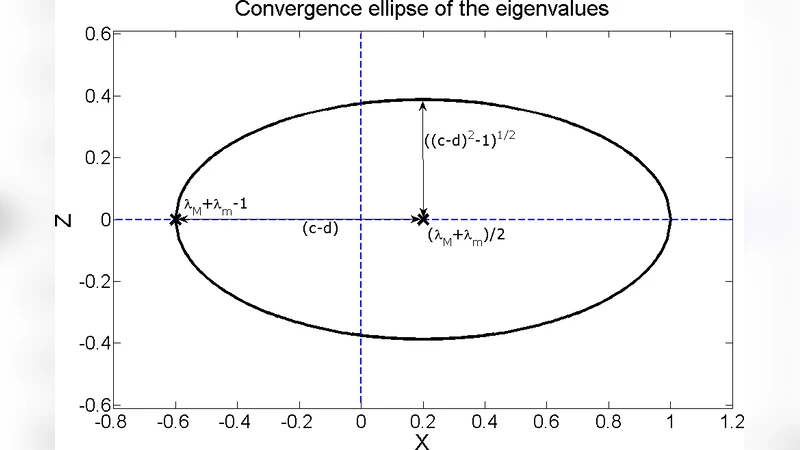
To overcome this limitation, the authors propose to replace the simple power (A^k) with a polynomial evaluation (P_k(A)) where (P_k) is a scaled Chebyshev polynomial. They define a linear transformation of the argument, \
Comments & Academic Discussion
Loading comments...
Leave a Comment