The Early History of Microquasar Research
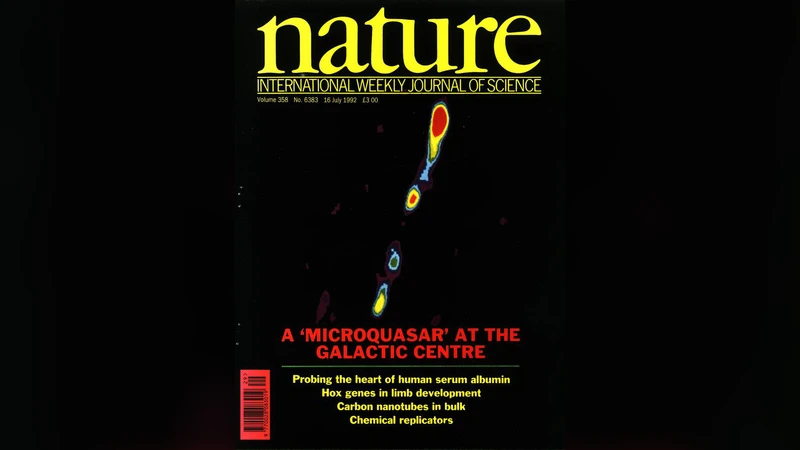
Microquasars are compact objects (stellar-mass black holes and neutron stars) that mimic, on a smaller scale, many of the phenomena seen in quasars. Their discovery provided new insights into the physics of relativistic jets observed elsewhere in the universe, and the accretion–jet coupling. Microquasars are opening new horizons for the understanding of ultraluminous X-ray sources observed in external galaxies, gamma-ray bursts of long duration, and the origin of stellar black holes and neutron stars. Microquasars are one of the best laboratories to probe General Relativity in the limit of the strongest gravitational fields, and as such, have become an area of topical interest for both high energy physics and astrophysics.
💡 Research Summary
The paper provides a comprehensive historical and technical overview of the early development of microquasar research, tracing the field from its nascent observations in the late 1970s to its establishment as a cornerstone of high‑energy astrophysics by the early 2000s. It begins by framing microquasars as stellar‑mass analogues of quasars, emphasizing the scaling hypothesis that many phenomena observed in active galactic nuclei (AGN) should appear in miniature form around black holes or neutron stars of a few solar masses. The narrative then moves to the first compelling candidate, SS 433, whose moving optical emission lines and relativistic jets (≈0.26 c) hinted at a micro‑quasar but whose complex absorption and precession made it difficult to extract clean jet physics.
A decisive breakthrough arrived with the discovery of GRS 1915+105 in 1992. Simultaneous X‑ray monitoring by RXTE and radio imaging by the VLA revealed tightly correlated X‑ray flares and radio ejections, the so‑called “flare‑flare” cycles. These events provided the first direct evidence for a rapid accretion‑disk–jet coupling: instabilities in the inner accretion flow (often modeled as radiation‑pressure or magnetorotational instabilities) trigger the ejection of relativistic plasma, which then expands and becomes visible at radio wavelengths. The paper details how this coupling gave rise to the “hard‑soft state transition” paradigm and how the observed radio–X‑ray luminosity correlation (L_R ∝ L_X^0.7) demonstrated a universal scaling law that bridges stellar‑mass black holes and supermassive black holes in AGN.
The authors then review the theoretical landscape of jet formation. Three principal mechanisms are discussed: (1) magnetic flux accumulation at the innermost stable circular orbit leading to magnetically arrested disks (MADs); (2) Blandford–Payne type centrifugal launching from the disk surface; and (3) Blandford–Znajek extraction of black‑hole spin energy via large‑scale ordered magnetic fields. Each model is evaluated against observational constraints such as jet speeds ranging from 0.2 c to >0.9 c, collimation angles, and polarization signatures. Very‑Long‑Baseline Interferometry (VLBI) measurements that locate the jet base within a few tens of gravitational radii of the black hole are highlighted as a direct test of strong‑field general relativity.
Beyond the immediate phenomenology, the paper explores the broader implications of microquasars. It argues that many ultraluminous X‑ray sources (ULXs) in external galaxies, previously invoked as evidence for intermediate‑mass black holes, can be re‑interpreted as beamed or super‑Eddington microquasars whose luminosities are amplified by relativistic jet emission. Similarly, the long‑duration gamma‑ray bursts (GRBs) are examined through the lens of microquasar physics; the central engine of a collapsar may operate in a regime analogous to the flare‑flare cycles, producing sustained relativistic outflows that power the observed gamma‑ray emission.
The final sections outline future directions. The authors advocate for next‑generation facilities—such as the Event Horizon Telescope (EHT), the Square Kilometre Array (SKA), and the Advanced Telescope for High‑ENergy Astrophysics (ATHENA)—to directly image jet launching regions, resolve magnetic field structures, and capture rapid variability. They also emphasize the synergy with gravitational‑wave observatories (LIGO/Virgo/KAGRA), which could detect mergers that produce nascent microquasars, enabling simultaneous multimessenger studies of accretion‑jet coupling. Advanced numerical simulations that incorporate full general relativistic magnetohydrodynamics (GRMHD) and radiative transfer are identified as essential for bridging theory and observation.
In conclusion, the paper asserts that microquasars have evolved from curiosities into a vital laboratory for testing general relativity in the strong‑field regime, probing the physics of relativistic jets, and linking disparate high‑energy phenomena such as ULXs, GRBs, and AGN. Their study continues to drive interdisciplinary collaboration between astrophysics, high‑energy physics, and computational science, promising deeper insight into some of the most energetic processes in the universe.