Application of Fractional Fourier Transform in Cepstrum Analysis
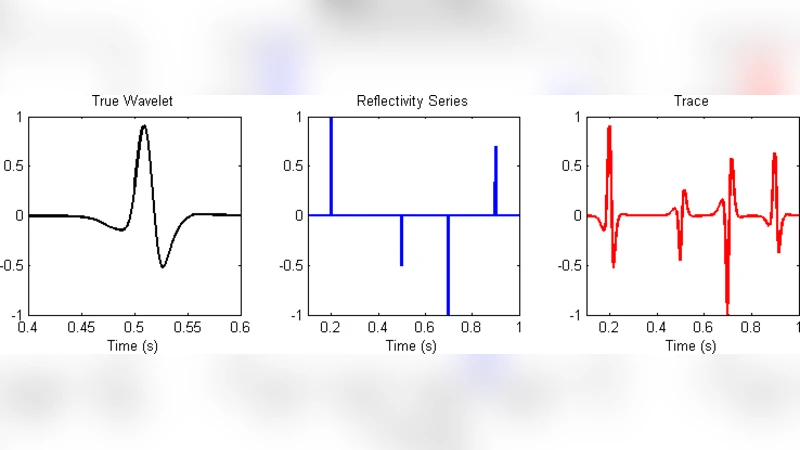
Source wavelet estimation is the key in seismic signal processing for resolving subsurface structural properties. Homomorphic deconvolution using cepstrum analysis has been an effective method for wavelet estimation for decades. In general, the inverse of the Fourier transform of the logarithm of a signal’s Fourier transform is the cepstral domain representation of that signal. The convolution operation of two signals in the time domain becomes an addition in the cepstral domain. The fractional Fourier transform (FRFT) is the generalization of the standard Fourier transform (FT). In an FRFT, the transformation kernel is a set of linear chirps whereas the kernel is composed of complex sinusoids for the FT. Depending on the fractional order, signals can be represented in multiple domains. This gives FRFT an extra degree of freedom in signal analysis over the standard FT. In this paper, we have taken advantage of the multidomain nature of the FRFT and applied it to cepstral analysis. We term this combination the Fractional-Cepstrum (FC). We derive the real FC formulation, and give an example using wavelets to show the multidomain representation of the traditional cepstrum with different fractional orders of the FRFT.
💡 Research Summary
The paper introduces a novel signal‑processing technique called the Fractional‑Cepstrum (FC), which merges the fractional Fourier transform (FRFT) with traditional homomorphic cepstrum analysis to improve source‑wavelet estimation in seismic data. Conventional cepstrum methods rely on the standard Fourier transform (FT) to convert a signal’s spectrum into the logarithmic domain, where convolution in the time domain becomes addition in the cepstral domain. While effective, the FT’s kernel consists solely of complex sinusoids, limiting the ability to capture non‑stationary or chirp‑like characteristics that are common in seismic waveforms.
The FRFT generalizes the FT by introducing a fractional order α (0 ≤ α ≤ π). Its kernel is a set of linear chirps, and varying α rotates the time‑frequency plane, providing a continuum of intermediate representations between the time domain (α = 0) and the frequency domain (α = π/2). By applying the FRFT to the logarithmic spectrum, the authors obtain a family of “fractional‑log spectra” Lα(u). They then extract the real part of Lα(u) and perform an inverse FRFT of order –α, yielding the real‑valued fractional‑cepstrum cα(t). Mathematically:
- S(ω) = FT{s(t)}
- L(ω) = log|S(ω)| (complex logarithm, split into real and imaginary parts)
- Lα(u) = FRFTα{L(ω)}
- cα(t) = FRFT−α{Re