Developing a computational model of blood platelets with fluid dynamics applications
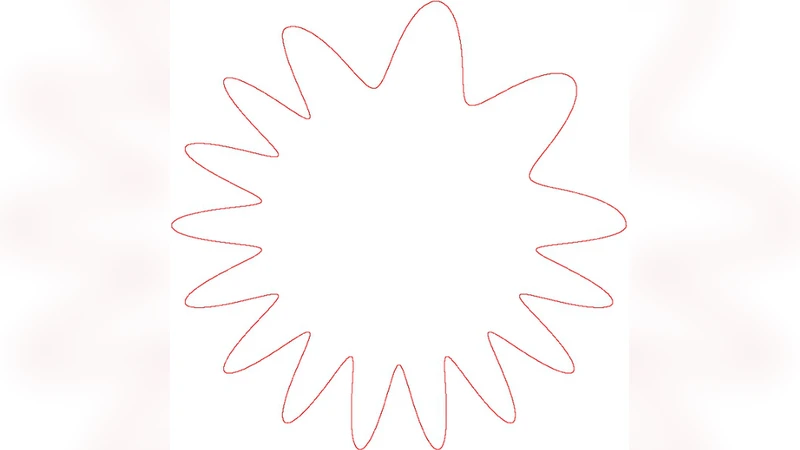
This paper worked towards modeling blood platelets. Blood platelets, also known as thrombocytes, play a key role in blood clotting which is a vital human function. Furthermore, the role of these entities in strokes, myocardial infarctions, and coronary artery disease add to the importance of blood platelets. Analytical expressions for the structure of blood platelets in both their inactivated and activated states were developed, beginning with randomized two-dimensional models in polar coordinates. Weak frameworks in spherical and cylindrical systems were then created. Next, using rotational matrices to change the position and direction of a simple projection, useful, explicit, parametric system of equations were attained in three-dimensional Cartesian space which roughly approximate the structure of a blood platelet. Finally, a methodology to return the drag coefficient ($c_d$) for any inputted set of blood platelet images was designed. This method was incorporated into a C++ program returning the functional representation and drag coefficient of any given platelet. This work has primary applications in computational biophysics and fluid dynamics. Additionally, if the parameters of the model are extended, there could be ramifications in other areas of scientific modelling by connecting analytical expressions with instrinsic characteristics.
💡 Research Summary
The manuscript presents a comprehensive computational framework for representing blood platelets (thrombocytes) in both their resting and activated states and for evaluating their hydrodynamic behavior. The authors begin by constructing a stochastic two‑dimensional description of platelet geometry in polar coordinates. A random radius function, generated from a mixture of beta and Gaussian distributions, creates surface irregularities that mimic the spiky protrusions observed after activation. This 2‑D model serves as a seed for extending the representation into weak spherical and cylindrical coordinate frameworks, where radial and angular components are treated as independent smooth scalar fields. By employing spline interpolation the authors ensure continuity and differentiability across coordinate transformations, thereby reducing numerical artifacts in downstream simulations.
The core of the work lies in the transition to a fully three‑dimensional parametric model. Using rotation matrices R(α,β,γ), a simple protuberance (the “projection”) can be oriented arbitrarily in space. The projection’s vector is rotated and then added to the base surface defined by the radial functions r(u) and height functions h(u). The resulting Cartesian parametric equations—x(u,v)=r(u)·cos v·R₁, y(u,v)=r(u)·sin v·R₂, z(u,v)=h(u)·R₃, with u∈
Comments & Academic Discussion
Loading comments...
Leave a Comment