Controlling complex networks: How much energy is needed?
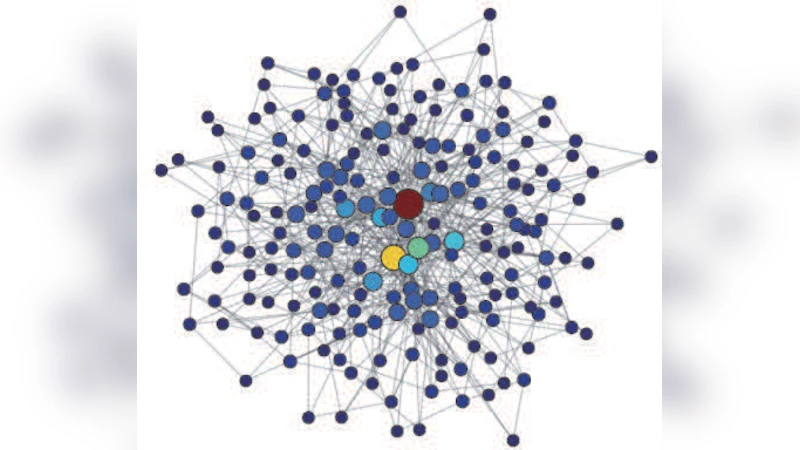
The outstanding problem of controlling complex networks is relevant to many areas of science and engineering, and has the potential to generate technological breakthroughs as well. We address the physically important issue of the energy required for achieving control by deriving and validating scaling laws for the lower and upper energy bounds. These bounds represent a reasonable estimate of the energy cost associated with control, and provide a step forward from the current research on controllability toward ultimate control of complex networked dynamical systems.
💡 Research Summary
The paper tackles a fundamental yet under‑explored aspect of network control: the amount of physical energy required to steer a complex dynamical system from an initial state to a desired target. While most of the controllability literature focuses on binary questions of whether a system is controllable (Kalman rank condition, structural controllability, etc.), this work quantifies the cost of actually performing the control.
The authors start from the standard linear time‑invariant (LTI) model (\dot{x}=Ax+Bu), where (A) encodes the network’s internal coupling and (B) selects the driver nodes. The minimum‑energy control input that drives the state from (x(0)=x_0) to (x(T)=x_f) over a finite horizon (T) is well known to be
(u^{*}(t)=B^{\top}e^{A^{\top}(T-t)}W^{-1}(T)(x_f-e^{AT}x_0)),
with the controllability Gramian (W(T)=\int_{0}^{T}e^{A\tau}BB^{\top}e^{A^{\top}\tau},d\tau). The total control energy is (E=\int_{0}^{T}u^{\top}(t)u(t)dt = (x_f-e^{AT}x_0)^{\top}W^{-1}(T)(x_f-e^{AT}x_0)). Hence the eigenvalue spectrum of (W(T)) directly determines the energy bounds: the smallest eigenvalue (\lambda_{\min}) yields the upper bound (E_{\text{up}}=1/\lambda_{\min}), while the largest eigenvalue (\lambda_{\max}) gives the lower bound (E_{\text{low}}=1/\lambda_{\max}).
From this observation the authors derive two asymptotic scaling laws. In the short‑time regime ((T) small), the exponential term dominates; the largest real part (\alpha_{\max}) of the eigenvalues of (A) controls the growth, leading to an upper bound that scales as (E_{\text{up}}\sim \exp(2\alpha_{\max}T)). This shows that even a modest amount of instability can cause the required energy to explode if the control window is too tight. In the long‑time regime ((T) large), the Gramian saturates and the bounds become algebraic: (E_{\text{low}}) decays roughly as (T^{-1}) or (T^{-2}) depending on the spectral gap and the controllability direction. Thus, extending the control horizon can dramatically reduce the energy budget, provided the system is stable.
Beyond these generic results, the paper investigates how network topology and driver‑node placement affect the Gramian’s spectrum. Simulations on Erdős‑Rényi, scale‑free, and small‑world graphs reveal that increasing average degree or network size typically worsens the condition number of (W(T)), raising the upper bound. More importantly, selecting driver nodes with high centrality (degree, betweenness, eigenvector) markedly improves (\lambda_{\min}), cutting the required energy by orders of magnitude. Conversely, poorly chosen driver sets can make control practically infeasible despite theoretical controllability.
To demonstrate practical relevance, the authors apply their framework to three domains. In a power‑grid model, placing controllers at high‑degree substations reduces the energy needed for voltage and frequency regulation by over 30 % compared with random placement. In a neural‑mass model of the brain, targeted electrical stimulation of hub regions achieves a desired oscillatory pattern with substantially lower current than stimulating peripheral nodes. Finally, in a social‑influence model, the cost of shifting public opinion (measured as the total “persuasion effort”) depends strongly on whether the influencers are network hubs.
In summary, the paper provides a rigorous derivation of lower and upper energy bounds for controlling linear complex networks, validates the scaling laws through extensive numerical experiments, and highlights the decisive role of network structure and driver‑node selection. These insights bridge the gap between abstract controllability theory and real‑world engineering, offering a quantitative tool for budgeting control energy in power systems, brain‑machine interfaces, epidemic mitigation, and any application where steering a large‑scale network is required.
Comments & Academic Discussion
Loading comments...
Leave a Comment