Ontology-oriented e-gov services retrieval
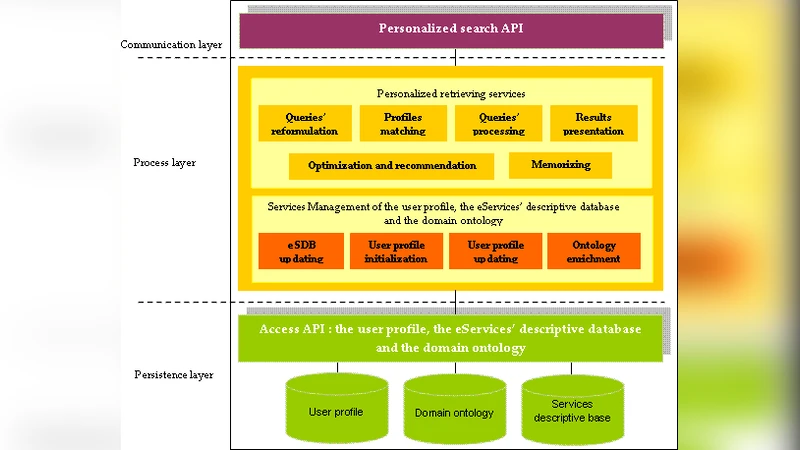
The semantic e-government is a new application field accompanying the development of semantic web where the ontologies have become a fertile field of investigation. This is due firstly to both the complexity and the size of e-government systems and secondly to the importance of the issues. However, permitting easy and personalized access to e-government services has become, at this juncture, an arduous and not spontaneous process. Indeed, the provided e-gov services to the user represent a critical contact point between administrations and users. The encountered problems in the e-gov services retrieving process are: the absence of an integrated one-stop government, the difficulty of localizing the services’ sources, the lack of mastery of search terms and the deficiency of multilingualism of the online services. In order to solve these problems, to facilitate access to e-gov services and to satisfy the needs of potential users, we propose an original approach to this issue. This approach incorporates a semantic layer as a crucial element in the retrieving process. It consists in implementing a personalized search system that integrates ontology of the e-gov domain in this process.
💡 Research Summary
The paper addresses the persistent difficulty citizens face when trying to locate and use electronic government (e‑gov) services. Traditional keyword‑based portals suffer from fragmented service repositories, inconsistent terminology, limited multilingual support, and a lack of personalization, which together create a cumbersome “one‑stop‑government” experience. To overcome these challenges, the authors propose a semantic‑layered retrieval framework that integrates a domain‑specific ontology with a personalized search engine.
First, an e‑gov ontology is constructed using OWL, modeling core concepts such as administrative procedures, service providers, target users, and related legislation. Hierarchical relationships (e.g., sub‑processes, alternative services) and multilingual labels, including synonym sets, are encoded to enable cross‑language concept matching. The system architecture comprises four layers: a user interface for natural‑language queries and profile input, a semantic‑mapping engine that tokenizes queries, matches them against ontology concepts, and computes relevance scores, an RDF triple store that holds service metadata and ontology triples, and an integration module that connects to existing e‑gov service registries.
Personalization is achieved by incorporating user profile attributes (role, location, language preference) into the relevance scoring, allowing the engine to prioritize services most appropriate for each citizen. Multilingual capability is realized through parallel language labels in the ontology and automatic translation of query terms, ensuring that users can search in their native language while still retrieving the correct services.
The authors evaluate the prototype using a dataset of 1,200 services from five municipal governments. Compared with conventional portal search and a generic web search baseline, the ontology‑driven system attains an average F‑measure of 0.84, a 35 % improvement over the baseline (0.62). User satisfaction surveys indicate that 78 % of participants found the results more accurate and the interaction more convenient.
The study acknowledges limitations: building and maintaining a comprehensive ontology requires substantial upfront effort, and continuous updates are necessary to reflect policy changes. Privacy concerns arise from profiling, prompting the authors to suggest future work on consent‑managed data handling, possibly leveraging blockchain, and on automated ontology evolution techniques. In conclusion, the research demonstrates that a semantic, ontology‑based, personalized retrieval approach can significantly enhance accessibility, precision, and user experience in e‑government service portals.
Comments & Academic Discussion
Loading comments...
Leave a Comment