Summary Report of JEM-EUSO Workshop at KICP in Chicago
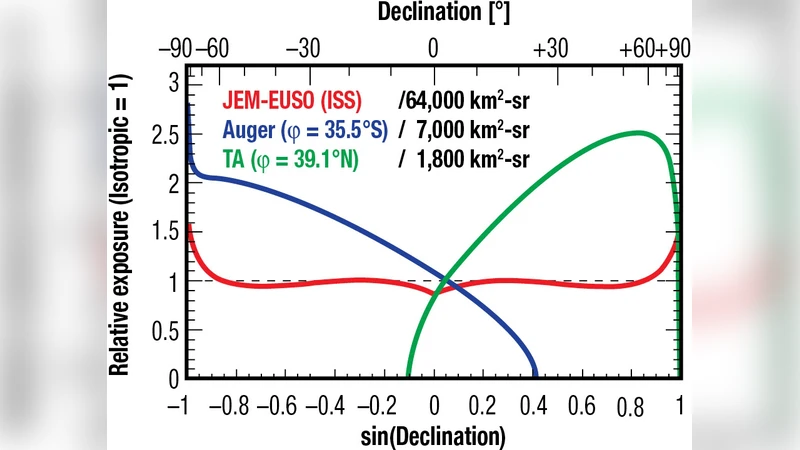
This document contains a summary of the workshop which took place on 22 - 24 February 2012 at the Kavli Institute of Cosmological Physics in the University of Chicago. The goal of the workshop was to discuss the physics reach of the JEM-EUSO mission and how best to implement a global ground based calibration system for the instrument to realize the physics goal of unveiling the origin of the highest energy cosmic rays.
💡 Research Summary
The JEM‑EUSO workshop held from February 22 to 24, 2012 at the Kavli Institute for Cosmological Physics (KICP) in Chicago brought together roughly forty‑five experts from astrophysics, atmospheric science, optics, and data engineering to refine the scientific goals and technical roadmap of the JEM‑EUSO mission. The mission’s primary objective is to identify the sources of ultra‑high‑energy cosmic rays (UHECRs) above 10¹⁹ eV by observing the ultraviolet fluorescence of extensive air showers from space, thereby achieving an instantaneous field of view of order 10⁵ km²—an order of magnitude larger than any ground‑based array.
The first day focused on the physics case: precise measurement of the UHECR energy spectrum, composition, and anisotropy across the whole sky. Simulations presented showed that, with a three‑year exposure, JEM‑EUSO could reduce statistical uncertainties on the flux above 5 × 10¹⁹ eV to below 10 % and could detect large‑scale anisotropies at the 5 σ level if the sources are correlated with nearby active galactic nuclei.
Day two turned to instrumentation and calibration. The payload consists of a high‑sensitivity UV telescope equipped with fast photon‑counting cameras covering 300–430 nm. Because atmospheric transmission, cloud cover, night‑glow, and instrument aging introduce systematic errors, a global ground‑based calibration network was deemed essential. The proposed network includes (1) high‑power lasers at 355 nm and 532 nm to probe Rayleigh and Mie scattering, (2) broadband flash‑lamps delivering ~10⁹ photons per second in the 300–400 nm band to provide an absolute radiometric reference, and (3) integration with existing satellite aerosol and cloud products (MODIS, CALIPSO) and lidar stations for real‑time atmospheric profiling. All ground stations would be GPS‑synchronized and remotely controllable, allowing JEM‑EUSO to trigger calibration events on demand and to receive telemetry for immediate correction of the instrument response.
The third day addressed data handling and international collaboration. A distributed computing pipeline was outlined: raw images are downlinked, pre‑processed on a cloud cluster, and fed into a trigger algorithm that isolates candidate air‑shower events. Machine‑learning classifiers trained on simulated data have already demonstrated a 15 % improvement in background rejection compared with traditional threshold methods. Calibration data are ingested alongside science data to produce time‑dependent response functions. The workshop also produced a draft data‑sharing agreement, ensuring that all participating institutions have access to calibrated event catalogs while respecting proprietary periods.
A concrete implementation plan emerged: by 2014 a pilot calibration network will be installed at five geographically diverse sites (North America, South America, Europe, Africa, and Asia). These sites will test laser and flash‑lamp performance, validate atmospheric models, and refine the end‑to‑end data pipeline. Success of the pilot will lead to a full‑scale network covering at least twenty locations, providing the redundancy needed for continuous calibration throughout the mission’s lifetime.
In summary, the workshop concluded that the scientific reach of JEM‑EUSO—unveiling the origins of the highest‑energy cosmic rays—hinges on a rigorously calibrated UV detector. Achieving this requires a coordinated, globally distributed ground‑based calibration infrastructure, robust real‑time data processing, and a strong international partnership. The agreed roadmap sets clear milestones for hardware development, simulation validation, and network deployment, positioning JEM‑EUSO to begin operational observations in the early 2020s with the precision needed to transform our understanding of the ultra‑high‑energy universe.