A dynamical model for competing opinions
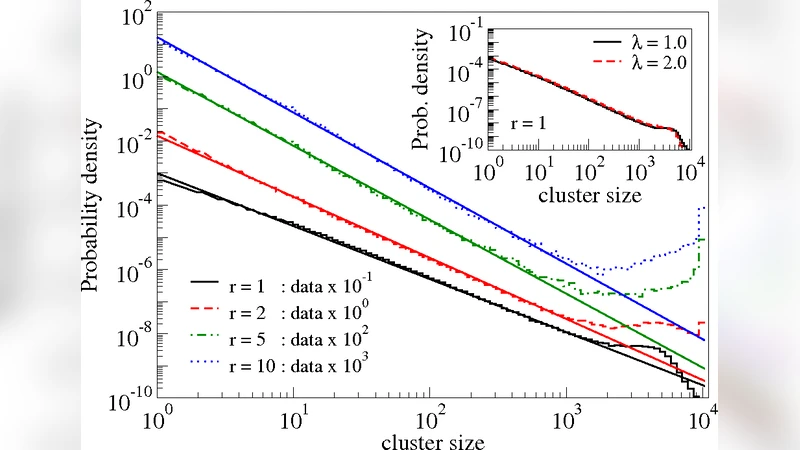
We propose an opinion model based on agents located at the vertices of a regular lattice. Each agent has an independent opinion (among an arbitrary, but fixed, number of choices) and its own degree of conviction. The latter changes every time it interacts with another agent who has a different opinion. The dynamics leads to size distributions of clusters (made up of agents which have the same opinion and are located at contiguous spatial positions) which follow a power law, as long as the range of the interaction between the agents is not too short, i.e. the system self-organizes into a critical state. Short range interactions lead to an exponential cut off in the size distribution and to spatial correlations which cause agents which have the same opinion to be closely grouped. When the diversity of opinions is restricted to two, non-consensus dynamic is observed, with unequal population fractions, whereas consensus is reached if the agents are also allowed to interact with those which are located far from them.
💡 Research Summary
The paper introduces a lattice‑based opinion dynamics model in which each agent occupies a vertex of a regular grid and holds one of a fixed number Q of discrete opinions together with a continuous conviction level. The conviction reflects how strongly the agent adheres to its current opinion and is updated whenever the agent interacts with a neighbor holding a different opinion. At each time step a random agent selects a partner within a prescribed interaction radius R; if the two share the same opinion nothing changes, but if they differ the agent with higher conviction retains its opinion while reducing the partner’s conviction by a factor α, and the lower‑conviction agent may switch to the majority opinion and receive a new conviction value. This simple rule captures both persuasion (conviction transfer) and opinion adoption (state change).
The authors explore the statistical properties of the resulting spatial clusters—contiguous groups of agents that share the same opinion. Cluster size s is measured as the number of agents in a connected component. By varying the interaction range R, the number of opinions Q, the lattice size L, and the conviction‑adjustment parameter α, they obtain three distinct regimes.
When R is sufficiently large (comparable to a substantial fraction of the lattice linear size), the cluster‑size distribution follows a power law P(s) ∝ s^‑τ with τ ≈ 1.5–2.0. This indicates that the system self‑organizes into a critical state: small fluctuations can propagate across the whole system, producing clusters of all scales without a characteristic size. The power‑law regime persists over a wide range of Q and α, showing robustness of the critical behavior.
If R is reduced to the nearest‑neighbor limit (R = 1), the distribution develops an exponential cutoff. Large clusters become exceedingly rare, and the system exhibits only short‑range correlations. Agents with the same opinion tend to be tightly packed, forming small, isolated domains. The authors interpret this as a failure of long‑range information flow; the dynamics remains subcritical and cannot generate scale‑free structures.
A special focus is placed on the binary‑opinion case (Q = 2). With short‑range interactions the system settles into a non‑consensus state: two domains coexist, their relative sizes depend on the initial conditions, and the interface between them becomes frozen. This reflects a symmetry‑broken configuration where neither opinion can dominate globally. When the interaction radius is increased, the domain walls become unstable, allowing one opinion to invade the other. Eventually the system reaches full consensus, demonstrating that the presence of long‑range links (social “bridges”) is crucial for global agreement in a binary setting.
The paper also examines the effect of a “conservatism” parameter that slows conviction decay. Higher conservatism weakens the power‑law tail, indicating that agents who are reluctant to change their conviction hinder the emergence of criticality.
Limitations are acknowledged: the regular lattice does not capture the heterogeneity of real social networks, the conviction update rule is linear and deterministic, and external influences such as media are absent. The authors suggest extensions to random or scale‑free graphs, multilayer networks, and the inclusion of external fields to model propaganda or advertising.
In summary, the study demonstrates that a minimal set of microscopic rules—discrete opinions, a conviction variable, and a tunable interaction range—can reproduce rich macroscopic phenomena observed in opinion dynamics: power‑law cluster distributions (self‑organized criticality), exponential cutoffs under short‑range coupling, and a transition between non‑consensus and consensus states in the binary case. The interaction range emerges as the key control parameter, highlighting the theoretical importance of long‑range connections for opinion homogenization in complex societies.
Comments & Academic Discussion
Loading comments...
Leave a Comment