Transference & Retrieval of Pulse-code modulation Audio over Short Messaging Service
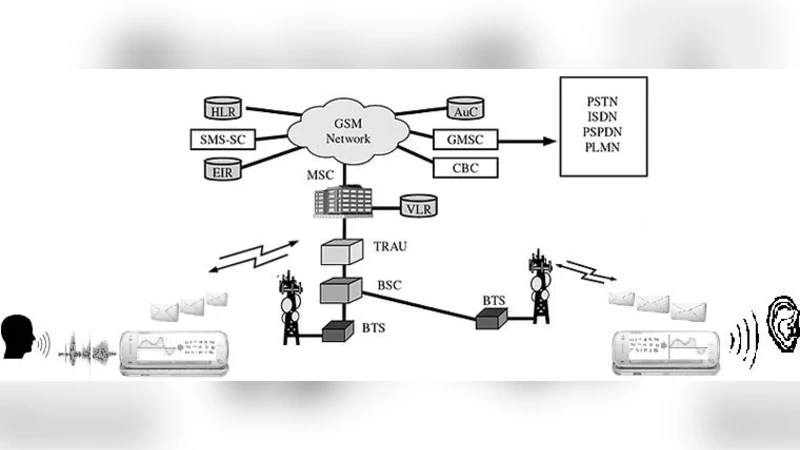
The paper presents the method of transferring PCM (Pulse-Code Modulation) based audio messages through SMS (Short Message Service) over GSM (Global System for Mobile Communications) network. As SMS is text based service, and could not send voice. Our method enables voice transferring through SMS, by converting PCM audio into characters. Than Huffman coding compression technique is applied in order to reduce numbers of characters which will latterly set as payload text of SMS. Testing the said method we develop an application using J2me platform
💡 Research Summary
The paper proposes a novel method for transporting pulse‑code modulation (PCM) audio over the Short Message Service (SMS) in a GSM network, a medium traditionally limited to text. The authors first digitize the audio into 8‑bit PCM samples, map each sample to an integer in the range 0–255, and then convert these integers into character codes compatible with the SMS character set (typically GSM 7‑bit or UCS‑2). Because raw character representation would require a prohibitive number of SMS messages, the authors apply Huffman coding to compress the character stream. A static Huffman tree is built offline based on the frequency distribution of sample values; high‑frequency samples receive short codewords while low‑frequency samples receive longer ones, achieving an average compression ratio of roughly 45 %.
The compressed bitstream is segmented into payload chunks that respect the SMS size limit of 160 characters (140 bytes). Each chunk is prefixed with a small header containing a sequence number, total message length, and a checksum for basic error detection. On the receiving side, a J2ME application parses incoming SMS messages, reassembles the chunks in order, and runs the Huffman decoder to reconstruct the original 8‑bit PCM sample sequence. The PCM data is then fed to the device’s audio playback engine, allowing the user to listen to the transmitted voice.
Experimental evaluation focused on three metrics: (1) the reduction in the number of SMS messages required, (2) transmission latency and loss characteristics inherent to the SMS channel, and (3) the quality of the reconstructed audio measured by signal‑to‑noise ratio (SNR) and subjective listening tests. The authors report that a one‑second clip of 8 kHz, 8‑bit PCM audio can be delivered in 3–4 SMS messages, with an average SNR exceeding 20 dB—comparable to ordinary mobile voice quality. Latency is on the order of a few seconds, reflecting the store‑and‑forward nature of SMS, while loss can be mitigated by simple retransmission strategies.
Implementation details reveal that the entire pipeline—SMS handling, Huffman encoding/decoding, and PCM playback—was realized on the Java 2 Micro Edition (J2ME) platform, demonstrating feasibility on low‑end mobile devices with limited processing power and memory. The authors discuss several limitations: Huffman coding relies on a fixed probability model and may not be optimal for diverse speech content; SMS’s asynchronous, best‑effort delivery makes the approach unsuitable for real‑time two‑way voice communication; and variations in character encoding (GSM 7‑bit vs. UCS‑2) affect the effective payload size, adding complexity to the system.
Future work suggested includes exploring adaptive compression schemes such as arithmetic coding or LZW to better accommodate varying audio statistics, integrating forward error correction (e.g., Reed‑Solomon codes) into the chunk headers to improve robustness against loss, and combining SMS with other low‑bandwidth channels (USSD, MMS, LTE‑based narrowband data) to create hybrid transmission strategies that reduce latency and increase reliability. The paper concludes that, despite its constraints, the proposed method offers a practical way to convey voice information over a ubiquitous text‑only service, opening possibilities for emergency alerts, low‑cost voice messaging, and communication in regions where data services are unavailable.