Modelling opinion formation driven communities in social networks
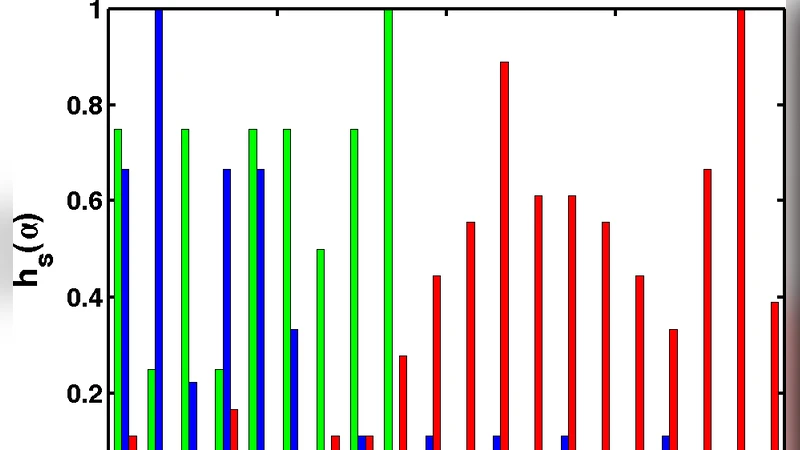
In a previous paper we proposed a model to study the dynamics of opinion formation in human societies by a co-evolution process involving two distinct time scales of fast transaction and slower network evolution dynamics. In the transaction dynamics we take into account short range interactions as discussions between individuals and long range interactions to describe the attitude to the overall mood of society. The latter is handled by a uniformly distributed parameter $\alpha$, assigned randomly to each individual, as quenched personal bias. The network evolution dynamics is realized by rewiring the societal network due to state variable changes as a result of transaction dynamics. The main consequence of this complex dynamics is that communities emerge in the social network for a range of values in the ratio between time scales. In this paper we focus our attention on the attitude parameter $\alpha$ and its influence on the conformation of opinion and the size of the resulting communities. We present numerical studies and extract interesting features of the model that can be interpreted in terms of social behaviour.
💡 Research Summary
The paper introduces a co‑evolutionary model of opinion dynamics and network restructuring that operates on two distinct time scales: a fast “transaction” phase in which individuals exchange opinions, and a slower “network evolution” phase in which the social graph is rewired in response to opinion changes. In the transaction phase each agent i holds a continuous opinion variable x_i(t). The update rule combines a short‑range term that reflects direct discussions with neighboring agents and a long‑range term that captures the agent’s attitude toward the overall mood of society. The long‑range influence is modulated by a quenched personal bias α_i, drawn independently from a uniform distribution on
Comments & Academic Discussion
Loading comments...
Leave a Comment