Radio Searches of Fermi LAT Sources and Blind Search Pulsars: The Fermi Pulsar Search Consortium
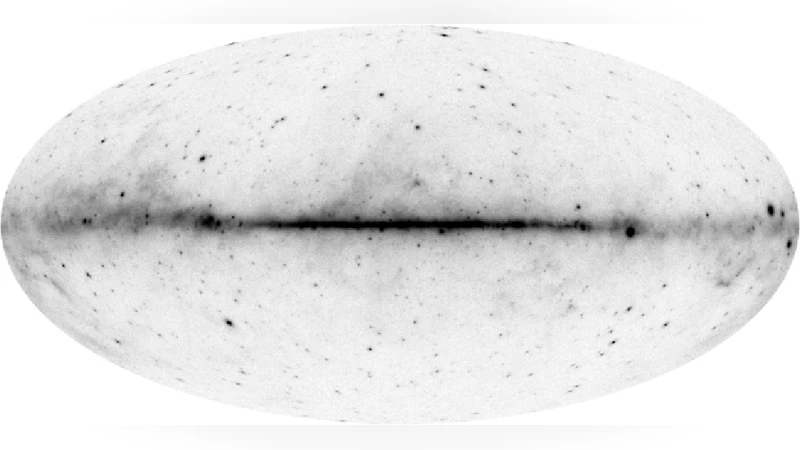
We present a summary of the Fermi Pulsar Search Consortium (PSC), an international collaboration of radio astronomers and members of the Large Area Telescope (LAT) collaboration, whose goal is to organize radio follow-up observations of Fermi pulsars and pulsar candidates among the LAT gamma-ray source population. The PSC includes pulsar observers with expertise using the world’s largest radio telescopes that together cover the full sky. We have performed very deep observations of all 35 pulsars discovered in blind frequency searches of the LAT data, resulting in the discovery of radio pulsations from four of them. We have also searched over 300 LAT gamma-ray sources that do not have strong associations with known gamma-ray emitting source classes and have pulsar-like spectra and variability characteristics. These searches have led to the discovery of a total of 43 new radio millisecond pulsars (MSPs) and four normal pulsars. These discoveries greatly increase the known population of MSPs in the Galactic disk, more than double the known population of so-called `black widow’ pulsars, and contain many promising candidates for inclusion in pulsar timing arrays.
💡 Research Summary
The Fermi Pulsar Search Consortium (PSC) was created to coordinate radio follow‑up of γ‑ray sources identified by the Large Area Telescope (LAT) on board the Fermi spacecraft. By pooling observing time on the world’s largest radio facilities—including Arecibo, Green Bank, Parkes, Effelsberg, and others—the consortium achieved full‑sky coverage and could exploit LAT’s precise source localizations, spectral hardness, and low variability to select the most promising pulsar candidates.
First, the PSC targeted the 35 pulsars discovered through blind frequency searches of LAT data. Although these objects were initially classified as “radio‑quiet” because no radio pulsations had been found, the consortium performed deep integrations, typically 30 minutes to several hours per source, across a wide frequency range (350 MHz–2 GHz). This effort yielded radio pulsations from four of the 35 LAT‑discovered pulsars, confirming that many “radio‑quiet” γ‑ray pulsars simply emit very weak radio beams that require high sensitivity and long dwell times to detect.
Second, the consortium embarked on a systematic survey of more than 300 LAT sources lacking firm associations with known γ‑ray classes but exhibiting pulsar‑like spectra and steady fluxes. By prioritizing hard‑spectrum, low‑variability objects and using multi‑frequency observing strategies, the PSC maximized detection efficiency. The campaign resulted in the discovery of 47 new pulsars: 43 millisecond pulsars (MSPs) and four ordinary, longer‑period pulsars. Notably, the MSP haul more than doubled the known population of Galactic‑disk MSPs and increased the number of so‑called “black‑widow” systems—binary MSPs with very low‑mass companions—by over a factor of two.
The newly identified MSPs exhibit high rotational stability and low timing noise, making many of them immediate candidates for inclusion in pulsar timing arrays (PTAs). Their addition will improve PTA sensitivity to nanohertz gravitational waves and enhance studies of the Galactic gravitational wave background, interstellar medium turbulence, and solar system ephemerides.
The paper also emphasizes that a substantial fraction of LAT‑detected pulsars remain radio‑silent even after deep searches, underscoring the need for next‑generation facilities such as the Square Kilometre Array (SKA) to push detection limits further. The authors conclude that coordinated multi‑wavelength campaigns—combining LAT γ‑ray data with deep radio observations—are essential for a comprehensive census of the Galactic pulsar population and for advancing our understanding of pulsar emission physics, binary evolution, and high‑energy astrophysics.