Mechanical state, material properties and continuous description of an epithelial tissue
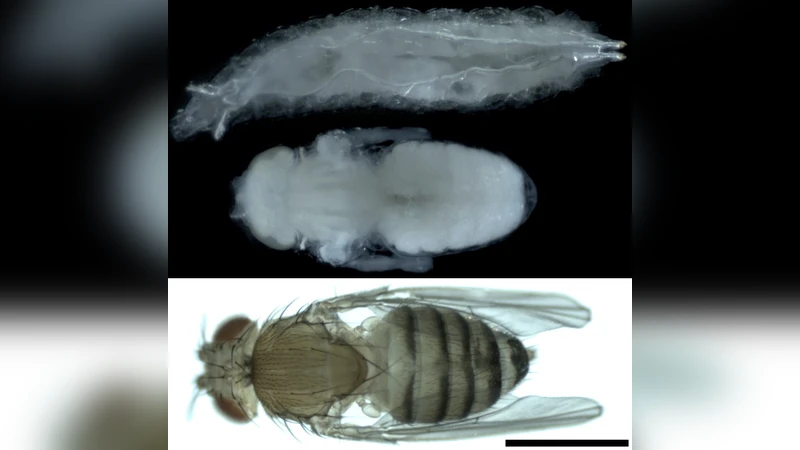
During development, epithelial tissues undergo extensive morphogenesis based on coordinated changes of cell shape and position over time. Continuum mechanics describes tissue mechanical state and shape changes in terms of strain and stress. It accounts for individual cell properties using only a few spatially averaged material parameters. To determine the mechanical state and parameters in the Drosophila pupa dorsal thorax epithelium, we sever in vivo the adherens junctions around a disk-shaped domain comprising typically hundred cells. This enables a direct measurement of the strain along different orientations at once. The amplitude and anisotropy of the strain increase during development. We also measure the stress to viscosity ratio and similarly find an increase in amplitude and anisotropy. The relaxation time is of order of ten seconds. We propose a space-time, continuous model of the relaxation. Good agreement with experimental data validates the description of the epithelial domain as a continuous, linear, visco-elastic material. We discuss the relevant time and length scales. Another material parameter, the ratio of external friction to internal viscosity, is estimated by fitting the initial velocity profile. Together, our results contribute to quantify forces and displacements, and their time evolution during morphogenesis.
💡 Research Summary
This paper investigates how an epithelial sheet remodels during Drosophila pupal development by treating the tissue as a continuous visco‑elastic material. The authors devised an in‑vivo “junction severing” experiment: they ablate the adherens junctions surrounding a roughly circular domain that contains on the order of one hundred cells. The sudden release of inter‑cellular tension allows the domain to relax freely, and high‑speed imaging captures the resulting deformation along multiple orientations simultaneously. By quantifying strain as a function of time and direction, they find that both the magnitude and anisotropy of strain increase as development proceeds, indicating that the tissue progressively stores larger, direction‑dependent stresses.
To extract mechanical parameters, the authors relate the measured strain rates to stress through a simple linear visco‑elastic constitutive law, obtaining a stress‑to‑viscosity ratio that likewise grows in amplitude and anisotropy. The relaxation time of the domain is consistently around ten seconds, suggesting that viscous flow dominates the dissipation of elastic energy on this timescale.
A continuum model is then constructed: a two‑dimensional linear visco‑elastic equation supplemented by an external friction term proportional to velocity. The key material parameters are the elastic modulus (E), the shear viscosity (η), and the ratio of external friction to internal viscosity (γ/η). By fitting the initial velocity profile of the relaxing domain, the authors estimate γ/η, which quantifies how strongly the tissue is coupled to surrounding fluid or substrate. Numerical integration of the model reproduces the experimentally observed strain, stress, and velocity fields with high fidelity, validating the description of the epithelial patch as a linear visco‑elastic continuum.
The paper also discusses the relevant spatial and temporal scales. The domain diameter (hundreds of micrometers) is much larger than individual cell size (~10 µm), justifying the continuum approximation. The ten‑second relaxation time matches the characteristic timescale of cytoskeletal remodeling (actin‑myosin turnover) within cells. The anisotropic evolution of mechanical parameters reflects coordinated cellular rearrangements that drive morphogenesis.
Overall, the study provides (1) a novel experimental platform for simultaneous multi‑directional strain measurement in living tissue, (2) a quantitative framework for extracting averaged material properties from those measurements, and (3) a validated continuum model that links cellular‑scale forces to tissue‑scale shape changes. These insights advance our ability to quantify the forces and displacements that underlie epithelial morphogenesis and offer a methodological template applicable to other developmental and regenerative systems.
Comments & Academic Discussion
Loading comments...
Leave a Comment