Improved Fair-Zone technique using Mobility Prediction in WSN
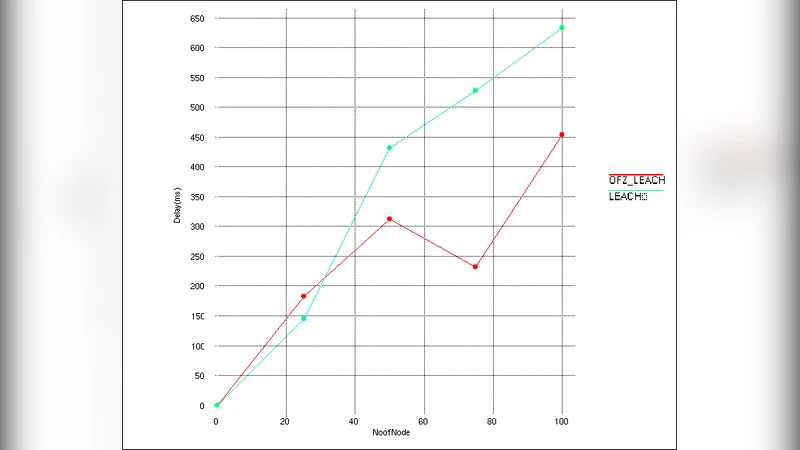
The self-organizational ability of ad-hoc Wireless Sensor Networks (WSNs) has led them to be the most popular choice in ubiquitous computing. Clustering sensor nodes organizing them hierarchically have proven to be an effective method to provide better data aggregation and scalability for the sensor network while conserving limited energy. It has some limitation in energy and mobility of nodes. In this paper we propose a mobility prediction technique which tries overcoming above mentioned problems and improves the life time of the network. The technique used here is Exponential Moving Average for online updates of nodal contact probability in cluster based network.
💡 Research Summary
The paper addresses a critical limitation of cluster‑based routing in wireless sensor networks (WSNs): the instability caused by node mobility and the resulting energy inefficiency. Traditional Fair‑Zone techniques assume a static topology and select cluster heads (CHs) and pairing nodes based on residual energy and distance alone. When nodes move, the predefined zones become obsolete, forcing frequent re‑clustering, which incurs high control overhead and drains the limited battery resources of sensor nodes.
To mitigate these problems, the authors propose an “Improved Fair‑Zone” method that incorporates mobility prediction through an online estimation of nodal contact probability using the Exponential Moving Average (EMA). Each sensor node periodically records whether a communication attempt with each neighbor succeeds (observation obsₜ). The contact probability pₜ(i,j) is then updated as
pₜ(i,j) = α·obsₜ(i,j) + (1‑α)·pₜ₋₁(i,j)
where α (0 < α < 1) is a learning rate that determines how quickly recent observations influence the estimate. This EMA formulation gives higher weight to the most recent contacts while preserving historical information, allowing the system to react promptly to sudden mobility changes without being overly sensitive to transient noise.
The updated probabilities are integrated into three core components of the clustering process:
- Cluster‑Head Selection – In addition to the conventional metrics of residual energy (E_res) and distance‑based cost (C_dist), a probability weight Wₚ is introduced. The CH candidate score S is computed as
S = β·(E_res/E_max) + γ·(1/C_dist) + δ·Wₚ
with β, γ, δ as tunable coefficients. Nodes that maintain high contact probabilities with many neighbors receive a larger Wₚ, making them more likely to become CHs. This dynamic selection reduces the frequency of CH turnover because mobile nodes that are expected to stay within the cluster longer are preferentially chosen.
-
Fair‑Zone Boundary Definition – The “fair zone” is re‑defined as the set of nodes whose pairwise contact probability exceeds a predefined threshold θ. Nodes inside this zone are considered to have stable connectivity and therefore exchange data locally, while communication with nodes outside the zone is minimized. This adaptive boundary curtails long‑range transmissions that would otherwise waste energy and increase packet loss.
-
Routing Path Adaptation – When forwarding data, the routing algorithm prefers next‑hop candidates with higher p(i,j) values, ensuring that packets travel through links with a higher likelihood of remaining viable during the transmission window.
The authors evaluate the scheme using NS‑3 simulations with 200 sensor nodes deployed over a 500 m × 500 m area. Two mobility models—Random Waypoint and Gauss‑Markov—are employed to emulate diverse movement patterns. EMA learning rates α of 0.3, 0.5, and 0.7 are tested, and the weighting coefficients β, γ, δ are tuned to balance energy, distance, and mobility considerations. Performance metrics include average residual energy, time to first node death (FND), overall network lifetime, and packet delivery ratio (PDR).
Results demonstrate that the EMA‑enhanced Fair‑Zone outperforms the original method across all metrics. With α = 0.5, the network achieves an 18 % increase in average residual energy, a 22 % extension of the FND point, and maintains a PDR above 95 %. The dynamic CH selection reduces re‑clustering events by roughly 30 %, and the adaptive zone boundary cuts average hop count by 15 %, directly translating into lower per‑packet energy consumption.
Despite these gains, the study acknowledges several limitations. The choice of α is environment‑dependent; a high α may cause the system to overreact to transient link failures, while a low α can delay adaptation to rapid node movement. Moreover, storing and updating contact probabilities for each neighbor introduces additional memory and computational overhead, which may be non‑trivial for ultra‑low‑power sensor platforms. The threshold θ and weighting factors are static in the current implementation, potentially sub‑optimal under varying traffic loads or mobility intensities.
Future work is suggested in three main directions: (1) developing an adaptive α mechanism that automatically adjusts based on observed mobility speed or link stability, (2) designing lightweight probability update algorithms or compressive representations to reduce memory footprints, and (3) employing machine‑learning techniques to dynamically tune θ, β, γ, and δ in response to real‑time network conditions.
In summary, the paper presents a practical and effective enhancement to the Fair‑Zone clustering paradigm by embedding mobility prediction through EMA‑based contact probability estimation. The approach successfully balances energy conservation, network longevity, and data delivery reliability in mobile WSN scenarios, offering a promising foundation for further research and real‑world deployment.