Do we have a Theory of Early Universe Cosmology?
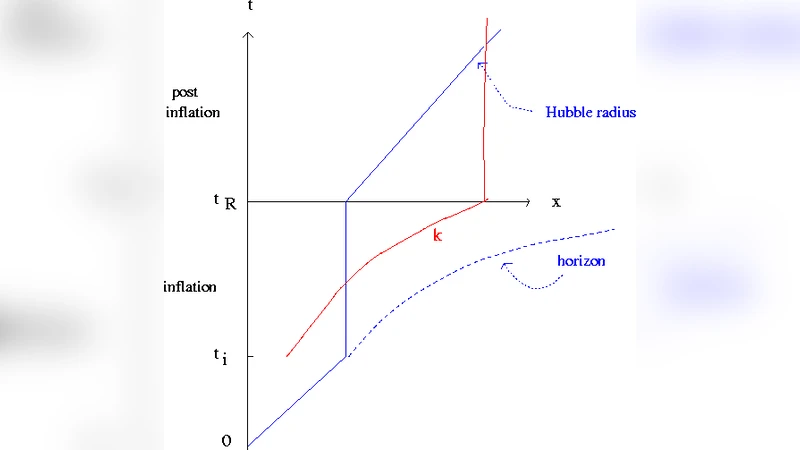
The inflationary scenario has become the paradigm of early universe cosmology, and - in conjuction with ideas from superstring theory - has led to speculations about an “inflationary multiverse”. From a point of view of phenomenology, the inflationary universe scenario has been very successful. However, the scenario suffers from some conceptual problems, and thus it does not (yet) have the status of a solid theory. There are alternative ideas for the evolution of the very early universe which do not involve inflation but which agree with most current cosmological observations as well as inflation does. In this lecture I will outline the conceptual problems of inflation and introduce two alternative pictures - the “matter bounce” and “string gas cosmology”, the latter being a realization of the “emergent universe” scenario based on some key principles of superstring theory. I will demonstrate that these two alternative pictures lead to the same predictions for the power spectrum of the observed large-scale structure and for the angular power spectrum of cosmic microwave background anisotropies as the inflationary scenario, and I will mention predictions for future observations with which the three scenarios can be observationally teased apart.
💡 Research Summary
The lecture begins by reviewing why cosmic inflation has become the dominant paradigm for early‑universe cosmology. A brief period of exponential expansion solves the flatness and horizon problems, and quantum fluctuations stretched to macroscopic scales generate a nearly scale‑invariant spectrum of scalar (density) perturbations and a small tensor (gravitational‑wave) component. These predictions match the observed temperature anisotropy spectrum of the cosmic microwave background (CMB) and the large‑scale distribution of galaxies. Despite this phenomenological success, the speaker points out several deep conceptual issues that prevent inflation from being regarded as a fully established theory. First, the “initial‑conditions problem” requires a highly special pre‑inflationary state; without a mechanism to generate such a state, inflation appears fine‑tuned. Second, the eternally inflating multiverse, while a logical consequence of many inflationary potentials, leads to a landscape of pocket universes that is essentially untestable, undermining the predictive power of the framework. Third, when the inflaton field approaches Planck‑scale energies, the effective field‑theory description breaks down, raising questions about the compatibility of inflation with a yet‑unknown quantum theory of gravity.
To address these shortcomings, the lecture introduces two non‑inflationary scenarios that nevertheless reproduce the same key observational signatures. The first is the “matter bounce” model. In this picture the universe undergoes a contracting phase dominated by pressureless matter, reaches a non‑singular bounce (often implemented via new physics that violates the null energy condition only briefly), and then expands into the hot big‑bang phase. During the matter‑dominated contraction, quantum vacuum fluctuations acquire a scale‑invariant spectrum; the bounce transmits these fluctuations to the expanding branch with only modest distortion. The resulting scalar power spectrum has the observed tilt (n_s≈0.96), while the tensor spectrum is predicted to be strongly suppressed (tensor‑to‑scalar ratio r≲10⁻³). Moreover, the bounce avoids the need for an initial singularity and does not rely on a finely tuned inflaton potential.
The second alternative is “string gas cosmology” (SGC), an implementation of the emergent‑universe idea rooted in fundamental aspects of superstring theory. In the very early universe all spatial dimensions are compact and filled with a thermal gas of fundamental strings. The T‑duality symmetry of string theory ensures that physics is invariant under the exchange of large and small radii, leading to a Hagedorn‑temperature phase where winding modes (strings wrapped around compact dimensions) and momentum modes are in thermal equilibrium. As the universe cools, winding modes annihilate in three dimensions, allowing those dimensions to expand while the others remain small. Thermal fluctuations of the string gas generate a nearly scale‑invariant spectrum of scalar perturbations, while the tensor spectrum acquires a slight blue tilt. SGC also naturally resolves the singularity problem because the Hagedorn phase replaces the classical big bang with a quasi‑static high‑temperature state.
Both the matter bounce and SGC reproduce the observed CMB temperature and polarization angular power spectra and the large‑scale structure power spectrum, matching inflation’s successes. However, they make distinct predictions that can be tested with upcoming experiments. The matter bounce typically predicts sizable local‑type non‑Gaussianity (f_NL of order a few to tens) and an extremely low r, whereas SGC predicts negligible non‑Gaussianity and a modest r (∼10⁻²) but a characteristic high‑frequency gravitational‑wave background with a blue spectrum. Future CMB polarization missions (CMB‑S4, LiteBIRD), space‑based interferometers (LISA, DECIGO), and 21 cm intensity‑mapping surveys (SKA) will be sensitive enough to discriminate among these possibilities.
In conclusion, while inflation remains the most empirically successful framework, its unresolved theoretical issues mean it cannot yet be called a complete theory of the early universe. The matter bounce and string gas cosmology provide viable, conceptually distinct alternatives that fit current data and offer clear, testable signatures for the next generation of cosmological observations. The lecture emphasizes that forthcoming high‑precision measurements will be decisive in determining which, if any, of these scenarios correctly describes the physics of the primordial cosmos.