Coexistence of Interacting Opinions in a Generalized Sznajd Model
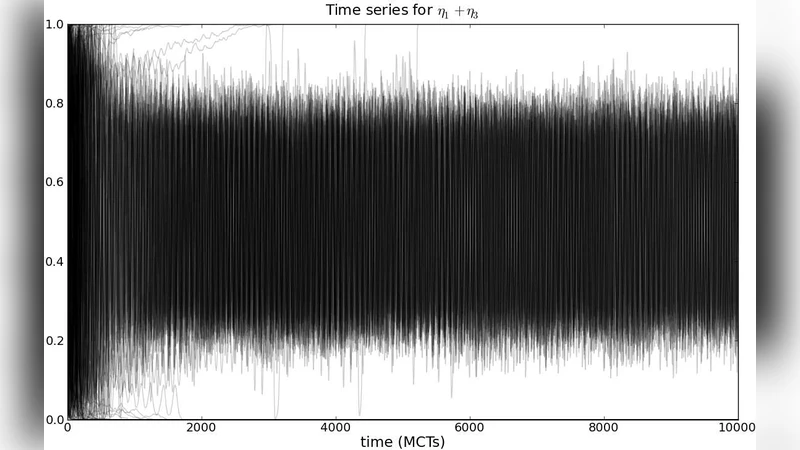
The Sznajd model is a sociophysics model that mimics the propagation of opinions in a closed society, where the interactions favour groups of agreeing people. It is based in the Ising and Potts ferromagnetic models and although the original model used only linear chains, it has since been adapted to general networks. This model has a very rich transient, that has been used to model several aspects of elections, but its stationary states are always consensus states. In order to model more complex behaviours we have, in a recent work, introduced the idea of biases and prejudices to the Sznajd model, by generalizing the bounded confidence rule that is common to many continuous opinion models. In that work we have found that the mean-field version of this model (corresponding to a complete network) allows for stationary states where non-interacting opinions survive, but never for the coexistence of interacting opinions. In the present work, we provide networks that allow for the coexistence of interacting opinions. Moreover, we show that the model does not become inactive, that is, the opinions keep changing, even in the stationary regime. We also provide results that give some insights on how this behaviour approaches the mean-field behaviour, as the networks are changed.
💡 Research Summary
The paper investigates a generalized version of the Sznajd model—a sociophysics framework where groups of agreeing agents convince their neighbors—by introducing explicit prejudice and bias parameters that turn the binary conviction rule into a full probability matrix pσ→σ′. In the original Sznajd model, regardless of the underlying network, the dynamics always end in a consensus (all agents share the same opinion). Earlier work by the authors showed that, in the mean‑field limit (complete graph), the generalized model can sustain stationary states where non‑interacting opinions coexist, but never where interacting opinions coexist.
To explore whether network topology can enable coexistence of interacting opinions, the authors focus on a specific four‑opinion setting that can be interpreted as two identical parties, each split into two factions. The transition probabilities are parameterized by three numbers (p, q, r) forming the rule R(p,q,r): p governs “forward” transitions within a party, q governs “cross‑party” transitions, and r governs direct swaps between opposite factions. In mean‑field analysis, r = 0 leads to two possible attractors (one party dominates), r ≠ 0 yields four consensus attractors, and no coexistence of interacting opinions is possible.
The authors then simulate the dynamics on Watts–Strogatz small‑world networks built from a 316 × 316 square lattice with periodic boundaries. By rewiring a fraction s of edges they control the average shortest‑path length ℓ, moving continuously from a regular lattice (large ℓ) to a random graph (small ℓ). Initial opinion distributions are drawn uniformly from the 4‑simplex (η₁,η₂,η₃,η₄) and assigned to nodes accordingly. The key simulation parameters are set to a strongly asymmetric confidence rule (e.g., p = 1, q = 0.1, r = 0).
Two qualitatively different stationary regimes emerge. In the “inactive” regime the system settles into a static configuration (either a consensus or a non‑interacting coexistence). In the “active” regime the fraction of agents holding a given opinion (e.g., η₁ + η₃) oscillates indefinitely. Time series show regular oscillations, and phase‑space projections (η₁ − η₃ versus η₂ − η₄) reveal a closed loop reminiscent of a limit cycle. The authors quantify the prevalence of this oscillatory regime as a function of the asymmetry parameters (p, q) and the rewiring probability s (or equivalently ℓ).
Key findings:
-
Asymmetry is essential – When p≈q the oscillatory regime disappears; a sufficient difference between forward and cross‑party transition probabilities is required.
-
Intermediate connectivity promotes oscillations – For very large ℓ (almost regular lattice) the system is too locally constrained to sustain a global limit cycle; for very small ℓ (highly rewired, approaching mean‑field) the basin of attraction of the limit cycle shrinks and most runs fall into static states. The maximal amplitude and highest probability of oscillations occur for ℓ≈20–30 (corresponding to modest rewiring).
-
Network topology matters – Repeating the same experiments on a Barabási–Albert scale‑free network (size 10⁵, minimal degree 5) yields almost no oscillatory runs, indicating that the presence of hubs drives the dynamics toward mean‑field behavior and eliminates the limit cycle.
The authors interpret the oscillatory regime as a dynamical attractor (limit cycle) whose size grows with rewiring, while its basin of attraction simultaneously contracts. They propose two possible mechanisms for the eventual disappearance of the oscillations as rewiring increases: (i) a collision between the limit cycle and the mean‑field fixed points, and (ii) a collapse of the basin of attraction so that typical initial conditions fall directly into a consensus attractor.
In conclusion, the generalized Sznajd model, when placed on networks with moderate small‑world properties and equipped with asymmetric confidence rules, can sustain long‑lived coexistence of interacting opinions manifested as persistent oscillations. This behavior is absent in the mean‑field limit and in highly heterogeneous networks, highlighting the crucial role of both topology and rule asymmetry in shaping collective opinion dynamics. The work thus extends the repertoire of sociophysics models beyond static consensus, offering a plausible mechanism for the continual flux of competing political factions observed in real societies.
Comments & Academic Discussion
Loading comments...
Leave a Comment