Functional quantum biology in photosynthesis and magnetoreception
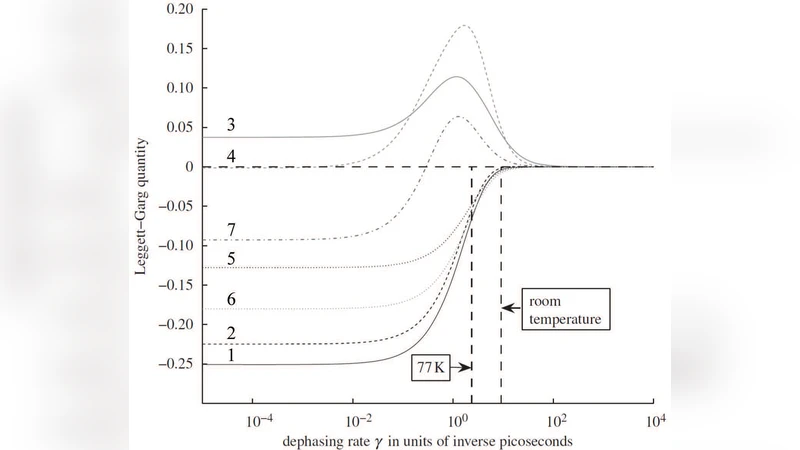
Is there a functional role for quantum mechanics or coherent quantum effects in biological processes? While this question is as old as quantum theory, only recently have measurements on biological systems on ultra-fast time-scales shed light on a possible answer. In this review we give an overview of the two main candidates for biological systems which may harness such functional quantum effects: photosynthesis and magnetoreception. We discuss some of the latest evidence both for and against room temperature quantum coherence, and consider whether there is truly a functional role for coherence in these biological mechanisms. Finally, we give a brief overview of some more speculative examples of functional quantum biology including the sense of smell, long-range quantum tunneling in proteins, biological photoreceptors, and the flow of ions across a cell membrane.
💡 Research Summary
The review tackles the long‑standing question of whether quantum mechanics plays a functional role in biology, focusing on two of the most promising systems: photosynthetic light‑harvesting complexes and animal magnetoreception. After a brief historical introduction, the authors summarize recent ultrafast spectroscopic studies that have revealed femtosecond‑scale electronic coherence in pigment‑protein assemblies such as the Fenna‑Matthews‑Olson (FMO) complex and reaction centers. Theoretical work suggests that such coherence could enable wave‑like energy transport, allowing excitations to sample multiple pathways simultaneously and thereby increase transfer efficiency. However, the coherence lifetimes measured at physiological temperature are extremely short, and quantitative assessments of their contribution to overall photosynthetic yield remain inconclusive.
The second major section reviews the radical‑pair mechanism proposed for avian and other animal magnetoreception. Here, photo‑induced electron‑spin pairs experience a tiny Zeeman splitting in Earth’s magnetic field, which modulates the singlet‑triplet interconversion rate and ultimately influences downstream chemical signaling. Experimental evidence from electron‑spin resonance and optical magnetic resonance indicates that spin coherence can persist for tens of microseconds, potentially long enough to be biologically relevant. Yet, the sensitivity of this process to thermal noise, decoherence, and molecular environment is still debated, and alternative models involving magnetic nanoparticles or ion‑channel modulation are also discussed.
The authors then briefly survey more speculative quantum‑biology proposals, including the quantum‑tunneling hypothesis for olfaction, long‑range electron tunneling in proteins, quantum effects in visual pigments, and quantum‑mediated ion transport across membranes. For each case, they note that experimental support is limited and that many claims rely heavily on theoretical plausibility rather than direct observation.
In conclusion, the paper acknowledges that genuine quantum coherence has been observed in several biological contexts, but the evidence that such coherence is essential for function is still lacking. The authors call for next‑generation experiments—single‑molecule time‑resolved measurements, controlled temperature studies, and integrated quantum‑classical modeling—to determine whether quantum effects are merely epiphenomena or truly exploited by living systems.
Comments & Academic Discussion
Loading comments...
Leave a Comment