Modeling the interactions of biomatter and biofluid
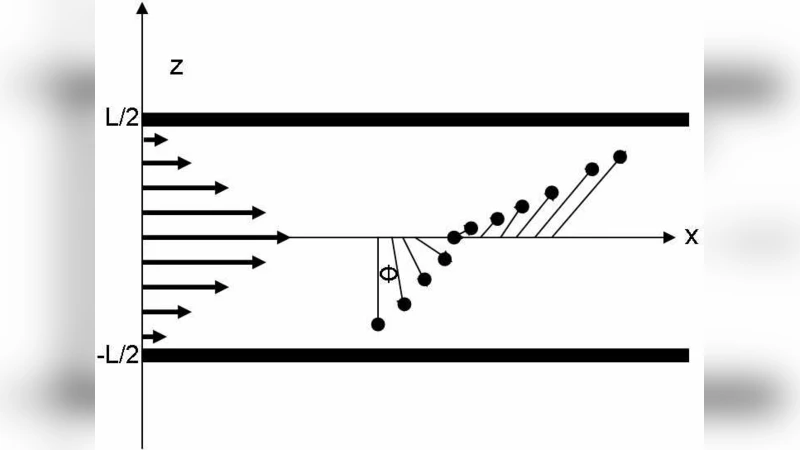
The internal motions of biomatter immersed in biofluid are investigated. The interactions between the fragments of biomatter and its surrounding biofluid are modeled using field theory. In the model, the biomatter is coupled to the gauge field representing the biofluid. It is shown that at non-relativistic limit various equation of motions, from the well-known Sine-Gordon equation to the simultaneous nonlinear equations, can be reproduced within a single framework.
💡 Research Summary
The paper presents a unified field‑theoretic framework for describing the internal dynamics of biomatter fragments immersed in a surrounding biofluid. The authors begin by noting that traditional models of biomolecular motion—typically based on classical spring‑mass systems or phenomenological friction terms—do not capture the full complexity of fluid‑matter coupling. To address this, they introduce a scalar field ϕ(x,t) to represent the biomatter (e.g., protein or DNA segments) and a gauge field Aμ(x,t) to represent the biofluid. The gauge field is interpreted as an effective description of fluid pressure (A0) and flow velocity (Ai), allowing the fluid’s mechanical properties to be incorporated directly into the Lagrangian.
The Lagrangian density is written in the familiar scalar‑gauge form
L = ½(Dμϕ)†(Dμϕ) − V(ϕ) − ¼FμνFμν + L_int,
where Dμ = ∂μ + igAμ is the covariant derivative, Fμν the field‑strength tensor, V(ϕ) a potential governing the intrinsic elasticity of the biomatter, and L_int an additional term designed to reproduce the low‑order Navier‑Stokes dynamics (viscosity, compressibility) of the fluid. By varying this action, two coupled nonlinear partial differential equations are obtained: one for the scalar field and one for the gauge field.
The authors then take the non‑relativistic limit, assuming that temporal variations of ϕ are slow compared to spatial variations and that the fluid velocities are much smaller than the speed of light. Under these approximations, the gauge field equations reduce to a form analogous to the continuity and Navier‑Stokes equations, while the scalar field equation becomes a generalized wave equation with a nonlinear source term that depends on the chosen potential V(ϕ).
Two illustrative cases are explored. First, when V(ϕ) is chosen as a sine‑Gordon potential, V(ϕ) = (μ⁴/β²)
Comments & Academic Discussion
Loading comments...
Leave a Comment