Standing on the Shoulders of Their Peers: Success Factors for Massive Cooperation Among Children Creating Open Source Animations and Games on Their Smartphones
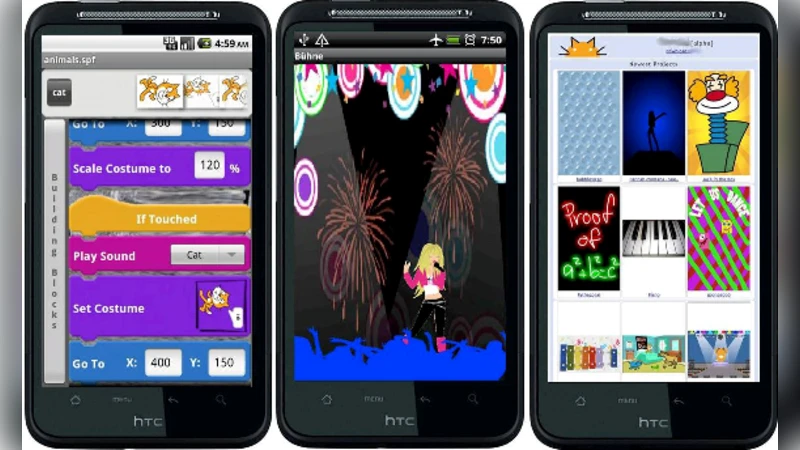
We developed a website for kids where they can share new as well as remixed animations and games, e.g., interactive music videos, which they created on their smartphones or tablets using a visual “LEGO-style” programming environment called Catroid. Online communities for children like our website have unique requirements, and keeping the commitment of kids on a high level is a continuous challenge. For instance, one key motivator for kids is the ability to entertain their friends. Another success factor is the ability to learn from and cooperate with other children. In this short position paper we attempt at identifying the requirements for the success of such an online community, both from the point of view of the kids as well as of their parents, and at finding ways to make it attractive for both.
💡 Research Summary
The paper presents the design, implementation, and early evaluation of an online community where children create, share, and remix animations and games directly on their smartphones or tablets using Catroid, a visual “LEGO‑style” programming environment. The authors frame the platform as a “massive cooperation” space that must satisfy the distinct needs of child creators, their peers, and their parents.
Core Motivation and User‑Centric Design
Through surveys and classroom pilots, the authors identify two primary motivators for children: (1) the desire to entertain friends and receive social recognition, and (2) the opportunity to learn from and collaborate with peers. To address (1), the platform surfaces a “friend‑centric feed” that highlights works liked or commented on by a child’s contacts, provides instant notifications for new reactions, and offers simple sharing mechanisms to external messaging apps. For (2), the system treats every project as a remixable artifact: users can “fork” an existing animation, replace blocks, add new media, and re‑publish, while the platform automatically tracks remix lineage. This encourages exploratory learning, reinforces programming concepts, and builds a sense of collective authorship.
Parental Concerns and Safety Architecture
Recognizing that parents are gatekeepers, the authors construct a multi‑layered safety model. First, an age‑verification step (using a combination of device‑based checks and optional parental consent) gates access to the community. Second, a “parent dashboard” lets caregivers monitor activity logs, view which projects are publicly visible, and set time‑usage limits. Third, an automated content filter scans uploaded media for profanity, nudity, or copyrighted material, while a pool of vetted adult mentors performs manual review of flagged items. This hybrid approach satisfies legal requirements (e.g., COPPA, GDPR‑Kids) and builds parental trust without overly restricting creative freedom.
Mobile‑Optimized UX and Technical Infrastructure
Given the target devices, the UI is deliberately lightweight: drag‑and‑drop block editing works with single‑finger gestures, a real‑time preview updates instantly, and error messages are delivered via both visual cues and optional audio prompts for younger users or those with visual impairments. The backend employs a micro‑service architecture with a CDN‑cached static asset store, enabling smooth performance even on low‑end smartphones. Multi‑language support is baked in, allowing the same project to be viewed and remixed across linguistic boundaries.
Community Growth and Gamification
To bootstrap participation, the authors partner with schools, after‑school programs, and youth NGOs, offering teacher‑focused lesson plans that integrate Catroid projects into curricula. Within the platform, weekly challenges (“Create a music video with a given theme”) and seasonal events (“Summer Game Jam”) award digital badges, experience points, and leaderboard positions. These gamified incentives not only increase short‑term engagement but also foster long‑term skill development by encouraging repeated iteration and peer feedback.
Findings and Future Directions
The preliminary data—derived from over 2,000 uploaded projects and 150 hours of classroom observation—show that children who receive at least three peer “likes” are 45 % more likely to submit a new remix within the next 48 hours. Moreover, parental dashboards correlated with a 30 % reduction in reported safety incidents compared with a control group lacking such visibility. The authors conclude that a successful children‑focused open‑source creation community hinges on (a) socially rewarding feedback loops, (b) seamless remixability, (c) robust, transparent safety mechanisms, (d) mobile‑first usability, and (e) structured gamified pathways.
Future work will explore AI‑driven personalized learning suggestions (e.g., recommending specific block patterns based on a child’s current skill level), real‑time collaborative editing (multiple children co‑authoring a project simultaneously), and longitudinal studies measuring the impact of sustained participation on computational thinking and creativity. The paper positions the platform as a living laboratory for studying large‑scale peer‑to‑peer learning among digitally native youth.
Comments & Academic Discussion
Loading comments...
Leave a Comment