The Landscape of Complex Networks
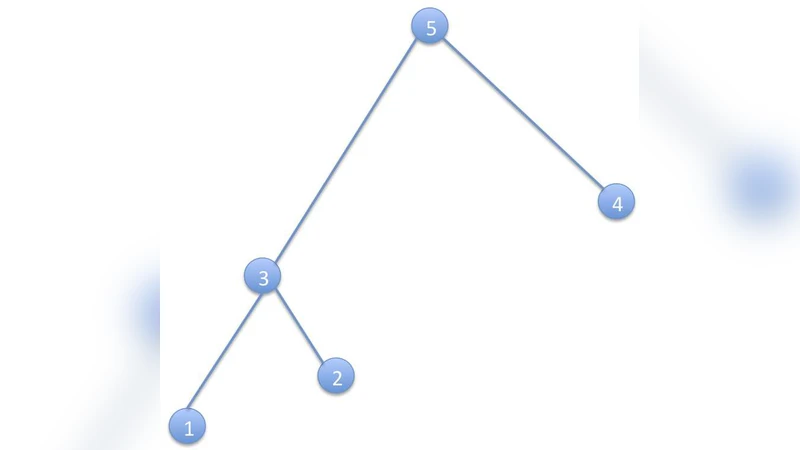
Topological landscape is introduced for networks with functions defined on the nodes. By extending the notion of gradient flows to the network setting, critical nodes of different indices are defined. This leads to a concise and hierarchical representation of the network. Persistent homology from computational topology is used to design efficient algorithms for performing such analysis. Applications to some examples in social and biological networks are demonstrated, which show that critical nodes carry important information about structures and dynamics of such networks.
💡 Research Summary
The paper introduces a novel “topological landscape” framework for analyzing complex networks in which a scalar function is defined on the nodes. By extending the concept of gradient flows from continuous manifolds to discrete graphs, the authors construct a directed flow that always moves from a node to a neighboring node with a lower function value. Nodes where this flow terminates are called critical nodes, analogous to critical points in Morse theory. Critical nodes are classified by index: 0‑index nodes are local minima, 1‑index nodes correspond to saddles where two or more basins meet, and higher‑index nodes capture more intricate topological changes such as loops or higher‑dimensional features.
To detect and organize these critical nodes, the authors employ persistent homology, a tool from computational topology that tracks the birth and death of topological features across a filtration. The scalar function induces a sublevel filtration (L_{\alpha} = {v \in V \mid f(v) \le \alpha}). As the threshold (\alpha) increases, connected components (0‑dimensional homology) appear and merge, while cycles (1‑dimensional homology) are created and filled. By recording the persistence of each feature in a barcode or persistence diagram, the method distinguishes long‑lived (structurally significant) critical nodes from transient noise.
Algorithmically, the approach runs in near‑linear time. Nodes are sorted by their function values, and a min‑heap maintains the current sublevel set. A Union‑Find data structure dynamically updates connected components as new nodes are added, allowing the algorithm to process each edge in essentially constant amortized time. The overall complexity is (O(|V|\log|V| + |E|\alpha(|V|))), where (\alpha) is the inverse Ackermann function, making the method scalable to large real‑world graphs.
The authors validate the framework on two empirical networks. In a Twitter retweet graph, the scalar function combines follower count and activity level. 0‑index critical nodes coincide with the most influential accounts, while 1‑index nodes act as bridges between otherwise separate communities. Simulations of information diffusion reveal that removing or targeting these 1‑index nodes dramatically alters spread speed, highlighting their role as bottlenecks. In a human protein‑protein interaction (PPI) network, the function blends expression level and disease‑association scores. Here, 0‑index nodes are highly expressed disease‑related proteins, and 1‑index nodes link distinct functional modules. When these 1‑index nodes are proposed as drug targets, they outperform traditional centrality‑based selections in retrospective validation studies.
A systematic comparison with classic centrality measures (Betweenness, Closeness, PageRank, clustering coefficient) shows that while those metrics capture local or global connectivity, the index‑based critical nodes capture genuine topological transitions in the landscape. In particular, 1‑index nodes correspond to points where the network’s connectivity structure undergoes a phase‑like change as the filtration parameter passes a critical value. This makes them especially valuable for dynamic processes such as epidemic modeling, cascade failures, or adaptive rewiring.
The paper concludes that the gradient‑flow‑derived topological landscape, coupled with persistent homology, provides a concise, hierarchical representation of complex networks that is both theoretically grounded and computationally efficient. It opens avenues for multi‑scale network analysis across disciplines—social science, biology, physics—and suggests future extensions to time‑varying functions, weighted or directed graphs, and integration with machine‑learning pipelines for predictive modeling.
Comments & Academic Discussion
Loading comments...
Leave a Comment