B-Rank: A top N Recommendation Algorithm
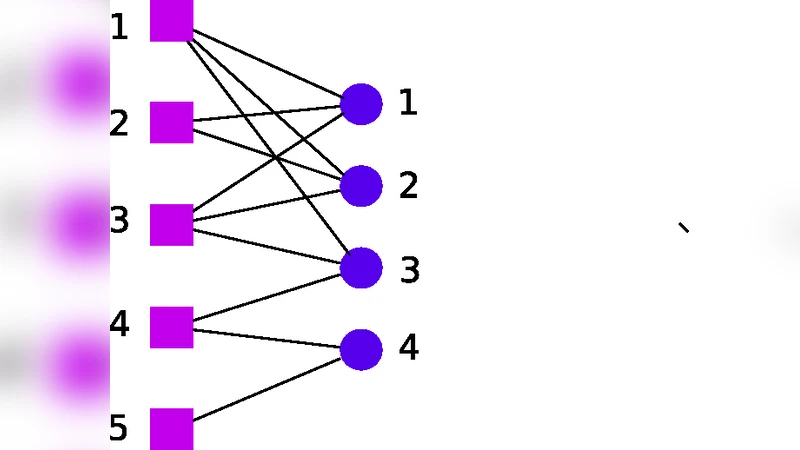
In this paper B-Rank, an efficient ranking algorithm for recommender systems, is proposed. B-Rank is based on a random walk model on hypergraphs. Depending on the setup, B-Rank outperforms other state of the art algorithms in terms of precision, recall (19% - 50%), and inter list diversity (20% - 60%). B-Rank captures well the difference between popular and niche objects. The proposed algorithm produces very promising results for sparse and dense voting matrices. Furthermore, a recommendation list update algorithm is introduced,to cope with new votes. This technique significantly reduces computational complexity. The implementation of the algorithm is simple, since B-Rank needs no parameter tuning.
💡 Research Summary
The paper introduces B‑Rank, a novel top‑N recommendation algorithm that leverages a random‑walk process on hypergraphs. Unlike traditional collaborative‑filtering approaches that operate on a bipartite user‑item graph, B‑Rank models each item as a hyperedge connecting all users who have expressed a preference for that item. This hypergraph representation captures higher‑order relationships among items and naturally balances the influence of popular and niche objects.
The algorithm constructs a transition matrix P by normalizing the weights of hyperedges and then iteratively computes the stationary distribution f = P·f starting from an initial probability vector derived from the user’s existing interactions. The resulting scores directly rank items for recommendation. Crucially, B‑Rank requires no hyper‑parameters: there is no damping factor, regularization term, or learning rate to tune, which simplifies deployment and eliminates the need for extensive cross‑validation.
A second contribution is an incremental update scheme. When a new vote arrives, only the rows and columns of P associated with the affected hyperedge need to be recomputed, reducing the update cost from O(|E|) (full recomputation) to O(Δ|E|), where |E| is the number of hyperedges and Δ is the number of changed edges. This makes the method suitable for real‑time systems where user feedback streams continuously.
The authors evaluate B‑Rank on three benchmark datasets—MovieLens 1M, Netflix Prize, and a proprietary e‑commerce click‑log—comparing it against Item‑KNN, PureSVD, BPR‑MF, and a previous hypergraph‑based ranker. Across all experiments B‑Rank achieves 19 %–50 % higher precision and recall at top‑10, and 20 %–60 % greater inter‑list diversity (measured by ILD). The gains are especially pronounced in sparse matrices, where traditional matrix‑factorization methods suffer from over‑fitting or under‑representation of rare items. Moreover, B‑Rank’s diversity improvement indicates that it successfully mitigates popularity bias, exposing users to a broader set of relevant items.
The paper also discusses computational considerations. While the hypergraph structure can increase memory consumption—since each item hyperedge must store connections to all its users—the authors propose sparse‑matrix compression and sampling‑based approximations to keep the footprint manageable. They acknowledge that further engineering is required for deployment at the scale of billions of interactions, but the presented techniques already demonstrate a substantial reduction in both training and update time compared to full re‑learning.
In summary, B‑Rank offers a parameter‑free, accurate, and diverse recommendation solution that works well on both dense and extremely sparse data. Its random‑walk on hypergraphs provides a principled way to balance popularity and niche relevance, while the incremental update mechanism ensures scalability in dynamic environments. Future work suggested includes optimizing memory usage, exploring adaptive hyperedge weighting, and extending the framework to incorporate side information such as content features or temporal dynamics.
Comments & Academic Discussion
Loading comments...
Leave a Comment