Rotating Stars and Revolving Planets: Bayesian Exploration of the Pulsating Sky
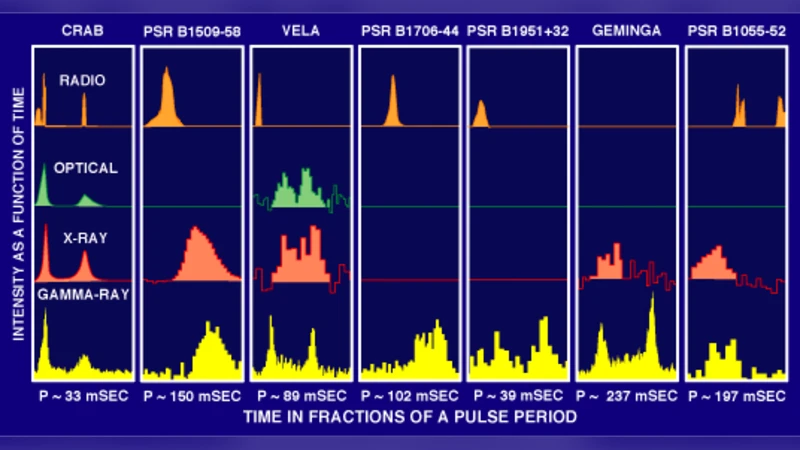
I describe ongoing work on development of Bayesian methods for exploring periodically varying phenomena in astronomy, addressing two classes of sources: pulsars, and extrasolar planets (exoplanets). For pulsars, the methods aim to detect and measure periodically varying signals in data consisting of photon arrival times, modeled as non-homogeneous Poisson point processes. For exoplanets, the methods address detection and estimation of planetary orbits using observations of the reflex motion “wobble” of a host star, including adaptive scheduling of observations to optimize inferences.
💡 Research Summary
The paper presents a unified Bayesian framework for analyzing two prominent classes of periodic astronomical phenomena: pulsars and exoplanets. For pulsars, photon arrival times are modeled as a non‑homogeneous Poisson point process. The Bayesian approach treats the rotation frequency, phase, and amplitude as random variables with explicit prior distributions (often log‑uniform or exponential). By marginalizing over nuisance parameters (amplitude and phase) the posterior density for the frequency becomes directly proportional to the periodogram, but unlike the frequentist treatment it yields a full probability distribution rather than a single p‑value. The authors employ Markov chain Monte Carlo (MCMC) and variational Bayes techniques to explore the highly multimodal posterior that naturally arises from the finite observation baseline (scale ~1/T). This multimodality reflects the many alias peaks that appear in traditional periodograms, but the Bayesian method quantifies the relative plausibility of each candidate frequency and provides Bayes factors for model comparison (signal vs. noise). Consequently, detection thresholds can be set in terms of posterior odds rather than arbitrary p‑value cut‑offs, and population‑level inference (e.g., the number of faint pulsars) can be performed using hierarchical models that incorporate detection probabilities derived from the marginal likelihoods.
For exoplanets, the observable is the stellar radial‑velocity “wobble” induced by orbiting planets. The underlying dynamics are described by a highly nonlinear Keplerian model with parameters such as planetary mass, orbital period, eccentricity, inclination, and argument of periastron. The paper adopts Bayesian inference to estimate these parameters, again specifying informative priors based on astrophysical knowledge. A key contribution is the application of Bayesian experimental design to schedule observations adaptively. At each step the current posterior is used to compute the expected information gain (or reduction in entropy) for a potential future observation time; the time that maximizes this expected gain is selected. This adaptive scheduling dramatically reduces the number of observations required to achieve a given precision on orbital parameters, as demonstrated through simulated data sets. Model comparison via Bayes factors also allows robust discrimination between single‑planet, multi‑planet, and no‑planet hypotheses, handling the severe non‑linearity and multimodality of the likelihood surface.
The paper also revisits the classic Lomb‑Scargle periodogram, showing that its Bayesian counterpart—obtained by marginalizing over amplitude and phase—produces a continuous probability density over frequency that naturally incorporates the correction for multiple testing (the “Bonferroni‑like” factor appears as the integral over the prior). This perspective clarifies the relationship between frequentist significance testing and Bayesian model selection, and it highlights the advantage of Bayesian methods for population‑level studies where detection uncertainties must be propagated.
Overall, the work argues that Bayesian statistics provide a coherent, principled alternative to traditional p‑value based methods for periodic signal detection in astronomy. By explicitly modeling prior information, handling multimodal posteriors, offering natural multiple‑testing corrections, and enabling adaptive observation strategies, the Bayesian framework enhances both the efficiency of data acquisition and the robustness of scientific conclusions in pulsar timing and exoplanet radial‑velocity studies.
Comments & Academic Discussion
Loading comments...
Leave a Comment