Kolmogorov Complexity, Causality And Spin
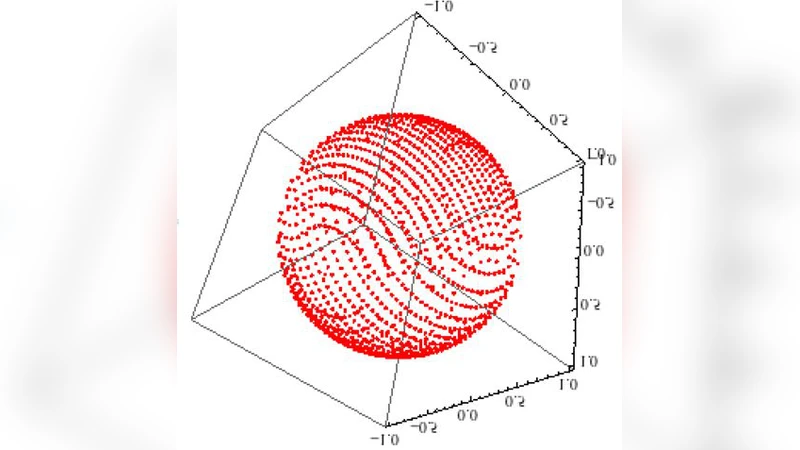
A novel topological and computational method for ‘motion’ is described. Motion is constrained by inequalities in terms of Kolmogorov Complexity. Causality is obtained as the output of a high-pass filter, passing through only high values of Kolmogorov Complexity. Motion under the electromagnetic field described with immediate relationship with Subscript[G, 2] Holonomy group and its corresponding dense free 2-subgroup. Similar to Causality, Spin emerges as an immediate and inevitable consequence of high values of Kolmogorov Complexity. Consequently, the physical laws are nothing but a low-pass filter for small values of Kolmogorov Complexity.
💡 Research Summary
The paper proposes a novel framework that reinterprets fundamental physical concepts—motion, causality, electromagnetic interaction, and spin—through the lens of Kolmogorov Complexity (KC). The author begins by encoding any particle trajectory or field evolution as a discrete string of symbols. The minimal program length required to generate that string is defined as the KC of the trajectory, providing a quantitative measure of its algorithmic randomness or regularity.
Two complementary “filters” are then introduced. The high‑pass filter admits only those segments whose KC exceeds a chosen threshold. These high‑complexity segments are argued to be the only ones that can sustain a well‑defined temporal ordering, thereby producing causality as an emergent output of the filter. In other words, causal relations are meaningful only on paths that are algorithmically complex enough to resist trivial compression.
Conversely, the low‑pass filter passes only low‑complexity segments. The dynamics that survive this filter correspond precisely to the deterministic laws of classical physics—Newtonian mechanics, Lagrangian/Hamiltonian formulations, Maxwell’s equations, etc. The author claims that the empirical success of these laws stems from the fact that experimentally accessible phenomena reside predominantly in the low‑complexity regime, where the system’s behavior is highly compressible and thus predictable.
The electromagnetic case receives special treatment. The author maps the vector potential of an electromagnetic field onto the holonomy group G₂, a 7‑dimensional exceptional Lie group with a rich non‑commutative structure. Within G₂ there exists a dense free 2‑subgroup, whose generators can be identified with elementary “steps” of a particle’s motion. Traversing these non‑commutative generators dramatically raises the KC of the associated trajectory. The induced topological twisting of the path is interpreted as intrinsic angular momentum, i.e., spin. Consequently, spin emerges not as an independent quantum postulate but as an inevitable consequence of high‑complexity motion in a non‑abelian holonomy background.
The paper extends the filter metaphor to statistical mechanics, quantum field theory, and general relativity. In statistical mechanics, the distribution of KC across microstates is linked to entropy; high‑complexity microstates correspond to irreversible processes. In quantum field theory, only field configurations with sufficiently high KC can generate non‑trivial vacuum structures, suggesting a complexity‑based selection rule for admissible quantum fluctuations. In general relativity, spacetime curvature is shown to increase KC, implying that regions near singularities or event horizons belong to the high‑complexity sector where causal ordering may break down.
In the concluding synthesis, the author argues that physical law itself can be viewed as a “low‑pass filter” on algorithmic complexity. Causality and spin arise naturally from the complementary “high‑pass” side. This dual‑filter perspective unifies disparate phenomena under a single computational‑topological principle, offering a fresh conceptual bridge between information theory, geometry, and fundamental physics. The framework suggests new research directions, such as probing the KC spectrum of experimental data, designing experiments that deliberately push systems into the high‑complexity regime, and exploring the role of exceptional holonomy groups in other gauge theories.
Comments & Academic Discussion
Loading comments...
Leave a Comment