Tensegrity and Motor-Driven Effective Interactions in a Model Cytoskeleton
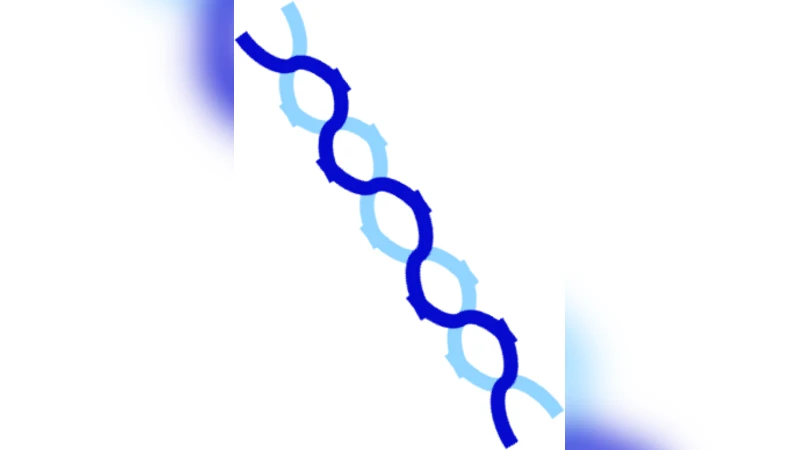
Actomyosin networks are major structural components of the cell. They provide mechanical integrity and allow dynamic remodeling of eukaryotic cells, self-organizing into the diverse patterns essential for development. We provide a theoretical framework to investigate the intricate interplay between local force generation, network connectivity and collective action of molecular motors. This framework is capable of accommodating both regular and heterogeneous pattern formation, arrested coarsening and macroscopic contraction in a unified manner. We model the actomyosin system as a motorized cat’s cradle consisting of a crosslinked network of nonlinear elastic filaments subjected to spatially anti-correlated motor kicks acting on motorized (fibril) crosslinks. The phase diagram suggests there can be arrested phase separation which provides a natural explanation for the aggregation and coalescence of actomyosin condensates. Simulation studies confirm the theoretical picture that a nonequilibrium many-body system driven by correlated motor kicks can behave as if it were at an effective equilibrium, but with modified interactions that account for the correlation of the motor driven motions of the actively bonded nodes. Regular aster patterns are observed both in Brownian dynamics simulations at effective equilibrium and in the complete stochastic simulations. The results show that large-scale contraction requires correlated kicking.
💡 Research Summary
This paper presents a comprehensive theoretical and computational framework for understanding the collective dynamics of actomyosin networks, which are central to cellular mechanics and morphogenesis. The authors model the cytoskeletal meshwork as a “motorized cat’s cradle”: a cross‑linked network of nonlinear elastic filaments (representing actin) whose nodes are bound by myosin motors. The distinctive feature of the model is the implementation of spatially anti‑correlated motor kicks: each motor simultaneously exerts equal‑magnitude forces on two adjacent cross‑links in opposite directions. This correlated activity injects energy in a non‑thermal, directed manner, thereby driving the system far from equilibrium while preserving a form of detailed balance when recast in terms of an effective free‑energy functional.
Mathematically, the dynamics are described by overdamped Langevin equations supplemented with stochastic kick terms. By averaging over the kick statistics and exploiting the anti‑correlation, the authors derive a modified Fokker‑Planck equation that can be interpreted as equilibrium dynamics in an altered potential landscape. The effective potential consists of the original filament elasticity (which is stiff under compression and soft under tension) plus additional interaction terms that encode the motor‑induced correlations. This mapping enables the use of equilibrium statistical‑mechanics tools to analyze a fundamentally active system.
The resulting phase diagram reveals three distinct regimes. (1) At low motor activity and high filament stiffness, the network behaves essentially as a passive gel; fluctuations are small and the structure remains close to its initial configuration. (2) At intermediate motor strength combined with moderate filament nonlinearity, the system undergoes arrested phase separation. Actomyosin condensates nucleate and grow, but the correlated kicks prevent unlimited coarsening, stabilizing finite‑size clusters. This provides a natural explanation for the persistent, mesoscale actomyosin condensates observed in vivo. (3) When motor kicks are strong and sufficiently correlated, a dramatic macroscopic contraction occurs, accompanied by the emergence of regular aster‑like patterns. Nodes converge toward common centers, producing radially symmetric structures that are reproduced both in Brownian‑dynamics simulations that assume effective equilibrium and in full stochastic simulations that retain the explicit kick dynamics.
Simulation studies validate the theory. Parameter sweeps show that decreasing the correlation coefficient of the kicks (approaching independent random kicks) eliminates large‑scale contraction, yielding only modest clustering. Conversely, increasing the correlation above a threshold (≈0.5 in the authors’ units) triggers rapid network collapse and aster formation. Varying filament nonlinearity tunes the sharpness of cluster boundaries, while altering cross‑link density controls the overall rigidity and the propensity for global contraction.
The authors discuss the biological relevance of these findings. Myosin motors in cells often engage multiple actin filaments simultaneously, effectively generating correlated pulling forces. The model demonstrates that such correlated activity is essential for the rapid, coordinated contractile events seen during cytokinesis, tissue morphogenesis, and wound healing. Moreover, the concept of an “effective equilibrium” provides a powerful lens for interpreting active matter: although the system is driven far from thermal equilibrium, its steady‑state statistics can be captured by a modified interaction potential that incorporates motor‑mediated correlations.
Finally, the paper outlines future directions. Experimental validation could involve micro‑fabricated actin‑myosin networks where motor activity and cross‑link density are precisely controlled, allowing direct measurement of kick correlations via high‑speed imaging. Extending the framework to three dimensions, incorporating filament turnover, and coupling to membrane mechanics would bring the model closer to the full complexity of living cells. Overall, this work bridges the gap between microscopic motor activity and emergent cytoskeletal architecture, offering a unified description of pattern formation, arrested coarsening, and large‑scale contraction in active biological gels.
Comments & Academic Discussion
Loading comments...
Leave a Comment