Emergence of robustness against noise: A structural phase transition in evolved models of gene regulatory networks
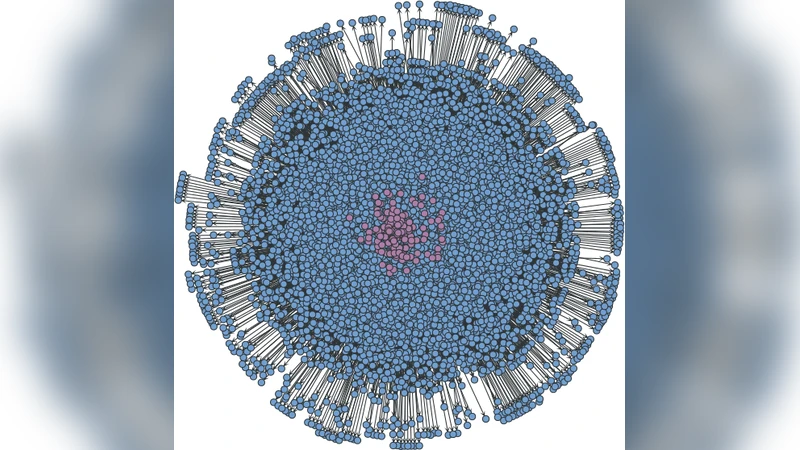
We investigate the evolution of Boolean networks subject to a selective pressure which favors robustness against noise, as a model of evolved genetic regulatory systems. By mapping the evolutionary process into a statistical ensemble and minimizing its associated free energy, we find the structural properties which emerge as the selective pressure is increased and identify a phase transition from a random topology to a “segregated core” structure, where a smaller and more densely connected subset of the nodes is responsible for most of the regulation in the network. This segregated structure is very similar qualitatively to what is found in gene regulatory networks, where only a much smaller subset of genes — those responsible for transcription factors — is responsible for global regulation. We obtain the full phase diagram of the evolutionary process as a function of selective pressure and the average number of inputs per node. We compare the theoretical predictions with Monte Carlo simulations of evolved networks and with empirical data for Saccharomyces cerevisiae and Escherichia coli.
💡 Research Summary
The paper investigates how Boolean networks (BNs) evolve under a selective pressure that favors robustness against transcriptional noise, providing a theoretical framework that links evolutionary dynamics to statistical mechanics. Each node in the network updates its state by a majority rule over its inputs, and each input is independently flipped with probability P at every time step, modeling stochastic transcriptional fluctuations. In the absence of noise the system has two homogeneous attractors (all‑0 or all‑1); with noise the fraction of nodes in the “error” state, b(t), evolves toward a steady‑state value b*. When b* reaches ½ the system loses memory of its initial condition and becomes ergodic; thus b* serves as a direct measure of robustness and is taken as the fitness function (f = −N b*).
Evolution is modeled as a large, constant‑size population in which offspring inherit the parental network topology but undergo mutations that randomly rewire connections (reversible, unbiased mutations). Survival probability follows a Boltzmann selection rule a ∝ e^{βf}, where β quantifies the strength of selection. This leads to a Gibbs‑type ensemble over all possible network topologies with partition function Z = ∑_i e^{−βN b*_i}. The average “energy” ⟨b*⟩ and entropy S = −∑_i π_i ln π_i define a free energy F = ⟨b*⟩ − S/β, whose minimization determines the most probable network structures at a given β.
To make the problem tractable, the authors introduce a stochastic block model with two blocks: a dense “core” and a sparse “periphery”. Macroscopic variables (average in‑degrees of core and periphery, intra‑ and inter‑block link probabilities) fully characterize the ensemble, allowing analytic expressions for both the error propagation b* and the entropy S. By inserting these into the free‑energy functional, they show that for low β the free energy is minimized by a random graph (no block structure), whereas above a critical β_c the optimal solution is a “segregated‑core” architecture: a small fraction of nodes (the core) is highly interconnected and exerts most of the regulatory influence on the rest of the network. The core’s size shrinks and its internal connectivity grows as β increases, while the average indegree ⟨k⟩ of the whole network remains fixed, reflecting a trade‑off between robustness and wiring cost.
Monte‑Carlo simulations of evolving BNs confirm the analytical predictions. As β is raised, networks undergo a sharp transition: the core fraction drops from O(1) to a few percent, core nodes acquire a markedly higher indegree, and the periphery becomes largely feed‑forward. The transition is continuous in the order parameters but displays a clear change in topology.
Finally, the authors compare their theoretical phase diagram with empirical data from the transcriptional regulatory networks of Saccharomyces cerevisiae and Escherichia coli. In both organisms, transcription factors constitute a small, densely connected subset that regulates the majority of target genes, matching the predicted segregated‑core structure. Quantitative measures (core‑to‑periphery size ratio, intra‑core link density) fall within the region of the phase diagram corresponding to high β, suggesting that natural selection for noise robustness may have driven the emergence of hierarchical regulatory architectures in real cells.
Overall, the study makes four major contributions: (1) it explicitly incorporates realistic transcriptional noise into a Boolean‑network evolutionary model; (2) it formulates the evolutionary steady state as a statistical‑mechanical ensemble, linking selection pressure to a free‑energy landscape; (3) it analytically identifies a structural phase transition from random to core‑periphery networks driven by β; and (4) it validates the theory with both computational simulations and biological data, offering a compelling explanation for the ubiquitous hierarchical organization of gene‑regulatory networks.
Comments & Academic Discussion
Loading comments...
Leave a Comment