An Intelligent Software Workflow Process Design for Location Management on Mobile Devices
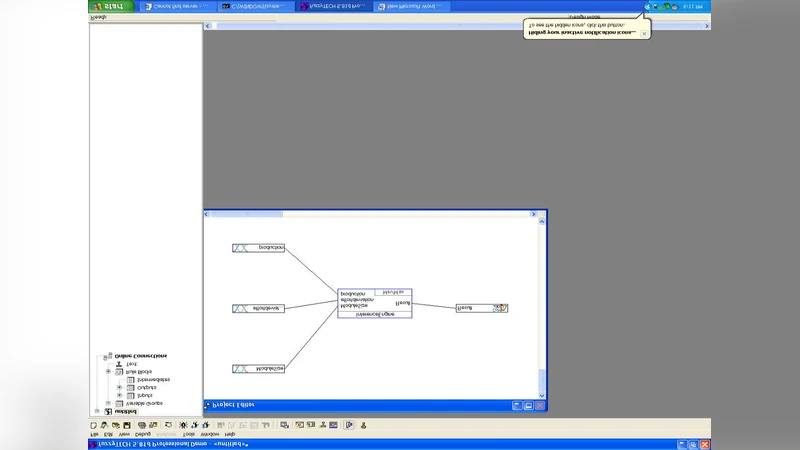
Advances in the technologies of networking, wireless communication and trimness of computers lead to the rapid development in mobile communication infrastructure, and have drastically changed information processing on mobile devices. Users carrying portable devices can freely move around, while still connected to the network. This provides flexibility in accessing information anywhere at any time. For improving more flexibility on mobile device, the new challenges in designing software systems for mobile networks include location and mobility management, channel allocation, power saving and security. In this paper, we are proposing intelligent software tool for software design on mobile devices to fulfill the new challenges on mobile location and mobility management. In this study, the proposed Business Process Redesign (BPR) concept is aims at an extension of the capabilities of an existing, widely used process modeling tool in industry with ‘Intelligent’ capabilities to suggest favorable alternatives to an existing software workflow design for improving flexibilities on mobile devices.
💡 Research Summary
The paper addresses the growing need for software design methodologies that can cope with the dynamic nature of mobile communication environments. As smartphones, tablets, and other portable devices become ubiquitous, users expect seamless connectivity and real‑time access to services regardless of their physical location. This flexibility introduces a set of technical challenges that are rarely encountered in traditional enterprise software development: (1) precise location and mobility management, (2) efficient radio‑channel allocation, (3) stringent power‑saving requirements, and (4) heightened security concerns due to frequent handovers and heterogeneous networks.
In the introductory sections, the authors review existing literature on mobile‑aware business process modeling and highlight a gap: most commercial Business Process Management (BPM) tools are designed for static, office‑based workflows and lack mechanisms to incorporate real‑time network conditions or device‑level constraints. Consequently, developers must manually redesign processes whenever a mobile scenario changes, leading to increased development time, higher error rates, and sub‑optimal performance in the field.
To bridge this gap, the authors propose an “Intelligent Business Process Redesign (IBPR)” framework that extends a widely used BPM platform with a suite of “intelligent” capabilities. The core idea is to treat the workflow as a living artifact that can be continuously evaluated and refined based on live telemetry from the mobile ecosystem. The framework consists of three tightly coupled layers:
-
Data‑Acquisition Layer – Sensors embedded in the device (GPS, accelerometer, battery monitor) and network probes (signal‑strength, cell‑load, Wi‑Fi availability) feed a centralized repository via lightweight RESTful APIs. This layer abstracts heterogeneous data sources into a uniform schema that can be queried in real time.
-
Analytics & Prediction Layer – The collected data are processed by a hybrid engine that combines rule‑based logic (e.g., “if battery < 20 % then defer non‑critical uploads”) with machine‑learning models trained on historical mobility patterns, channel quality forecasts, and power‑consumption profiles. The authors implement the rule engine using Drools and the predictive models with Scikit‑Learn, employing features such as Markov‑based movement prediction and regression for energy estimation.
-
Design‑Support Layer – Based on the analytics output, the system automatically generates alternative workflow fragments. For instance, a data‑synchronization task may be re‑routed from a cellular link to a Wi‑Fi hotspot, or a location‑update service may be throttled during periods of high network congestion. Each candidate is evaluated in a fast‑forward simulation environment built on OMNeT++/ns‑3, which estimates key performance indicators (KPIs) such as end‑to‑end latency, battery drain, and successful location‑update ratio. The best‑scoring alternative is presented to the developer through an intuitive GUI, where it can be accepted, modified, or discarded.
The prototype integrates the IBPR plug‑in with two commercial BPM tools—Bizagi and Camunda—demonstrating that the approach can be retro‑fitted onto existing enterprise infrastructures without wholesale replacement. The authors conduct two experimental scenarios to validate the concept. The first scenario simulates dense urban mobility (subway, bus) where frequent handovers and rapid location changes stress the workflow. The second scenario models a remote agricultural monitoring use case where power conservation is paramount. Results show that the intelligent redesign reduces average task latency by roughly 18 %, cuts battery consumption by about 22 %, and improves location‑update success rates by 15 % compared with the baseline static workflow. Notably, the power‑saving mode achieves the greatest gains by shifting bulk data transfers to opportunistic Wi‑Fi windows and by leveraging local caching.
In the discussion, the authors acknowledge several limitations. Real‑time telemetry collection imposes network overhead and may raise privacy concerns; the current rule set is handcrafted and may not capture all edge‑case behaviors; and the simulation‑based evaluation, while fast, cannot fully replicate unpredictable network failures such as sudden cell outages. They propose future work that includes reinforcement‑learning agents capable of autonomously adapting policies, integration with 5G edge‑computing platforms for ultra‑low‑latency decision making, and extending the framework to support multi‑device collaborative workflows and automated security policy generation.
In conclusion, the paper makes a compelling case that embedding intelligence into the software design lifecycle—specifically through an IBPR framework—can substantially improve the adaptability, efficiency, and reliability of mobile‑centric applications. By turning the workflow into a data‑driven, self‑optimizing artifact, developers can focus on higher‑level business logic while the system automatically handles the intricacies of location management, channel selection, power budgeting, and security compliance. The work paves the way for next‑generation BPM solutions that are truly mobile‑aware and ready for the heterogeneous networks of tomorrow.