Inhomogeneity of the phase space of the damped harmonic oscillator under Levy noise
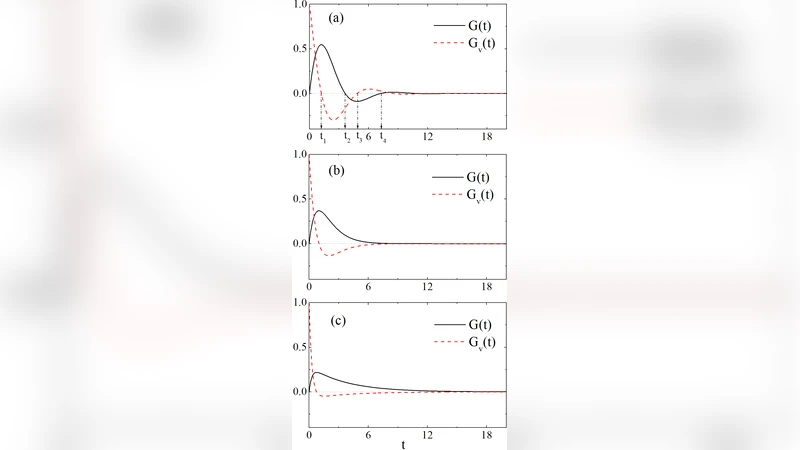
The damped harmonic oscillator under symmetric L'{e}vy white noise shows inhomogeneous phase space, which is in contrast to the homogeneous one of the same oscillator under the Gaussian white noise, as shown in a recent paper [I. M. Sokolov, W. Ebeling, and B. Dybiec, Phys. Rev. E \textbf{83}, 041118 (2011)]. The inhomogeneity of the phase space shows certain correlation between the coordinate and the velocity of the damped oscillator under symmetric L'{e}vy white noise. In the present work we further explore the physical origin of these distinguished features and find that it is due to the combination of the damped effect and heavy tail of the noise. We demonstrate directly this in the reduced coordinate $\tilde{x}$ versus velocity $\tilde{v}$ plots and identify the physics of the anti-association of the coordinate and velocity.
💡 Research Summary
The paper investigates the phase‑space structure of a damped harmonic oscillator driven by symmetric Lévy white noise, contrasting it with the well‑known Gaussian case. Starting from the Langevin equation
(\ddot{x} + \gamma \dot{x} + \omega_0^2 x = \xi_{\alpha}(t)),
where (\xi_{\alpha}(t)) is a symmetric α‑stable Lévy noise (0 < α ≤ 2), the authors solve the dynamics using the Green functions (G(t)) and (G_v(t)=\dot G(t)). The formal solutions are expressed as convolutions of the Green functions with the noise, and the integrals are discretized for numerical simulation. Lévy noise samples are generated with the Chambers‑Mallows‑Stuck algorithm, allowing the authors to produce a large ensemble of trajectories for various damping regimes (underdamped, critically damped, overdamped) and Lévy indices (α = 2, 1.5, 1.2, 0.8).
To reveal the geometry of the stochastic attractor, the authors introduce reduced variables (\tilde{x}=x/\sigma_x) and (\tilde{v}=v/\sigma_v), where (\sigma_x) and (\sigma_v) are the scale parameters of the marginal distributions. Scatter plots of ((\tilde{x},\tilde{v})) show that for Gaussian noise (α = 2) the points fill a circularly symmetric cloud, reflecting the independence of the two Gaussian variables. In stark contrast, for any α < 2 the cloud becomes markedly anisotropic: points concentrate along the quadrants where (\tilde{x}) and (\tilde{v}) have opposite signs, indicating a strong anti‑association between position and velocity. This effect intensifies as α decreases, i.e., as the noise tail becomes heavier.
Statistical analysis confirms the visual impression. The Pearson correlation coefficient between (\tilde{x}) and (\tilde{v}) is essentially zero for α = 2 but becomes increasingly negative for smaller α, reaching values around –0.6 for α = 0.8. Joint probability density functions (PDFs) computed via kernel density estimation reveal a Gaussian‑like core but fat tails that extend far along the anti‑correlated directions. The marginal PDFs retain the Lévy‑stable power‑law decay (|x|^{-(1+α)}) and (|v|^{-(1+α)}), while the joint PDF exhibits a pronounced ridge along (\tilde{x}\tilde{v}<0).
The authors attribute this inhomogeneity to the interplay of two mechanisms. First, the damping term (\gamma) rapidly erases memory of past dynamics, so a sudden large jump in the Lévy noise immediately dominates the state. Second, Lévy noise possesses a heavy tail, meaning that large jumps occur with non‑negligible probability. When such a jump occurs, the position variable jumps sharply, while the damping forces the velocity to respond in the opposite direction to restore equilibrium, producing the observed anti‑association. This effect is most evident in the overdamped regime, where the velocity relaxes quickly to near zero; a large noise impulse then forces the velocity to a sign opposite to the displacement. In the underdamped regime, the oscillator still oscillates, so the sign relationship oscillates in time, but the overall distribution remains skewed.
The paper concludes that the non‑uniform phase‑space of a damped oscillator under Lévy noise is not a trivial consequence of non‑Gaussian statistics; rather, it emerges from the coupling of heavy‑tailed forcing with the dissipative dynamics. This insight has implications for a broad class of systems where Lévy‑type fluctuations appear, such as transport in turbulent plasmas, financial markets with abrupt price jumps, and biological processes driven by bursty environmental noise. The authors suggest that future work could explore nonlinear potentials, colored Lévy noise, and the role of external periodic driving to further elucidate the rich phenomenology of Lévy‑driven dissipative systems.
Comments & Academic Discussion
Loading comments...
Leave a Comment