Fisher Matrix Preloaded -- Fisher4Cast
The Fisher Matrix is the backbone of modern cosmological forecasting. We describe the Fisher4Cast software: a general-purpose, easy-to-use, Fisher Matrix framework. It is open source, rigorously designed and tested and includes a Graphical User Interface (GUI) with automated LATEX file creation capability and point-and-click Fisher ellipse generation. Fisher4Cast was designed for ease of extension and, although written in Matlab, is easily portable to open-source alternatives such as Octave and Scilab. Here we use Fisher4Cast to present new 3-D and 4-D visualisations of the forecasting landscape and to investigate the effects of growth and curvature on future cosmological surveys. Early releases have been available at http://www.cosmology.org.za since May 2008 with 750 downloads in the first year. Version 2.2 is made public with this paper and includes a Quick Start guide and the code used to produce the figures in this paper, in the hope that it will be useful to the cosmology and wider scientific communities.
💡 Research Summary
Fisher4Cast is presented as a comprehensive, open‑source software framework for Fisher matrix forecasting in cosmology. Built primarily in MATLAB, the package is deliberately written to be portable to other high‑level numerical environments such as Octave and Scilab, ensuring accessibility for researchers who prefer free software ecosystems. The core design follows a modular architecture: users supply separate functions that encode the theoretical model (e.g., ΛCDM, wCDM, dynamical dark energy) and the observational probes (e.g., supernova distances, baryon acoustic oscillations, weak‑lensing shear, growth‑rate measurements). The main engine then assembles the Fisher information matrix by numerically differentiating the model predictions with respect to the chosen parameters. By default a central‑difference scheme is employed, but the framework allows the user to provide analytic derivatives for higher precision or to reduce computational cost.
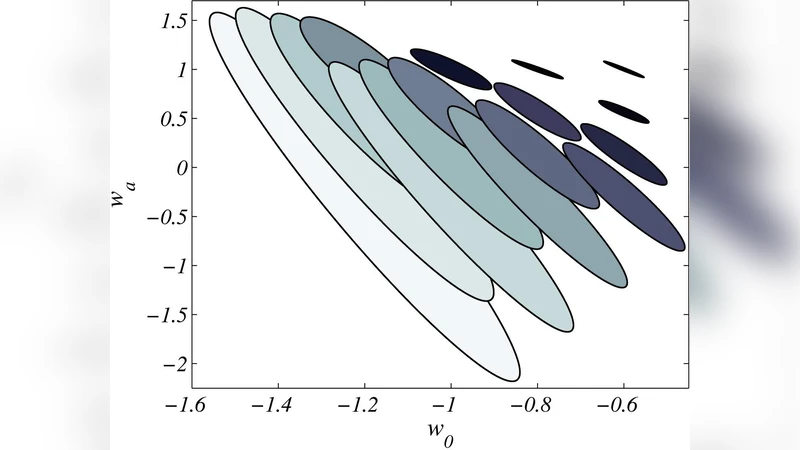
A standout feature of Fisher4Cast is its graphical user interface (GUI). The GUI provides sliders and text boxes for setting parameter ranges, prior distributions, and measurement uncertainties, enabling rapid prototyping of survey configurations without writing code. Once a pair (or higher‑dimensional set) of parameters is selected, the GUI instantly draws the corresponding 2‑D confidence ellipse. In addition, the package includes sophisticated 3‑D and 4‑D visualisation tools that render confidence surfaces as rotatable isocontour plots with transparency mapping. These visualisations make it possible to see how adding extra parameters—particularly the growth rate f(z) and curvature Ω_k—distorts the error ellipsoids, a capability that is difficult to convey with traditional 2‑D plots.
The authors emphasize reproducibility and robustness. Validation proceeds in two stages: first, simple test cases with analytically known Fisher matrices are reproduced to verify numerical accuracy; second, results are cross‑checked against earlier versions of Fisher4Cast and against published forecasts from other groups. All validation steps are integrated into a continuous‑integration pipeline, so any code change automatically triggers the test suite. The software also automatically generates LaTeX tables and figures, eliminating manual transcription errors when preparing manuscripts.
Using Fisher4Cast, the paper showcases novel three‑ and four‑dimensional visualisations of the “forecasting landscape.” For example, when curvature Ω_k is allowed to vary, the Ω_m–w_0 confidence region becomes markedly skewed, an effect that is clearly visible in the 3‑D rendering but would be hidden in a 2‑D projection. Incorporating the growth‑rate observable f(z) further tightens constraints on Ω_m at high redshift, illustrating how future surveys could gain discriminating power by measuring both geometry and growth simultaneously. These demonstrations underline the practical value of the higher‑dimensional visual tools for survey design and for communicating complex parameter degeneracies to a broader audience.
Version 2.2, released alongside the paper, adds a “Quick Start Guide” that walks a new user through generating a basic Fisher matrix in five lines of code, and it bundles the exact scripts used to produce every figure in the manuscript. This transparency enables other groups to replicate the results, modify the input assumptions, or extend the code to new probes such as intensity mapping or gravitational‑wave standard sirens.
Since its initial public release in May 2008, Fisher4Cast has been downloaded over 750 times in the first year, indicating strong uptake within the cosmology community. The authors argue that the combination of a user‑friendly GUI, high‑quality visualisation, automated LaTeX output, and open‑source portability makes Fisher4Cast a valuable infrastructure component for both seasoned cosmologists and newcomers. By lowering the technical barrier to performing Fisher forecasts, the package is poised to accelerate the planning and optimisation of next‑generation cosmological surveys, ultimately contributing to more precise measurements of dark energy, curvature, and the growth of cosmic structure.