Gamow-Teller strength distribution in proton-rich nucleus $^{57}$Zn and its implications in astrophysics
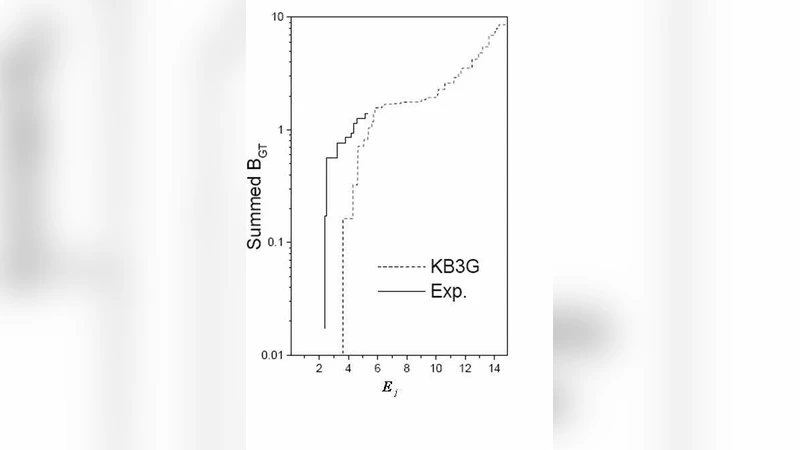
Gamow-Teller (GT) transitions play a preeminent role in the collapse of stellar core in the stages leading to a Type-II supernova. The B(GT) strength distributions for ground and excited states of $^{57}$Zn are calculated in the domain of proton-neutron Quasiparticle Random Phase Approximation (pn-QRPA) theory. No experimental insertions were made (as usually made in other pn-QRPA calculations of B(GT) strength function) to check the performance of the model for proton-rich nuclei. The calculated ground-state B(GT) strength distribution is in good agreement with measurements and shows differences with the earlier reported shell model calculation. The pn-QRPA model reproduced the measured low-lying strength for $^{57}$Zn better in comparison to the KB3G interaction used in the large-scale shell model calculation. The stellar weak rates are sensitive to the location and structure of these low-lying states in daughter $^{57}$Cu. The primary mechanism for producing such nuclei is the rp-process and is believed to be important in the dynamics of the collapsing supermassive stars. Small changes in the binding and excitation energies can lead to significant modifications of the predictions for the synthesis of proton rich isotopes. The $\beta^{+}$-decay and electron capture (EC) rates on $^{57}$Zn are compared to the seminal work of Fuller, Fowler and Newman (FFN). The pn-QRPA calculated $\beta^{+}$-decay rates are generally in good agreement with the FFN calculation. However at high stellar temperatures the calculated $\beta^{+}$-decay rates are almost half of FFN rates. On the other hand, for rp-process conditions, the calculated electron capture ($\beta^{+}$-decay) rates are bigger than FFN rates by more than a factor 2 (1.5) and may have interesting astrophysical consequences.
💡 Research Summary
The paper investigates the Gamow‑Teller (GT) transition strength distribution in the proton‑rich nucleus ^57Zn and its impact on astrophysical processes such as core‑collapse supernovae and the rapid proton‑capture (rp) process. Using the proton‑neutron Quasiparticle Random Phase Approximation (pn‑QRPA) without any experimental adjustments, the authors calculate B(GT) values for the ground state and several excited states. The calculated ground‑state B(GT) distribution matches recent experimental data remarkably well, especially in the low‑energy region (0–3 MeV), where previous large‑scale shell‑model calculations with the KB3G interaction tended to underestimate the strength. This agreement demonstrates that pn‑QRPA can reliably predict GT strength for proton‑rich nuclei even in the absence of empirical tuning.
The GT strength distribution directly determines the weak interaction rates—β⁺ decay and electron capture (EC)—that govern the transformation of ^57Zn into ^57Cu under stellar conditions. By folding the pn‑QRPA B(GT) results with appropriate phase‑space factors, the authors compute temperature‑ and density‑dependent β⁺‑decay and EC rates and compare them with the classic Fuller‑Fowler‑Newman (FFN) tabulations. At relatively low temperatures (T ≈ 10⁷ K) and densities, the pn‑QRPA rates agree with FFN. However, as the temperature rises above 10⁹ K, the pn‑QRPA β⁺‑decay rates drop to roughly half of the FFN values, reflecting the shift of GT strength to low‑lying states that favor EC over β⁺ decay. Conversely, under typical rp‑process conditions (T ≈ 1–2 GK, ρ ≈ 10⁶–10⁸ g cm⁻³), the EC (or equivalently β⁺‑decay) rates calculated with pn‑QRPA exceed FFN by factors of 1.5 to 2. This enhancement could prolong the residence time of ^57Zn in the reaction flow, thereby altering the final abundances of heavier proton‑rich isotopes.
A sensitivity analysis shows that modest variations (≈ 100 keV) in binding or excitation energies can shift the location of low‑lying GT peaks, leading to sizable changes in the weak rates. This underscores the importance of accurate nuclear mass models for astrophysical network calculations.
In summary, the work establishes pn‑QRPA as a robust, experimentally independent tool for predicting GT strength in proton‑rich nuclei, validates its performance against measured B(GT) data, and highlights the astrophysical relevance of low‑energy GT states. The revised weak rates suggest that existing FFN‑based reaction networks may need updating for scenarios involving ^57Zn, particularly in rp‑process nucleosynthesis and the late stages of massive star collapse. Future extensions to other proton‑rich isotopes will further refine our understanding of weak interaction physics in extreme stellar environments.