Recovery of 150-250 MeV/nuc Cosmic Ray Helium Nuclei Intensities Between 2004-2010 Near the Earth, at Voyager 2 and Voyager 1 in the Heliosheath - A Two Zone Helioshpere
The recovery of cosmic ray He nuclei of energy ~150-250 MeV/nuc in solar cycle #23 from 2004 to 2010 has been followed at the Earth using IMP and ACE data and at V2 between 74-92 AU and also at V1 beyond the heliospheric termination shock (91-113 AU). The correlation coefficient between the intensities at the Earth and at V1 during this time period is remarkable (0.921), after allowing for a ~0.9 year delay due to the solar wind propagation time from the Earth to the outer heliosphere. To describe the intensity changes and to predict the absolute intensities measured at all three locations we have used a simple spherically symmetric (no drift) two-zone heliospheric transport model with specific values for the diffusion coefficient in both the inner and outer zones. The diffusion coefficient in the outer zone, assumed to be the heliosheath from about 90 to 120 (130) AU, is determined to be ~5 times smaller than that in the inner zone out to 90 AU. This means the Heliosheath acts much like a diffusing barrier in this model. The absolute magnitude of the intensities and the intensity changes at V1 and the Earth are described to within a few percent by a diffusion coefficient that varies with time by a factor ~4 in the inner zone and only a factor of ~1.5 in the outer zone over the time period from 2004-2010. For V2 the observed intensities follow a curve that is as much as 25% higher than the calculated intensities at the V2 radius and at times the observed V2 intensities are equal to those at V1. At least one-half of the difference between the calculated and observed intensities between V1 and V2 can be explained if the heliosphere is squashed by ~10% in distance (non-spherical) so that the HTS location is closer to the Sun in the direction of V2 compared to V1.
💡 Research Summary
The paper investigates the temporal evolution of 150‑250 MeV/nucleon helium nuclei during the recovery phase of solar cycle #23 (2004‑2010) as observed at three locations: near Earth (IMP and ACE data), Voyager 2 (V2, 74‑92 AU) and Voyager 1 (V1, 91‑113 AU, largely beyond the termination shock). The authors first document the raw intensity histories, noting that at the start of the recovery the helium intensity at V1 was about six times that at Earth, decreasing to a factor of two by mid‑2010. By applying a time shift of ~0.9 years to account for solar‑wind propagation, they find an exceptionally high correlation (r ≈ 0.921) between Earth and V1 intensities, and similarly strong correlations involving V2.
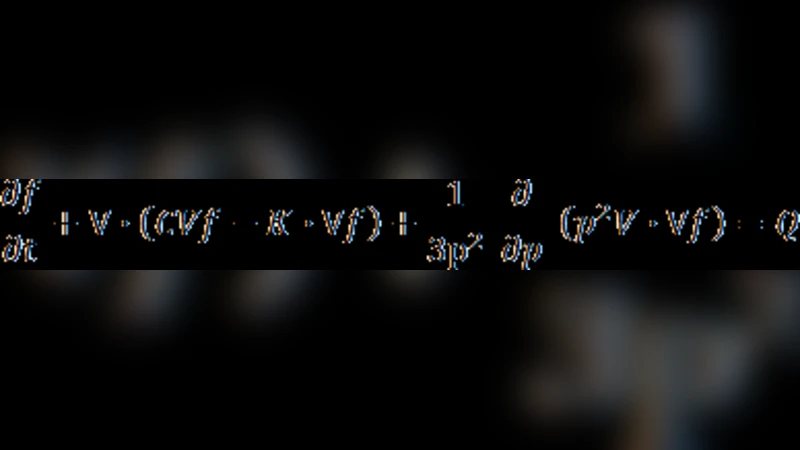
To interpret these observations, the authors employ a spherically symmetric, steady‑state, no‑drift transport model based on the Parker equation. The diffusion coefficient is separated into a rigidity‑dependent part K₁(P) and a radial part K₂(r). Two distinct heliospheric zones are defined: an inner zone (0‑90 AU, representing the supersonic solar wind) with V≈400 km s⁻¹, and an outer zone (≈90‑120/130 AU, the heliosheath) with V≈130 km s⁻¹. The model parameters (K₁ for the inner zone and K₁H for the outer zone) are tuned to reproduce the observed intensities rather than taken from canonical values.
Key findings from the modeling are:
- The diffusion coefficient in the heliosheath is roughly 5‑10 times smaller than in the inner heliosphere, effectively making the heliosheath a strong diffusion barrier.
- During the 2004‑2010 recovery, K₁ (inner zone) varied by a factor of ~4, whereas K₁H (outer zone) changed only by ~1.5. This asymmetry explains why Earth‑based intensities rose more sharply than those at V1.
- Using a heliopause (HP) distance of 120 AU (or 130 AU) the model reproduces Earth and V1 intensities within ±3 % over the entire period. The required local interstellar spectrum (LIS) for helium at ~200 MeV/nuc is 0.98 ± 0.05 (p m⁻² sr⁻¹ s⁻¹ MeV⁻¹), consistent with previous estimates.
- V2 intensities are systematically ~25 % higher than model predictions. The authors attribute this discrepancy to a north‑south asymmetry of the heliosphere: the heliospheric termination shock (HTS) is estimated to be ~10 % closer to the Sun in the direction of V2. Adjusting V2’s effective distance by ~10 AU (or increasing K₁H locally) brings the model into much better agreement, though residual differences remain during periods of near‑zero radial gradient (1998‑99, 2007‑08).
The paper also explores the sensitivity of the fits to the assumed HP distance. For HP > 130 AU the required LIS intensity would need to be unrealistically high, degrading the fit quality.
In summary, the study demonstrates that a simple two‑zone diffusion model, with a markedly lower diffusion coefficient in the heliosheath and modest temporal variations in both zones, can quantitatively account for the observed helium intensity recovery at three widely separated locations. The analysis underscores the importance of heliosheath diffusion properties and heliospheric asymmetries in shaping cosmic‑ray modulation, and it highlights the limitations of single‑zone models for interpreting multi‑point spacecraft data.
Comments & Academic Discussion
Loading comments...
Leave a Comment