No-Cloning In Categorical Quantum Mechanics
Recently, the author and Bob Coecke have introduced a categorical formulation of Quantum Mechanics. In the present paper, we shall use it to open up a novel perspective on No-Cloning. What we shall find, quite unexpectedly, is a link to some fundamen…
Authors: ** Samson Abramsky (주 저자) – 현재 University of Oxford, Department of Computer Science 소속. **
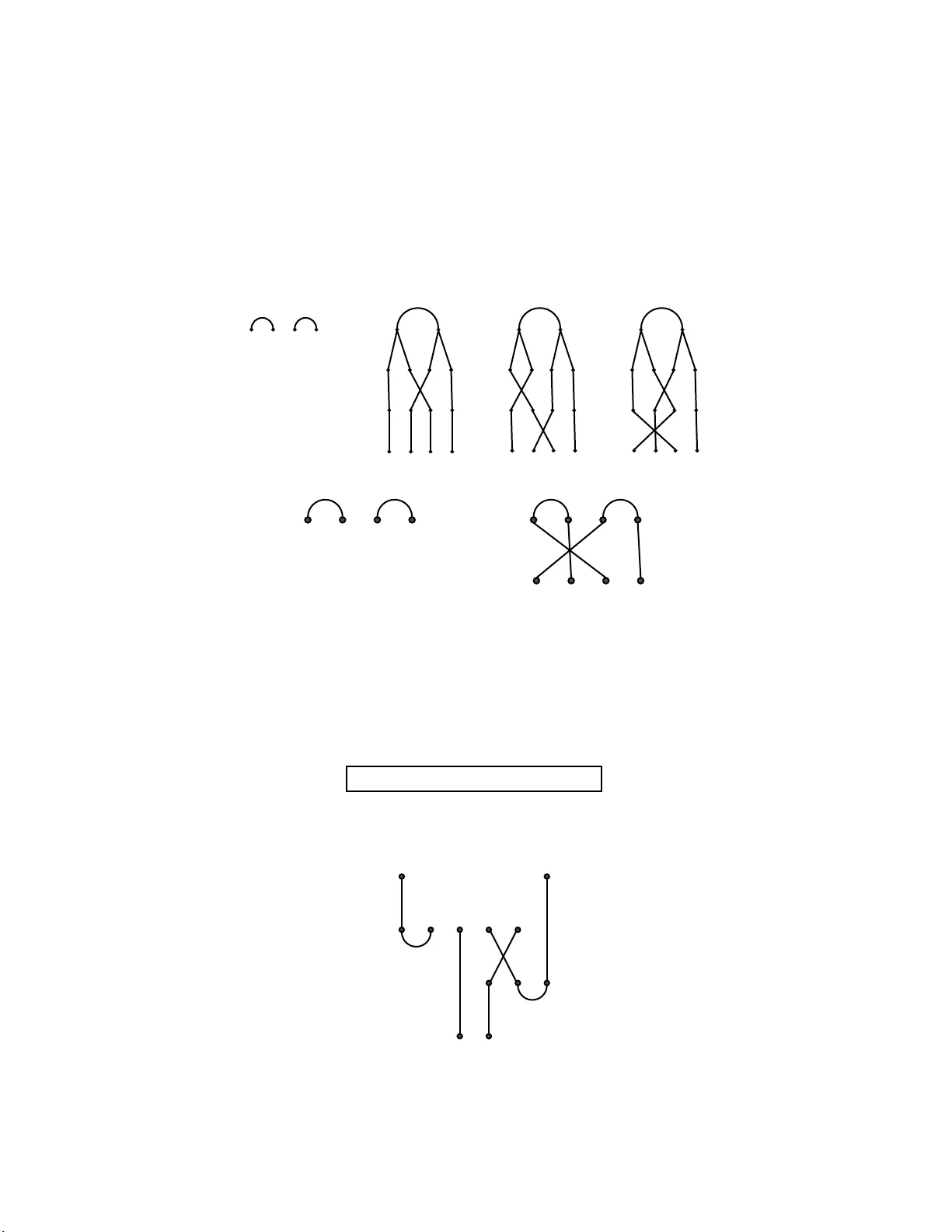
No-Cloning In Categorical Quan tum Mec hanics Samson Abramsky 1 In tro duction The No-Cloning theorem [Die82, WZ82] is a basic limit ativ e result for quan- tum mec hanics, with particular significance for quan tum in f o r mat ion. It sa ys that there is no un ita ry op eration whic h m ak es p erfect copies of an unknown (pu re) quan tum state . A stron ger form of this result is the No- Broadcasting th eo rem [BCFJS96], which applies to mixed states. There is also a No-De leting theorem [PB00]. Recen tly , the author and Bob Co ec k e ha ve introdu c ed a categoric al for- m ulation of Quantum Me chanics [A C 04 , A C05, AC08], as a basis for a m o r e structural, high-lev el approac h to quan tum information a n d computation. This has b een ela b orated by ourselv es, our collea gues, and other w orke r s in the field [Abr 04 , Abr05, Abr07, AD06, C P07 , CD08, Sel07, Vic07], and has b een sh o wn to yield an effectiv e and illuminating treatmen t of a wide range of topics in qu an tum information. Diagrammatic calculi f o r tensor catego ries [JS91, T ur94], suitably extended to incorp orate the v arious ad- ditional structures whic h ha ve been used t o reflect fund a mental f eatures of quan tum mec hanics, pla y an imp ortan t rˆ ole, b oth as an intuiti ve and vivid visual presen tation of the formalism, and as an effectiv e calc u la tional device. It is clear that suc h a no vel r eformulation of the mathematical formalism of quan tum mechanics, a s u b ject m ore or less set in stone since V on Neu- mann’s classic treatise [vN32], has the p oten tial to yield new insights in to the foun d at ions of quantum mechanics. In the present pap er, we sh al l use it to op en u p a nov el p ersp ectiv e on No-Cloning. What we shall find , qu ite unexp ectedly , is a link to some fun damen tal issu es in logic, compu tat ion, and the foun datio n s of mathematics. A strikin g feature of our results is that they are visibly in the same genre as a w ell-kno wn result by Joy al in catego rical logic [LS86] sho wing that a ‘Bo ole an cartesian closed category’ trivializes, whic h p r o vides a ma jor road-blo c k to the computational inter- pretation of classical logic. I n fact, they strengthen Joy al’s r esult, insofar as the assumption of a fu ll categorical p rodu ct (diagonals and pro jections) in 1 the pr esence of a classical dualit y is w eak ened. This sh ows a h eret ofore u n - susp ected connection b et we en limitativ e results in pro of theory and No-Go theorems in quant u m mechanics. The f urther con ten ts of the p ap er are as follo ws: • In the next section, w e shall briefly r evie w the three-wa y link b et ween logic, compu ta tion and categories, and r ecall J o y al’s lemma. • In section 3, we sh all review the categorical ap p roac h to quantum mec hanics. • O u r main results are in section 4, where w e pro ve our limitativ e result, whic h shows the incompatibilit y of structur al features corresp onding to qu an tum en tanglemen t (essentia lly , the existence of Bell states en- abling telep ortat ion) with the existence of a ‘natural’ (in the cate- gorical sen s e, corresp onding essen tially to b asis-indep endent ) cop yin g op eratio n . Th is result is mathematically r obust, since it is p ro v ed in a very general con text, and has a top ological cont ent which is clearly rev ealed b y a d ia grammatic pr o of. A t the same time it is d e licately p oised, sin ce non-natur al , basis-dep enden t copying op erations do in fact pla y a ke y rˆ ole in the categorical f orm ulation of quantum notions of measurement. W e discuss this con text, and the conceptual reading of the r esu lts. • W e conclude w it h some discuss ion of extensions of the results, fur ther directions, and op en problems. 2 Categories, Logic and Computatio nal Con ten t: Jo y al’s Lemma Categorica l log ic [LS86 ] and the Curry-Ho ward corresp ondence in Pro of Theory [SU06] giv e u s a b eautiful three-w a y corresp ondence: Logic ✛ ✲ Computation Categories ✛ ✲ ✛ ✲ 2 More particularly , we ha ve as a paradigmatic example: In tuitionistic L ogic ✛ ✲ λ -calculus Cartesian Closed C a tegories ✛ ✲ ✛ ✲ Here w e are fo cussing on the fragmen t of intuitionistic logic contai n ing con- junction and implication, and the simp ly-t yp ed λ -calculus with pro duct t yp es. W e shall assume f amiliarit y with basic notions of catego ry theory [Mac98, LS97]. Recal l that a cartesian closed category is a catego r y with a termi- nal ob ject, binary p rodu ct s and exp onen tials. The basic cartesian closed adjunction is C ( A × B , C ) ∼ = C ( A, B ⇒ C ) . More exp licitly , a category C with fin ite p rod ucts has exp o nentials if for all ob jects A and B of C ther e is a couniversal arro w fr om − × A to B , i.e. an ob ject A ⇒ B of C and a morph ism ev A,B : ( A ⇒ B ) × A − → B with the couniv ersal prop ert y: for ev ery g : C × A − → B , there is a unique morphism Λ( g ) : C − → A ⇒ B su ch that A ⇒ B C Λ( g ) ✻ ( A ⇒ B ) × A ev A,B ✲ B C × A Λ( g ) × id A ✻ g ✲ The corresp ondence b et we en the in tuitionistic logic of conjunction and im- plication and cartesian closed categories is summarized in the follo wing table: 3 Axiom Γ , A ⊢ A Id π 2 : Γ × A − → A Conjunction Γ ⊢ A Γ ⊢ B Γ ⊢ A ∧ B ∧ I f : Γ − → A g : Γ − → B h f , g i : Γ − → A × B Γ ⊢ A ∧ B Γ ⊢ A ∧ E 1 f : Γ − → A × B π 1 ◦ f : Γ − → A Γ ⊢ A ∧ B Γ ⊢ B ∧ E 2 f : Γ − → A × B π 2 ◦ f : Γ − → B Implication Γ , A ⊢ B Γ ⊢ A ⊃ B ⊃ I f : Γ × A − → B Λ( f ) : Γ − → ( A ⇒ B ) Γ ⊢ A ⊃ B Γ ⊢ A Γ ⊢ B ⊃ E f : Γ − → ( A ⇒ B ) g : Γ → A ev A,B ◦ h f , g i : Γ − → B 2.1 Jo ya l’s Lemma It is a v ery natural idea to seek to extend the corresp ondence sho wn ab o v e to the case of classic al lo gic . Jo yal’ s lemma shows that there is a fu n damen tal imp edimen t to d oing so. 1 The natural extension of th e notion of cartesian closed catego r y , which corresp onds to the intui tio nistic lo gic of conju nctio n and implication, to the classical case is to in tro duce a suitable notion of classical negation. W e recall that it is customary in intuitionistic logic to define the n eg ation by ¬ A := A ⊃ ⊥ where ⊥ is the falsum . The c haracteristic p rop er ty of th e falsum is that it implies ev ery prop osition. In categorical terms, this translates into the notion of an initial ob ject. Note that f or any fi xed ob ject B in a cartesian closed category , there is a well-defined con tra v arian t fu ncto r C − → C op :: A 7→ ( A ⇒ B ) . This will alwa ys satisfy th e prop erties corresp onding to negation in minimal logic, and if B = ⊥ is the initial ob ject in C , then it will satisfy the la ws of 1 It is cu sto mary to refer to this result as Joy al’s lemma, although, app aren tly , he never published it. The usual reference is [LS86], who attribu te the result to Joy al, b ut follo w the p ro of given by F reyd [F re7 2 ]. Our statement and pro of are somewhat d ifferent to those in [LS86]. 4 in tuitionistic negation. In particular, there is a canonical arrow A − → ( A ⇒ ⊥ ) ⇒ ⊥ whic h is just the curried form of the ev aluatio n morphism . This corresp onds to the v alid intuitio n istic principle A ⊃ ¬¬ A . What else is needed in ord er to obtain classical logic? As is well kn own, the missing prin ciple is that of pr o of by c ontr adiction : the conv erse implication ¬¬ A ⊃ A . This leads u s to the follo wing notion. A dualizing obje ct ⊥ in a closed catego ry is one for wh ic h the canonical arrow A − → ( A ⇒ ⊥ ) ⇒ ⊥ is an isomorp hism for all A . W e can no w state J oy al’s lemma: Prop os it ion 1 ( Jo y al’s L emma) Any c artesian close d c ate gory with a dualizing obje ct is a pr e or der (henc e trivial as a semantics for pr o ofs or c omp u tational pr o c esses). Pro of Note firstly that, if ⊥ is du a lizing, the ind uced negation fu nctor C − → C op is a c ontr avariant e quivalenc e C ≃ C op . S ince ( ⊤ ⇒ A ) ∼ = A where ⊤ is the terminal ob ject, it follo ws that ⊥ is the dual of ⊤ , and h ence initial. S o it suffices to pr o v e Jo ya l’s lemma und er the assu mption that the dualizing ob ject is initial. W e assume that ⊥ is a dualizing initial ob j ect in a cartesian closed catego ry C . W e wr ite ι C : ⊥ → C for the unique arr o w giv en b y initialit y . Note that C ( A × ⊥ , A × ⊥ ) ∼ = C ( ⊥ , A ⇒ ( A × ⊥ )), whic h is a singleton b y initialit y . It follo ws that ι A ×⊥ ◦ π 2 = id A ×⊥ , wh ile π 2 ◦ ι A ×⊥ = id ⊥ b y initialit y . Hence A × ⊥ ∼ = ⊥ . 2 No w C ( A, B ) ∼ = C ( B ⇒ ⊥ , A ⇒ ⊥ ) ∼ = C (( B ⇒ ⊥ ) × A, ⊥ ) . (1) Giv en an y h, k : C − → ⊥ , note that h = π 1 ◦ h h, k i , k = π 2 ◦ h h, k i . But ⊥ × ⊥ ∼ = ⊥ , h ence by initialit y π 1 = π 2 , and s o h = k , wh ich b y (1) implies that f = g for f , g : A − → B . 2 A slic ker pro of simply notes th at A × ( − ) is a left adjoin t by cartesian closure, and hence preserves all colimits, in particular initial ob jects. 5 2.2 Linearit y and Classicalit y Ho w ever, we know from Linear Logic that there is no imp edimen t to having a closed structur e w ith a dualizing ob ject, pr ovide d we weak en our assumption on the u nderlying con text-buildin g stru ct u r e, fr o m c artesian × to monoidal ⊗ . Then w e get a w ealth of examples of ∗ -autonomous c ate gor ie s [Barr79 ], whic h stand to Multiplicativ e Linear Logic as cartesian closed categ ories d o to Intuitionistic L ogic [S ee 89 ]. Jo y al’s lemma can th u s b e stated in the follo wing equiv alen t form. Prop os it ion 2 A ∗ -autonomous c ate gory in which the monoidal structur e is c artesian is a pr e or der. Essen tially , a cartesian structur e is a monoidal stru cture plu s natural diagonals, and with the tensor u nit a term in al ob ject, i.e. plus cloning and deleting ! 3 Categorical Quan tum Mec hanics In this section, we s h all pr o vide a brief review of the stru ctur es used in cat- egorical quant u m mec h an ics, their graph ica l representat ion, and ho w these structures are used in f ormali zing some key features of quantum m ec hanics. F urther details can b e found elsewhere [A C 08 , Abr05, Sel07]. 3.1 Symmetric Monoidal Categories W e recall that a monoidal c ate gory is a s tructure ( C , ⊗ , I , a, l , r ) w here: • C is a category , • ⊗ : C × C → C is a fu nctor ( tensor ), • I is a distinguish e d ob ject of C ( unit ), • a , l , r are natural isomorph ism s ( structur al i so s ) with comp onen ts: a A,B ,C : A ⊗ ( B ⊗ C ) ∼ = ( A ⊗ B ) ⊗ C l A : I ⊗ A ∼ = A r A : A ⊗ I ∼ = A suc h that certain diagrams commute, which ens ure c oher enc e [Mac98], d e- scrib ed by the slogan: 6 All d iag rams only inv olving a , l and r must comm u te . Examples: • Both pro ducts and copro ducts giv e rise to monoidal stru ctures — whic h are the common denominator b etw een them. (But in add it ion, p rod- ucts h av e diagonals and pr oje ctions , and copro ducts ha ve c o diagona ls and inje ctions .) • ( N , 6 , + , 0) is a monoidal category . • Rel , th e category of sets and relations, with cartesia n pro duct (whic h is not the categorica l pro duct). • V ect k with th e standard tensor pro duct. Let us examine the example of Rel in some detail. W e tak e ⊗ to b e the cartesian pro duct, w hic h is defined on relations R : X → X ′ and S : Y → Y ′ as follo ws. ∀ ( x, y ) ∈ X × Y , ( x ′ , y ′ ) ∈ X ′ × Y ′ . ( x, y ) R ⊗ S ( x ′ , y ′ ) ⇐ ⇒ xRx ′ ∧ y S y ′ . It is not difficult to sh o w that this is indeed a functor. Note that, in the case that R, S are functions , R ⊗ S is the same as R × S in Set . Moreo ve r , w e take eac h a A,B ,C to b e the asso ciativit y function for pro ducts (in Set ), which is an iso in Set and hence also in Rel . Finally , we tak e I to b e the one-elemen t set, and l A , r A to b e the pro jectio n functions: their relational conv erses are their inv erses in Rel . The monoidal coherence diagrams commute simp ly b ecause they comm ute in Set . T ensors and pro ducts As mentioned earlier, p rodu ct s are tensors w it h extra structure: natur a l diagonals and pro jecti ons, corresp onding to cloning and deleting op erations. This fact is expressed more p recise ly as follo ws. Prop os it ion 3 L et C b e a monoidal c ate gory ( C , ⊗ , I , a, l , r ) . The tensor ⊗ induc es a pr o duct structur e iff ther e exist natur al diagonals and pr oje ctions, i.e. natur a l tr ansforma tions ∆ A : A − → A ⊗ A , p A,B : A ⊗ B − → A , q A,B : A ⊗ B − → B , 7 such that the fol lowing diagr ams c ommute. A A ✛ p A,A ✛ id A A ⊗ A ∆ A ❄ q A,A ✲ A id A ✲ A ⊗ B ∆ A,B ✲ ( A ⊗ B ) ⊗ ( A ⊗ B ) A ⊗ B p A,B ⊗ q A,B ❄ id A ⊗ B ✲ Symmetry A symmetric monoidal c at e gory is a monoidal category ( C , ⊗ , I , a, l , r ) with an additional natural isomorp hism ( symmetry ), σ A,B : A ⊗ B ∼ = B ⊗ A suc h that σ B ,A = σ − 1 A,B , and some add itional coherence diagrams commute . 3.2 Scalars Let ( C , ⊗ , I , l , a, l, r ) b e a monoidal category . W e defin e a sc alar in C to b e a m orphism s : I → I , i.e. an endomorp hism of the tensor u n it. Example 4 In FdV ec K , line ar maps K → K ar e uniqu ely determine d by the image of 1 , and henc e c orr esp ond biuniqu e ly to elements of K ; c omp o- sition c orr esp onds to multiplic at ion of sc alar s. In Rel , ther e ar e just two sc ala rs, c orr esp onding to the Bo ole an values 0 , 1 . The (multiplic ativ e) monoid of scalars is then just th e end omorphism monoid C ( I , I ). T he fi rst key p oint is the elemen tary but b eautiful observ atio n by Kelly and Laplaza [KL80] that this m on oid is alwa ys comm utativ e. Lemma 5 C ( I , I ) i s a c ommutative monoid 8 Pro of I r − 1 I ✲ I ⊗ I = = = = = = I ⊗ I l I ✲ I I s ✻ r − 1 I ✲ I ⊗ I s ⊗ 1 ✻ s ⊗ t ✲ I ⊗ I 1 ⊗ t ❄ l I ✲ I t ❄ I t ❄ l − 1 I ✲ I ⊗ I 1 ⊗ t ❄ = = = = = = I ⊗ I s ⊗ 1 ✻ r I ✲ I s ✻ using the coherence equation l I = r I . The second p oint is that a go o d notion of sc alar multiplic ation exists at this level of generalit y . That is, eac h scalar s : I → I induces a n at u ral transformation s A : A ≃ ✲ I ⊗ A s ⊗ 1 A ✲ I ⊗ A ≃ ✲ A . with th e naturalit y squ are A s A ✲ A B f ❄ s B ✲ B f ❄ W e write s • f for f ◦ s A = s B ◦ f . Note that 1 • f = f s • ( t • f ) = ( s ◦ t ) • f ( s • g ) ◦ ( t • f ) = ( s ◦ t ) • ( g ◦ f ) ( s • f ) ⊗ ( t • g ) = ( s ◦ t ) • ( f ⊗ g ) whic h exactly generalizes the multiplicativ e part of the usu al prop erties of scalar m u lti p lic ation. Thus scalars act globally on the whole category . 9 3.3 Compact Closed Categories A category C is ∗ -autonomous [Barr79] if it is s y m metric monoidal, and comes equipp ed with a full and faithful functor ( ) ∗ : C op → C suc h that a bijection C ( A ⊗ B , C ∗ ) ≃ C ( A, ( B ⊗ C ) ∗ ) exists whic h is natural in all v ariables. He nce a ∗ -autonomous category is closed, with A ⊸ B := ( A ⊗ B ∗ ) ∗ . These ∗ -autonomous categ ories provide a categorical seman tics for the m u l- tiplicativ e fragmen t of linear logic [See89]. A c omp act close d c ate gory [KL80] is a ∗ -autonomous category w ith a self-dual tensor, i.e. with natural isomorphisms u A,B : ( A ⊗ B ) ∗ ≃ A ∗ ⊗ B ∗ u I : I ∗ ≃ I . It follo ws that A ⊸ B ≃ A ∗ ⊗ B . A v ery d ifferen t d efinition arises wh en one considers a symmetric monoidal catego ry as a one-ob ject bicatego ry . In this con text, compact closure s imply means that ev ery ob ject A , q u a 1-cell of the b ica tegory , has a sp ecified adjoin t [KL80]. Definition 6 (Kelly-Laplaza) A c omp act close d c ate gor y is a symmetric monoidal catego ry in w hic h to eac h ob ject A a dual obje ct A ∗ , a unit η A : I → A ∗ ⊗ A and a c ounit ǫ A : A ⊗ A ∗ → I are assigned, in suc h a wa y that the d iag ram A r − 1 A ✲ A ⊗ I 1 A ⊗ η A ✲ A ⊗ ( A ∗ ⊗ A ) A 1 A ❄ ✛ l A I ⊗ A ✛ ǫ A ⊗ 1 A ( A ⊗ A ∗ ) ⊗ A a A,A ∗ ,A ❄ and the dual one for A ∗ b oth comm u te. 10 Examples The symmetric monoidal categories ( Rel , × ) of sets, r e lations and cartesian pro duct and ( FdV ec K , ⊗ ) of fi nite- d imensional v ector spaces o v er a fi eld K , linear maps and tensor p rodu ct are b oth compact closed. In ( Rel , × ), we simply set X ∗ = X . T aking a one-p oin t set {∗} as the un it for × , and w r iting R ∪ for th e conv erse of a relation R : η X = ǫ ∪ X = { ( ∗ , ( x, x )) | x ∈ X } . F or ( FdV ec K , ⊗ ), w e tak e V ∗ to b e the dual space of linear fu nctio n a ls on V . T he unit and counit in ( FdV ec K , ⊗ ) are η V : K → V ∗ ⊗ V :: 1 7→ i = n X i =1 ¯ e i ⊗ e i and ǫ V : V ⊗ V ∗ → K :: e i ⊗ ¯ e j 7→ ¯ e j ( e i ) where n is the dimension of V , { e i } i = n i =1 is a basis of V and ¯ e i is the linear functional in V ∗ determined b y ¯ e j ( e i ) = δ ij . Definition 7 T he name p f q and th e c oname x f y of a morphism f : A → B in a compact closed category are A ∗ ⊗ A 1 A ∗ ⊗ f ✲ A ∗ ⊗ B I I η A ✻ p f q ✲ A ⊗ B ∗ f ⊗ 1 B ∗ ✲ x f y ✲ B ⊗ B ∗ ǫ B ✻ F or R ∈ Rel ( X , Y ) we ha ve p R q = { ( ∗ , ( x, y )) | xRy , x ∈ X , y ∈ Y } and x R y = { (( x, y ) , ∗ ) | xRy , x ∈ X, y ∈ Y } and for f ∈ FdV ec K ( V , W ) with ( m ij ) the matrix of f in bases { e V i } i = n i =1 and { e W j } j = m j =1 of V and W resp ectiv ely p f q : K → V ∗ ⊗ W :: 1 7→ i,j = n,m X i,j =1 m ij · ¯ e V i ⊗ e W j and x f y : V ⊗ W ∗ → K :: e V i ⊗ ¯ e W j 7→ m ij . 11 Giv en f : A → B in an y compact closed categ ory C w e can d efine f ∗ : B ∗ → A ∗ as B ∗ l − 1 B ∗ ✲ I ⊗ B ∗ η A ⊗ 1 B ∗ ✲ A ∗ ⊗ A ⊗ B ∗ A ∗ f ∗ ❄ ✛ r A ∗ A ∗ ⊗ I ✛ 1 A ∗ ⊗ ǫ B A ∗ ⊗ B ⊗ B ∗ 1 A ∗ ⊗ f ⊗ 1 B ∗ ❄ This op eration ( ) ∗ is fun c torial and mak es Definition 6 coincide with the one giv en at the b eginning of this section. It then follo ws by C ( A ⊗ B ∗ , I) ∼ = C ( A, B ) ∼ = C ( I , A ∗ ⊗ B ) that every morp h ism of type I → A ∗ ⊗ B is th e name of some morph ism of t yp e A → B and ev ery morphism of t yp e A ⊗ B ∗ → I is the coname of some morphism of t yp e A → B . I n th e case of the u n it and th e counit we hav e η A = p 1 A q and ǫ A = x 1 A y . F or R ∈ Rel ( X, Y ) the dual is the con ve rs e , R ∗ = R ∪ ∈ Rel ( Y , X ), and f o r f ∈ FdV ec K ( V , W ), the du a l is f ∗ : W ∗ → V ∗ :: φ 7→ φ ◦ f . 3.4 Dagger Compact Categories In order to f ully captur e the salien t stru ct u r e of FdH ilb , the category of finite-dimensional complex Hilb ert spaces and linear maps, an imp ortan t refinement of compact categories, to dagger- (or strongly-) compact cate- gories, was intro d uced in [AC0 4 , AC05]. W e sh all not make an y s ignifi ca nt use of this refined definition in this pap er, sin ce our results hold at the more general lev el of compact catego ries. 3 Nev ertheless, w e give the definition since w e sh al l r efer to this notion later. W e shall adopt the most concise and elegan t axiomatizatio n of strongly or dagger compact closed categories, which tak es the adj oint as primitiv e, follo wing [A C05]. It is con v enient to build the d efi nitio n up in s everal stages, as in [S el0 7]. 3 W e shall often use the abbreviated form “compact categories” instead of “compact closed categories”. 12 Definition 8 A dagger categ ory is a c ate go ry C e quipp e d with an identity- on-obje cts, c ontr ava riant, strictly involutive fu ncto r f 7→ f † : 1 † = 1 , ( g ◦ f ) † = f † ◦ g † , f †† = f . We define an arr ow f : A → B in a dagger c ate gory to b e unitary if it is an i somorphism su c h that f − 1 = f † . An endomorphism f : A → A is self-adjoin t if f = f † . Definition 9 A dagger sy m metric monoidal category ( C , ⊗ , I , a, l , r , σ, † ) c ombines dagger and symmetric monoidal structur e, with the r e quir ement that the natur al isomorph isms a , l , r , σ ar e c omp o nentwise uni tary, and mor e over that † is a strict monoidal fu ncto r: ( f ⊗ g ) † = f † ⊗ g † . Finally we come to the m a in d efi nitio n . Definition 10 A dagger compact category is a dagger symmetric monoida l c ate gory which is c omp act close d, and such that the fol low ing diagr am c om- mutes: I η A ✲ A ∗ ⊗ A A ⊗ A ∗ σ A ∗ ,A ❄ ǫ † A ✲ This implies th a t th e counit is definable from the unit and the adj o int: ǫ A = η † A ◦ σ A,A ∗ and similarly the unit can b e d efined from the counit and the adjoint. F ur - thermore, it is in fact p ossible to r eplac e th e tw o comm uting diagrams re- quired in the d efinition of compact closure by one. W e r e f er to [A C05] for the details. 3.5 T race An essen tial mathematical instrument in quan tum mec hanics is the tr ac e of a linear map. In q u an tum information, extensive us e is made of the more general notion of p artia l tr ac e , which is used to trace out a su bsystem of a comp ound system. 13 A general categorical axiomatizatio n of the n ot ion of partial trace h as b een giv en b y Jo ya l, Street and V erity [J S V96]. A trace in a symmetric monoidal catego ry C is a family of f unctions T r U A,B : C ( A ⊗ U, B ⊗ U ) − → C ( A, B ) for ob jects A , B , U of C , satisfying a num b er of axioms, for whic h we refer to [JSV96]. This sp ecia lizes to yield the total trace for en domorphisms by tak- ing A = B = I . In th is case, T r ( f ) = T r U I ,I ( f ) : I → I is a scalar. Exp ected prop erties such as the in v ariance of the trace und er cyclic p ermutat ions T r ( g ◦ f ) = T r ( f ◦ g ) follo w fr om the general axioms. An y compact closed category carries a canonical (in fact, a unique) trace. F or an endomorph ism f : A → A , the total trace is defined b y T r ( f ) = ǫ A ◦ ( f ⊗ 1 A ∗ ) ◦ σ A ∗ ,A ◦ η A . This definition giv es r ise to the s tand ard notion of tr a ce in FdHilb . 3.6 Graphical R ep resentation Complex algebraic expr essio n s for morph isms in symmetric monoidal cate- gories can r apidly b ecome h ard to r ea d . Graphical rep resen tations exp lo it t wo -dimens io n ality , with the v ertical dimension corresp onding to comp osi- tion an d th e h orizo ntal to the monoidal tensor, and pro vid e more intuitiv e present ations of morp hisms. W e depict ob jects by wires, m orphisms by b o xes with inpu t and output wir e s, comp osition b y conn ec ting ou tp uts to inputs, and the monoidal tensor by locating b o xes sid e- by-side. f B A g C f B B g f B A C A f B A E h A C A B f B B g C A Algebraically , these corresp ond to: 1 A : A → A, f : A → B , g ◦ f , 1 A ⊗ 1 B , f ⊗ 1 C , f ⊗ g , ( f ⊗ g ) ◦ h resp ectiv ely . (The con ve ntion in th ese diagrams is th at the ‘upw ard’ vertic al direction represents progress of time.) 14 Kets, Bras and Scalars: A sp ecia l role is pla y ed b y b o xes with either n o input or no outp ut, i. e. arro ws of the f orm I − → A or A − → I resp ectiv ely , where I is the unit of the tensor. In the setting of FdHilb and Quantum Mec hanics, th ey corresp ond to states and c osta tes r espectiv ely (cf. Dirac’s k ets and br a s [Dir 47]), whic h we dep ict by triangles. Sc alars then arise naturally by comp osing these elemen ts (cf. inn er-prod uct or Dirac’s br a- k et): ψ A A π ψ A π π ψ o = F ormally , scalars are arro ws of the form I − → I . In th e p h ysical con- text, they pr o vide num b ers (“probabilit y amplitudes” etc.). F or example, in FdHilb , the tensor unit is C , the complex num b ers, and a linear map s : C − → C is determined b y a single num b er, s (1). I n Rel , the scalars are the b o ole an semiring { 0 , 1 } . This graphical notation can b e seen as a sub stan tial t wo-dimensional generalizat ion of Dir ac notation [Dir 47]: h φ | | ψ i h φ | ψ i Note ho w the geometry of the plane absorbs fu nctoria lity and naturalit y conditions, e.g.: f g = f g ( f ⊗ 1) ◦ (1 ⊗ g ) = f ⊗ g = (1 ⊗ g ) ◦ ( f ⊗ 1) 15 Cups and Caps W e in tro duce a sp ecial d iag rammatic notation for the unit and counit. A ∗ A A ∗ A ǫ A : A ⊗ A ∗ − → I η A : I − → A ∗ ⊗ A. The lin es indicate the information flow accomplished by these op erations. Compact Closure The basic algebraic la ws for un it s and counits b ecome diagrammaticall y eviden t in terms of the information-flow lines: = = ( ǫ A ⊗ 1 A ) ◦ (1 A ⊗ η A ) = 1 A (1 A ∗ ⊗ ǫ A ) ◦ ( η A ⊗ 1 A ∗ ) = 1 A ∗ Names a nd Conames in the Graphical Calculus The units and counits are p o werful; they allo w u s to defin e a close d structur e on the cate- gory . In particular, we can form the name p f q of any arrow f : A → B , as a s pecial case of λ -abstraction, and dually the c oname x f y : 16 f f x f y : A ⊗ B ∗ → I p f q : I → A ∗ ⊗ B This is th e general form of Map-State d ualit y: C ( A ⊗ B ∗ , I ) ∼ = C ( A, B ) ∼ = C ( I , A ∗ ⊗ B ) . 3.7 F ormalizing Quan tum I nform ation Flo w In this section, we giv e a brief glimps e of categorica l quantum mec hanics. While n ot needed for the resu lts to follo w, it pro vides the motiv at ing con text for th em. F or fur ther details, see e.g. [A C 08 ]. 3.7.1 Quan tum En tanglement W e consid er f o r illustration t wo standard examples of t w o-qub it en tangled states, the Bell s ta te: | 00 i + | 11 i and the EPR state: | 01 i + | 10 i In quan tum mec hanics, comp ound systems are represen ted b y the tensor pr o duct of Hilb ert spaces: H 1 ⊗ H 2 . A typical elemen t of the tensor pro duct has the form: X i λ i · φ i ⊗ ψ i where φ i , ψ i range o v er basis v ectors, and the co efficien ts λ i are com- plex num b ers. Sup erp ositio n enco des c orr elation : in the Bell state, the 17 off-diagonal element s ha v e zero co efficien ts. This giv es rise to Einstein’s “sp ooky action at a distance”. E ven if the particles are s p ati ally separated, measuring one has an effect on the state of the other. In the Bell state, for example, when we measure one of the tw o qubits we m a y get either 0 or 1, b ut once this r esu lt h as b een obtained, it is certain that the resu lt of measuring th e other qub it will b e the same. This leads to Bell’s famous theorem [Bell64]: QM is essential ly non- lo c al , in the sense that the correlatio n s it predicts exceed those of any “lo ca l realistic theory”. F rom ‘paradox’ to ‘feature’: T elep ortation M Bell U x | 00 i + | 11 i x ∈ B 2 | φ i | φ i Alice Bob In the telep ortation proto col [BBCJPW93 ], Alice sends an unknown qubit φ to Bob, usin g a shared Bell pair as a “quan tum c h annel”. By p erformin g a m ea su r emen t in the Bell basis on φ and her half of th e en tangled pair, a collapse is induced on Bob’s qub it . Once the result x of Alice’s m ea su remen t is transmitted by classical comm u nica tion to Bob (there are four p ossible measuremen t outcomes, hence this requ ires tw o classical bits), Bob can p er- form a corresp onding unitary correction U x on his qu bit, after which it will b e in the state φ . 18 3.7.2 Categorical Quantum Mec hanics and Diagrammatics W e n o w outline the catego r ical approac h to quan tum mec hanics dev elop ed in [A C04, A C05]. T he same graphical calculus and un derlying algebraic struc- ture which w e h av e seen in the pr evi ous section has b een applied to quan tum information and computation, yielding an in ci sive analysis of quantum in- formation flow , and p o w erfu l and illuminating m et h ods for reasoning ab out quan tum inf o r mat ic p rocesses and proto cols [A C04 ]. Bell Stat es and C ostates: Th e cups and caps w e ha ve already seen in the guise of deficit and cancellation op erations, now take on the rˆ ole of Bel l states and c ostat es (or p reparatio n and test of Bell states), the fundamental building blo c ks of quantum enta nglement. (Mathematically , th ey arise as the transp ose and co-transp ose of the iden tit y , which exist in any finite- dimensional Hilb ert space by “map-state du a lity” ). A A A* A* The formation of names and c onames of arro ws ( i.e. map-state and map- costate dualit y) is conv enien tly d epict ed th us : =: f =: f f f (2) The ke y lemma in exp osing the quan tum information fl o w in (bip a r ti te) en tangled q u an tum sys tems can b e formulated diagrammatica lly as follo ws: = f g = f g f g = f g Note in particular the interesting phenomenon of “apparent r ev ersal of the causal order” . While on the left, physically , we firs t pr epare the state la- b eled g and th e n apply the costate lab eled f , the global effect is as if we first applied f itself fir st, and only then g . 19 Deriv at ion of quantum telep ortation. This is the most basic ap p li- cation of comp ositionalit y in action. W e can read off the b asic quantum mec hanical p oten tial for telep ortatio n immediately from the geometry of Bell states and costates: Alice Bob = ψ ψ Alice Bob Alice Bob = ψ The Bell state forming the sh ared channel b et w een Alice and Bob app ears as the do wnw ards triangle in th e diagram; the Bell costate forming one of the p ossible measurement br a n c hes is the upw ards triangle. The information flo w of the inp ut qubit from Alice to Bob is then immediately evident from the diagrammatics. This is not quite the wh ole story , b ecause of the non-deterministic nature of measurement s. But in fact, allo wing for this shows the u nderlying design principle for the telep o r a tion p rotocol. Namely , w e find a measuremen t basis suc h that eac h p ossible branch i through the measurement is lab elled, und er map-state du a lity , with a unitary map f i . The corresp onding correction is then jus t the inv erse map f − 1 i . Using our lemma, the f u ll description of telep orta tion b ecomes: f = f i i f i -1 f i -1 = 4 No-Cloning Note that the pro of of Joy al’s lemma given in Section 2.1 mak es full u se of b oth diagonals and pr o jectio n s, i. e . of b oth cloning and d eleting. O ur aim is to examine cloning and deleting as separate principles, an d to see how far eac h in isolation is compatible with the strong f o r m of d ualit y which, as w e hav e seen, pla ys a basic stru ct u ral rˆ ole in the categorical axiomati- zation of quan tum m ec hanics, and app lie s very d ir ec tly to th e analysis of en tanglemen t. 20 4.1 Axiomatizing Cloning Our first task is to axiomatize cloning as a uniform op er ation in the setting of a symmetric m on oidal category . As a preliminary , w e r ec all the n o tions of monoidal fu ncto r and monoidal natural transformation. Let C and D b e monoidal categories. A (strong) monoidal functor ( F , e, m ) : C − → D comprises: • A fun ct or F : C − → D • An isomorph ism e : I ∼ = F I • A natural isomorph ism m A,B : F A ⊗ F B − → F ( A ⊗ B ) sub ject to v arious coherence conditions. Let ( F , e, m ) , ( G, e ′ , m ′ ) : C − → D b e monoidal fun cto rs . A monoidal natural transf ormati on b et w een them is a natural transformation t : F . − → G s uc h that I e ✲ F I GI t I ❄ e ′ ✲ F A ⊗ F B m A,B ✲ F ( A ⊗ B ) GA ⊗ GB t A ⊗ t B ❄ m ′ A,B ✲ G ( A ⊗ B ) t A ⊗ B ❄ W e sa y that a monoidal category has uniform cloning it is h as a diagonal, i.e. a monoidal natural tran s formatio n ∆ A : A − → A ⊗ A whic h is moreov er c o a sso ciative and c o c ommutative : A ∆ ✲ A ⊗ A 1 ⊗ ∆ ✲ A ⊗ ( A ⊗ A ) A w w w w w w w w w w ∆ ✲ A ⊗ A ∆ ⊗ 1 ✲ ( A ⊗ A ) ⊗ A ) a A,A,A ❄ A ∆ ✲ A ⊗ A A ⊗ A σ A,A ❄ ∆ ✲ Note that in the case when the monoidal structure is induced by a pro duct, the standard d iag onal ∆ A : A h 1 A , 1 A i ✲ A × A 21 automatica lly satisfies all these pr operties. T o simplify the p resen tation, we shall hen ceforth mak e the assumption that th e monoidal categories we consider are strictly asso ciative . This is a standard manouevre, and b y the coherence theorem for monoidal catego ries [Mac98] is harmless. Note that the functor A 7→ A ⊗ A whic h is the co domain of th e diagonal has as its monoidal structure maps m A,B = A ⊗ B ⊗ A ⊗ B 1 ⊗ σ ⊗ 1 ✲ A ⊗ A ⊗ B ⊗ B , e = I l − 1 I ✲ I ⊗ I . Of course the iden tit y fun ctor, whic h is the domain of the diagonal, has iden tit y morph isms as its structur e maps. 4.2 Compact categories with cloning (almost) collapse Theorem 11 L et C b e a c omp act c ate g ory with cloning. Then every endo- morphism is a sc alar multiple of the identity. Mor e pr e cisely, for f : A → A , f = T r ( f ) • id A . This me ans that for every obje ct A of C , C ( A, A ) is a r etr act of C ( I , I ) : α : C ( A, A ) ✁ C ( I , I ) : β , α ( f ) = T r ( f ) , β ( s ) = s • i d A . In a category enr ic hed ov er vecto r spaces, th is means that eac h en domor- phism algebra is one-dimensional. In the cartesian case, th er e is a u n ique scalar, and we r ec ov er th e reflexive part of the p osetal collapse of Jo ya l’s lemma. But in general, the collapse giv en by our r esu lt is of a different nature to that of J o y al’s lemma, as w e sh all see later. Note that our collapse result only refers to endomorph isms. In the dagger-compact case, ev ery morphism f : A → B has an asso cia ted en- domorphism σ ◦ ( f ⊗ f † ) : A ⊗ B → A ⊗ B . Moreo v er the passage to this asso ciate d end omo r phism can b e seen as a kind of “pro jectiv e quotien t” of the original catego ry [Co e07]. Thus in this case, the collapse giv en by our theorem can b e read as saying that the p ro jectiv e quotien t of the category is trivial. 4.3 Pro ving the Cloning Collapse Theorem W e sh al l make some use of the graph ic al calculus in our pro ofs. W e sh all use sligh tly d ifferen t conv en tions f r om those adopted in the p revio u s section: 22 • Firstly , the diagrams to follo w are to b e read d own w ard s r at h er than upw ards. • S ec ond ly , we shall depict th e units and counits of a compact category simply as “cups” and “caps”, without an y enclosing triangles. T o illustrate these p oin ts, the units and counits will b e depicted thus: A ∗ A A A ∗ η A : I − → A ∗ ⊗ A ǫ A : A ⊗ A ∗ − → I while the iden tities for the units and counits in compact categories will app ear thus: = = The small n odes app earing in these diagrams in d ica te ho w the figur es are built by comp ositio n from basic figures s uc h as cup s, caps and identitie s. First step W e shall b egin b y showing that “parallel caps = nested caps” Diagrammatic ally: = A ∗ A ∗ A ∗ A ∗ A A A A This amoun ts to a “confusion of en tanglemen ts”. In f a ct, we shall find it more con v enient to p ro v e this resu lt in th e fol- lo wing f o r m: η A ⊗ η A = (3 2 1 4) ◦ ( η A ⊗ η A ) Here (3 2 1 4) is the p ermutati on acting on the tensor pr oduct of four fac- tors whic h is bu ilt from the symmetry isomorphisms in the ob vious fashion. Diagrammatic ally: 23 = Lemma 12 W e have ∆ I = l − 1 I : I → I ⊗ I . Pro of This is an immediate application of the monoidalit y of ∆, together with e = l − 1 I for the co domain fun ct or. Lemma 13 L et u : I → A ⊗ B b e a morphism i n a symmetric monoidal c ate gory with cloning. Then u ⊗ u = (3 2 1 4) ◦ ( u ⊗ u ) . Pro of Consider th e follo wing diagram. I ∆ I ✲ I ⊗ I A ⊗ B u ❄ ∆ A ⊗ B ✲ A ⊗ B ⊗ A ⊗ B u ⊗ u ❄ A ⊗ A ⊗ B ⊗ B ∆ A ⊗ ∆ B ❄ σ ⊗ 1 ✲ A ⊗ A ⊗ B ⊗ B 1 ⊗ σ ⊗ 1 ✻ ∆ A ⊗ ∆ B ✲ The u pp er square commute s b y naturalit y of ∆. T he upp er triangle of the lo w er s q u are comm utes by monoidalit y of ∆. The lo wer triangle commutes b y co co mmutativit y of ∆ in th e fir st comp onen t, and then tensoring w it h the second comp onent and using the bifunctorialit y of the tensor. Let f = ( u ⊗ u ) ◦ ∆ I , and g = (∆ A ⊗ ∆ B ) ◦ u . Th en by the ab o v e diagram f = (1 ⊗ σ ⊗ 1) ◦ ( σ ⊗ 1) ◦ g . A simple compu tat ion w it h p erm u tations sho ws that (1 ⊗ σ ⊗ 1) ◦ ( σ ⊗ 1) = (1 3 2 4) ◦ (2 1 3 4) = (3 2 1 4) ◦ (1 ⊗ σ ⊗ 1) . App ealing to the ab o v e diagram again, f = (1 ⊗ σ ⊗ 1) ◦ g . Hence f = (1 ⊗ σ ⊗ 1) ◦ ( σ ⊗ 1) ◦ g = (3 2 1 4) ◦ (1 ⊗ σ ⊗ 1) ◦ g = (3 2 1 4) ◦ f . 24 Applying the previous lemma: u ⊗ u = f ◦ l I = (3 2 1 4) ◦ f ◦ l I = (3 2 1 4) ◦ ( u ⊗ u ) . Diagrammatic ally , this can b e pr e sented as follo ws: = = = and hence = Note that this lemma is pro ved in generalit y , f or any morph ism u of the required sh ape. Ho wev er, we shall, as exp ected, apply it by taking u = η A . It will b e conv enien t to giv e the remainder of th e pro of in d ia grammatic form. Second step W e use the fir s t step to show that the t w ist map = the iden tity in a compact category with cloning, by putting p aral lel and serial caps in a common con text and simp lifying using th e triangular iden tities. The context is: A A A A A ∗ A ∗ A A 25 W e get: = A A A A A A A A and: = A A A A A A A A W e used the original picture of nested caps for clarit y . If we use the pictur e directly corresp onding to the statemen t of lemma 13, w e obtain the same result: = A A A A A A A A The im p ortant p oin t is th at the left input is connected to the r ight output, and the righ t in p ut to the left outpu t. Third step Finally , we u s e the trace to show th at any endomorphism f : A − → A is a sc alar multiple of the identity : f = s • 1 A for s = T r ( f ). 26 f A A = f A A = f A A This completes the pro of of the Cloning Collapse Theorem 11. 4.4 Examples W e note another consequ en ce of cloning. Prop os it ion 14 In a monoidal c ate gory with cloning, the multiplic ation of sc alar s is idemp otent. Pro of This f ollo ws immediately from naturalit y I ∆ I ✲ I ⊗ I I s ❄ ∆ I ✲ I ⊗ I s ⊗ s ❄ together with lemma 12. Th u s th e scalars form a comm utative , id empotent monoid, i.e. a semi- lattice . Giv en any semilattice S , we regard it qua monoid as a one-ob ject cate- gory , sa y with ob ject • . W e can d efine a trivial strict monoidal structure on this category , with • ⊗ • = • = I . Bifunctorialit y follo ws from commutat ivity . A n a tur al diagonal is also given trivially by the iden tit y elemen t (whic h is the top elemen t of the ind uced partial ord e r , if we view the semilattice op eration as meet). Units and counits are also giv en trivially by the identit y . Note that the s calars in this catego ry are of course ju st th e elemen ts of S . Th u s any semilattice yields an example of a (trivial) compact category with cloning. Note the con trast with J oy al’s lemma. While every b o olea n algebra is of course a semilattice, it forms a degenerate cartesian closed cate- gory as a p oset , with many ob jects but at most one morp hism in eac h homset. 27 The degenerate categories w e are considering are categories qu a monoids , with arbitrarily large hom-sets, bu t only one ob ject. Po sets and monoids are opp osite extremal examples of categories, which app ear as con trasting degenerate examples allo w ed by these no-go results. Note that our result as it stands is not directly comparable w ith Jo yal’ s, since our hyp ot h ese s are we ake r insofar as we only assume a monoidal diag- onal r at h er than full cartesian structur e, but str o n g er insofar as we assume compact closure. A b o ol ean algebra which is compact closed qu a category is necessarily the trivial, one-elemen t p oset, since meets and joins — and in particular the top and b ottom of the lattice — are ident ifi ed . 4.5 Discussion The Cloning C ol lapse theorem can b e read as a No-Go theorem. I t says that it is not p ossible to com bin e basic structural f eatures of qu an tum en- tanglemen t with a un iform cloning op eration without collapsing to d e gen- eracy . It should b e und erstoo d th a t the k ey p oint here is the uniformity of the cloning op eration, whic h is formalized as th e monoidal natur a lity of the diagonal. A s u ita b le in tuition is to thin k of this as corresp ondin g to b asis-indep endenc e . 4 The distinction is b et we en an op eration that exists in a representa tion-indep endent form, for logical reasons, as compared to op eratio n s which do in trins ically dep end on sp ecific repr ese ntatio n s . In fact, in turns out that m u c h significan t quant u m s tructure can b e cap- tured in our catego r ic al setting by non-uniform copying op erations [CP07]. Giv en a c hoice of basis f o r a finite-dimensional Hilb ert space H , on e can define a diagonal | i i 7→ | ii i . This is coasso cia tive and co comm utativ e, and extends to a comonoid stru c- ture. Applying th e dagger yields a comm utativ e monoid structures, and the t wo structures inte r act by the F rob enius la w. It can b e shown that such “dagger F rob enius structures” on finite-dimensional Hilb ert spaces corre- sp ond exactly to b ase s. S ince bases corresp ond to “c hoice of measurement con text”, these s tr uctures can b e used to formalize quantum measurements, and quan tum p rotocols in vol vin g su ch measurements [CP07]. It is of the essence of quan tum mec h anics that many such structures can co e xist on th e same s y s te m, leading to the idea of inc omp atible me asur e- ments . Th is to o has b een axiomatiz ed in the categorical setting, en a b ling 4 In fact, th e original example which led Eilen b erg and Mac Lane to define naturality w as the naturalit y of the isomorphism from a finite-d imensi onal vector space to its second dual, as compared with t h e non-n atural isomorphism to the first d ual. 28 the effectiv e description of many cen tral features of qu an tum computation [CD08]. Th u s the No-Go resu lt is delicately p oised on the issue of naturalit y . It seems p ossible that a r ather sharp d eli n ea tion b et ween quantum and classical, and more generally a classification of the space of p ossible theories incorp orating v arious features, may b e ac hiev ed by fu r ther dev elopment of these ideas. 5 No-Deleting The issu e of No-deleting is muc h simpler from the curr en t p ersp ectiv e. A uniform deleting op eration is a m o n oi d a l n atural transformation d A : A → I . Note that th e domain of th is transformation is the identit y functor, while the co domain is the constant fun ct or v alued at I . The f o llowing r esult was originally observ ed b y Bob Co ec k e in the d a gger compact case: Prop os it ion 15 If a c omp act c ate gory has uniform deleting, then it is a pr e or der. Pro of Giv en f : A − → B , consider the n at u ralit y square A ⊗ B ∗ d A ⊗ B ∗ ✲ I I x f y ❄ d I ✲ I w w w w w w w w w w By monoidal naturalit y , d I = 1 I . So for all f , g : A − → B : x f y = d A ⊗ B ∗ = x g y and hence f = g . 6 F urther Directions W e conclude by d isc u ssing some fu rther dev elopments and p ossible exten- sions of th ese ideas. 29 • In a forthcoming join t pap er with Bob Co ec k e, the results are extended to co ver No-Broadca sting by lifting th e Clonin g Collapse theorem to the CPM category [Sel07], wh ic h provides a categoric al treatment of mixe d states . • T h e p roof of the Cloning C o llapse theorem mak es essen tial use of com- pactness. Op en Question Are there non-trivial examples of ∗ -autonomous c at- e gories with uniform cloning op er a tions ? One can also consider v arious p ossible s h arp enings of our results, by w eak ening th e hyp otheses, e.g. on monoidalit y of the diagonal, or b y strengthening th e conclusions, to a more d efinitiv e form of collapse. • Finally , the rˆ ole of scalars in these results hint s at the r el ev ance of pro jectivit y ideas [Co e07], whic h should b e deve lop ed fu rther in the abstract s etting. Altoget h er, these results, while preliminary , suggest that the categorica l axiomatiza tion of quantum mec hanics in [A C04, AC05, A C08] d o es indeed op en up a no vel and fr uitful p ersp ectiv e on No-Go Theorems and other foundational results. Moreo v er, these foundational topics in p h ysics can usefully b e in formed by results and concepts stemming from categorical logic and th eo retical computer science. References [Abr04] S . Abramsky . High-lev el metho ds for quantum computation and information. In: Pr o c e e dings of the 19th Annual IEEE Symp osium on L o gic in Computer Scienc e , pages 410–414. IEEE Comp uter Science Press, 2004. [Abr05] S . Abramsky . Abstract scalars, lo ops, and free tr a ced and strongly compact closed cate gories. I n: P r o c e e dings of CALCO 2005 , p ag es 1–31. L e c tur e Notes in Computer Scie nc e 3629 , Sprin g er-V erlag, 2005. [Abr07] S . Abramsky . T emp erley-Lieb algebra: F rom knot theory to logic and computation via quantum mechanics. In : M a thematics of Quantum Computing and T e chnolo g y , G. Ch en, L. Kauffman and S . Lamonaco (eds), pages 415–458. T a ylor an d F rancis, 2007. 30 [A C03] S. Abr a m s ky and B. Co ec k e. Physical traces: Quan tum vs . classi- cal information p r ocessing. Ele ctr onic Notes in The or etic al Computer Scienc e 69 . arXiv:cs/02070 57 , 2003. [A C04] S. Abramsky and B. Co ec k e. A catego rical semantic s of qu an tum proto col s. In: Pr o c e e dings of 19th IEEE c onfer enc e on L o gic in Com- puter Scie nc e , p a ges 415– 425. IEE E Press. arXiv:qu a nt-ph/0402 130 , 2004. [A C05] S. Ab ramsky and B. C oec ke. Abstract p h ysical traces. The ory and Applic atio ns of Cate gories 14 , 111–124 , 2005. [A C08] S. Abr a m s ky and B. Co ec k e. Categorical Qu a ntum Mec hanics. T o app ear in Handb o ok of Q u an tum L o gic V ol. II , D. Gabbay and K. Engesser (ed), Elsevier, 2008. [AD06] S. Abramsky and R. W. Duncan. Categorical Q uan tum Logic. Mathematic al Structur es in Computer Scienc e 16 , 469 –489. arXiv:quan t-ph/0512114 , 2006. [BCFJS96] H. Barnum, C. M. Ca v es, C . A. F uc hs , R. J o zsa, and B. Sc hu- mac her. Noncomm uting mixed states cannot b e broadcast. Physic al R e- view L etters , 76 , 2818–28 21, 1996. [Barr79] M. Barr. ∗ -Autonom ous Cate gories . L e ctur e Notes in Mathematics 752 , Sprin ge r, 1979. [Bell64 ] J. S . Bell. On the Einstein Podolsky Rosen parado x. Physics 1 , 195, 1964. [BBCJPW93] C. H. Bennett, G. Brassard, C. Cr´ ep eau, R. Jozsa, A. P eres and W. K. W o oters. T elep orting an un kno wn quantum state via dual classical and Einstein-P o dolsky-Rosen c hann els. P hysic al R eview L et- ters 70 , 1895–18 99, 1993. [Co e07 ] B. Co ec k e. De-linearizing linearit y: p ro jectiv e quantum axiomatic s from strong compact closure. Ele ctr onic Notes in The or etic a l Computer Scienc e 170 , 47–72, 2007. [CD08] B. Co ec k e and R. W. Duncan. In teracting quan tum obs erv ables. In: Pr o c e e dings of the 35th International Col lo quium on Automa ta, L an- guages and Pr o gr amming (ICALP), p ages 298–31 0, L e ctur e Notes in Computer Scienc e 5126 , S pringer-V erlag, 2008. 31 [CP07] B. Co ec ke and D. P a vlovic . Quant u m measuremen ts without sums . In: M at hematics of Quantum Computing and T e chnolo gy , G. Chen, L. Kauffm a n and S. Lamonaco (eds), p ag es 567–6 04. T a ylor and F rancis, 2007. arXiv:quan t-ph /0608035 . [Die82] D. G. B. J. Dieks. Comm unication by EPR devices. Physics L etters A 92 , 271–272, 1982. [Dir 47] P . A. M. Dirac, (1947) The Principles of Q uantum Me chanics (Third ed it ion). Oxford Univ ersity Pr ess, 1947. [F re72] P . J. F r eyd . Asp ects of T op oi. Bul l. Austr al. M at h. So c. 7 , 1–76 and 467–8 0, 1972. [JS91] A. J o y al and R. Street. The geometry of tensor calculus I. A dvanc es in Mathematics 88 , 55–112, 1991. [JSV96] A. Jo yal, R. Street and D. V erit y . T r ac ed monoidal categories. Mathematic al Pr o c e e dings of the Cambridge Philosophic al So ciety 119 , 447–4 68, 1996. [KL80] G. M. Kelly and M. L. L ap laza. Coherence for compact closed cat- egories. Journal of Pur e and Applie d Algebr a 19 , 193–213, 1980. [LS86] J. Lam b ek and P . J . Scott. Intr o duction to Hi gher-Or der Cate goric al L o gic . Cam br id ge Univ ersity Press, 1986. [LS97] F. Lawv ere and S. Schan uel, Conc eptual Mathematics: A First In- tr o duction to Cate gories , Cambridge Universit y Press, 1997. [Mac98 ] S. Mac Lane, Cate gories for the Working M ath ematician , Second Edition, Sprin ge r, 1998. [PB00] A. K . Pat i a nd S. L. Br au n stein. Imp ossibilit y of d ele t- ing an u nkno wn quan tum state. Natur e 404 , 164–165, 200 0. arXiv:quan t-ph/9911090 . [See89] R. A. G. Seely . Linear logic, ∗ -autonomous categories and cofree coalge b ras. In: Cate gories in Computer Scienc e and L o gic , Conte mp o- rary Mathematics 92 , 1989. [Sel07] P . Selinger. Dagger compact catego r ies and completely p ositiv e maps. Ele ctr onic N ot es in The or etic al Computer Scienc e 170 , 139–1 63. Extended v ersion to app ear in New Structur es for Physics , B. Co ec k e (ed). L e ctur e Notes in P hys ic s , Springer-V erlag 2007. 32 [SU06] M. H. Sørensen and P . Urzyczyn, L e ctur es on the Curry-Howar d Isomorph ism , Elsevier, 2006. [T ur94] V. T uraev. Quantum Invariants of Knots and 3-Manifolds , de Gruyter, 1994. [Vic07] J. Vicary . A categorica l framework for the quantum harmonic os- cillato r . International Journal of The or etic al Physics , to app ear, 2007. arXiv:0706 .0711 . [vN32] J . von Neumann. Mathematische Grund lagen der Q uant enme chanik . Springer-V erlag, 1932. [WZ82] W. K . W o otters and W. Zurek. A single quant u m cannot b e cloned. Natur e 299 , 802–803 , 1982. 33
Original Paper
Loading high-quality paper...
Comments & Academic Discussion
Loading comments...
Leave a Comment