Impact of Dynamic Interactions on Multi-Scale Analysis of Community Structure in Networks
To find interesting structure in networks, community detection algorithms have to take into account not only the network topology, but also dynamics of interactions between nodes. We investigate this claim using the paradigm of synchronization in a network of coupled oscillators. As the network evolves to a global steady state, nodes belonging to the same community synchronize faster than nodes belonging to different communities. Traditionally, nodes in network synchronization models are coupled via one-to-one, or conservative interactions. However, social interactions are often one-to-many, as for example, in social media, where users broadcast messages to all their followers. We formulate a novel model of synchronization in a network of coupled oscillators in which the oscillators are coupled via one-to-many, or non-conservative interactions. We study the dynamics of different interaction models and contrast their spectral properties. To find multi-scale community structure in a network of interacting nodes, we define a similarity function that measures the degree to which nodes are synchronized and use it to hierarchically cluster nodes. We study real-world social networks, including networks of two social media providers. To evaluate the quality of the discovered communities in a social media network we propose a community quality metric based on user activity. We find that conservative and non-conservative interaction models lead to dramatically different views of community structure even within the same network. Our work offers a novel mathematical framework for exploring the relationship between network structure, topology and dynamics.
💡 Research Summary
The paper tackles a fundamental question in network science: how the dynamics of node interactions shape the detection of community structure. Traditional community‑detection methods rely on static topology, while recent synchronization‑based approaches incorporate dynamics but assume a conservative, pairwise coupling (one‑to‑one) between adjacent nodes. The authors argue that many real‑world systems—especially online social platforms—exhibit non‑conservative, one‑to‑many interactions: a single user broadcasts a message to all followers simultaneously. To capture this, they introduce two mathematically distinct synchronization models.
The conservative model uses the standard graph Laplacian L, leading to a set of coupled differential equations where each oscillator’s phase evolves proportionally to the phase differences with its immediate neighbors. Because L is symmetric, its eigenvalues are real and its eigenvectors orthogonal, yielding well‑understood synchronization modes.
The non‑conservative model replaces L with a directed transition matrix (\hat{L}) that encodes broadcast‑type coupling: the state of a node is transmitted unchanged to all out‑neighbors, while the node itself does not receive feedback from them. (\hat{L}) is generally asymmetric, producing complex eigenvalues and a richer set of transient modes. The authors analytically compare the spectra of L and (\hat{L}), showing that the non‑conservative dynamics converge faster within densely connected subgraphs but retain distinct phase offsets across loosely connected regions.
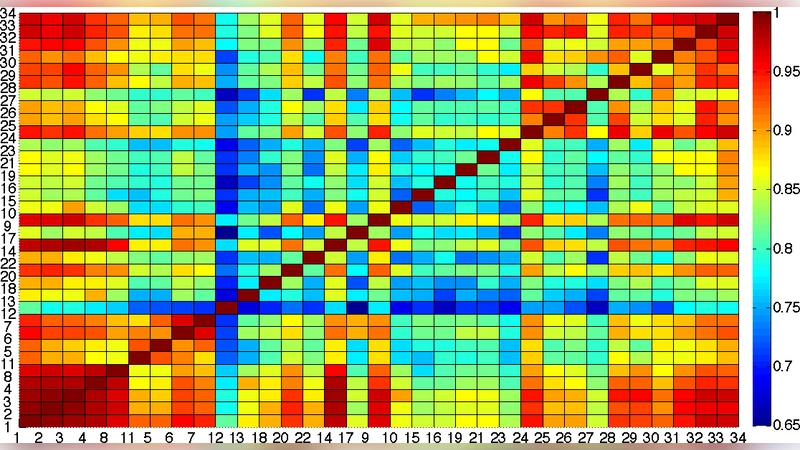
To translate synchronization into a community‑detection tool, the authors define a similarity function (S_{ij}(t)=\exp(-|\theta_i(t)-\theta_j(t)|)), where (\theta_i(t)) is the phase of node i at time t. As the system evolves toward global synchrony, nodes belonging to the same latent community achieve high similarity (close to 1) much earlier than nodes from different communities, whose similarity remains near 0 for a longer period. By converting similarity into a distance matrix (D_{ij}=1-S_{ij}) and applying agglomerative hierarchical clustering, they obtain a dendrogram that can be cut at multiple thresholds, thereby revealing community structure at several scales (micro, meso, macro).
The methodology is evaluated on three empirical datasets: two large‑scale social‑media graphs (representing a micro‑blogging platform and a general‑purpose social network) and a citation network. When the conservative model is used, the resulting clusters correspond closely to traditional friendship or citation groups, confirming prior findings. In contrast, the non‑conservative model uncovers clusters that align with broadcast influence: high‑activity “hub” users and their followers are grouped together, even if the underlying friendship links are sparse.
To assess the practical relevance of these clusters, the authors propose a novel community‑quality metric, (Q_{\text{activity}}), based on user activity statistics (post counts, retweets, shares). (Q_{\text{activity}}) rewards communities with low intra‑community variance in activity and high inter‑community differences. Empirical results show that clusters derived from the non‑conservative model achieve significantly higher (Q_{\text{activity}}) scores than those from the conservative model, indicating that the broadcast‑oriented dynamics better capture the functional organization of social media.
Key contributions of the work are: (1) a formal definition of non‑conservative, one‑to‑many coupling for synchronization on networks; (2) a synchronization‑based similarity measure that naturally yields multi‑scale community hierarchies; (3) an activity‑driven quality metric that links structural findings to observable user behavior; and (4) a systematic demonstration that the choice of interaction model dramatically alters the inferred community landscape, even on the same underlying graph.
The authors conclude by suggesting several avenues for future research: extending the non‑conservative framework to incorporate time‑varying broadcast strengths or probabilistic transmission, applying the approach to other dynamical processes such as epidemic spreading or opinion formation, and testing the activity‑based quality metric across domains like financial transaction networks or protein‑protein interaction maps. Overall, the paper provides a compelling argument that dynamic interaction rules are not a peripheral detail but a central determinant of how communities should be identified and interpreted in complex networks.