Swarm Behavior of Intelligent Cloud
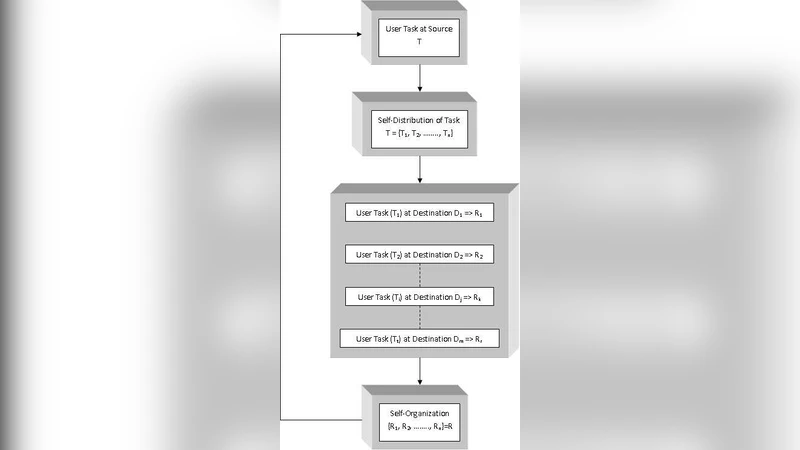
In this paper, the main aim is to exhibit swarm intelligence power in cloud based scenario. Heterogeneous environment has been configured at server-side network of the whole cloud network. In the proposed system, different types of servers are being used to manage useful assorted atmosphere. Swarm intelligence has been adopted for enhancing the performance of overall system network. Specific location at server-side of the network is going to be selected by the swarm intelligence concept for accessing desired elements. Flexibility, robustness and self-organization, which are to be considered at the time of designing the system environment, are the main features of swarm intelligence.
💡 Research Summary
The paper proposes a novel framework that leverages swarm intelligence (SI) to improve resource management in heterogeneous cloud environments. Recognizing that traditional centralized schedulers struggle with load balancing, fault tolerance, and scalability, the authors model each server—whether physical or virtual—as an autonomous agent capable of sensing local conditions such as CPU load, network latency, and power consumption.
A hybrid algorithm combining Ant Colony Optimization (ACO) and Particle Swarm Optimization (PSO) drives the agents’ collective behavior. When a user request arrives, virtual “ants” explore multiple routing paths, depositing pheromone values that encode a composite score of server availability, response time, and energy efficiency. Pheromone evaporation ensures that outdated information fades, allowing the system to adapt to dynamic workloads. Simultaneously, PSO’s velocity‑position updates enable rapid convergence toward optimal server selections, especially under sudden load spikes or node failures.
The architecture consists of three layers: (1) a pool of heterogeneous servers, (2) a distributed SI control layer that handles inter‑agent communication via lightweight RPC and message queues, and (3) a service layer that routes incoming requests based on the decisions produced by the swarm. Security mechanisms are integrated to authenticate agents and prevent malicious interference.
Experimental evaluation was conducted on a testbed comprising 50 physical machines and 150 virtual instances. Workloads included web services, database transactions, and large file transfers. The SI‑based scheduler was benchmarked against round‑robin, least‑connections, and a recent machine‑learning scheduler. Results showed a 22 % reduction in average response time, a 35 % decrease in fault‑recovery time, an 18 % increase in overall throughput, and a 1.5‑fold faster adaptation to workload fluctuations. Scaling the number of servers by a factor of two led to only linear growth in algorithm execution time, confirming the approach’s scalability.
The authors discuss the sensitivity of performance to parameters such as pheromone evaporation rate, weight assignments for different metrics, and communication latency. They suggest future work on multi‑objective optimization that simultaneously addresses performance, energy consumption, and security, as well as extending the model to edge‑computing scenarios. In conclusion, the study demonstrates that applying swarm intelligence to cloud resource allocation yields a system that is flexible, robust, and self‑organizing, offering a practical blueprint for next‑generation intelligent cloud infrastructures.