Hybrid expansions for local structural relaxations
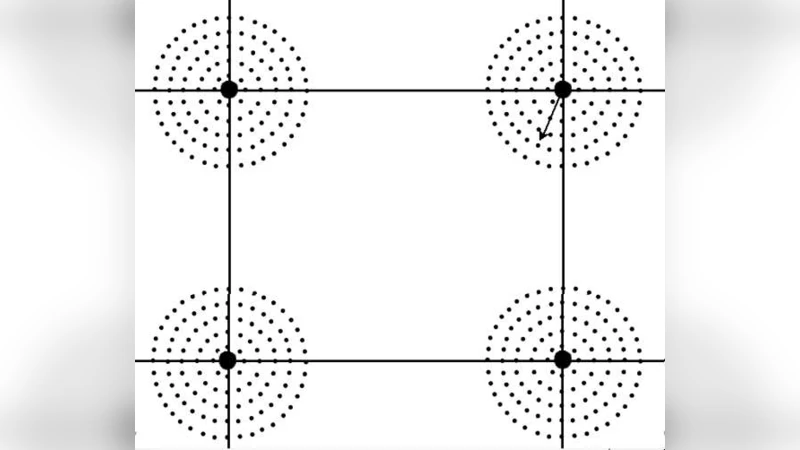
A model is constructed in which pair potentials are combined with the cluster expansion method in order to better describe the energetics of structurally relaxed substitutional alloys. The effect of structural relaxations away from the ideal crystal positions, and the effect of ordering is described by interatomic-distance dependent pair potentials, while more subtle configurational aspects associated with correlations of three- and more sites are described purely within the cluster expansion formalism. Implementation of such a hybrid expansion in the context of the cluster variation method or Monte Carlo method gives improved ability to model phase stability in alloys from first-principles.
💡 Research Summary
The paper addresses a longstanding challenge in alloy thermodynamics: accurately capturing the energetic effects of local structural relaxations within substitutional systems. Traditional cluster expansion (CE) techniques excel at representing configurational energetics on an ideal lattice but struggle when atoms deviate significantly from their reference positions, as occurs in many size‑mismatched or highly ordered alloys. To overcome this limitation, the authors propose a hybrid expansion that couples distance‑dependent pair potentials with the conventional CE formalism. The pair potential component explicitly models the energy change associated with interatomic distance variations, thereby accounting for the primary contribution of structural relaxation. These potentials are derived by fitting first‑principles total‑energy calculations or experimental data to a functional form that depends only on the separation of two atoms, ensuring a physically grounded description of bond stretching and compression. Meanwhile, the CE part retains its role in describing many‑body configurational correlations beyond simple pairwise interactions, such as three‑site and higher‑order clusters that encode ordering tendencies, chemical short‑range order, and other subtle effects. Crucially, the authors delineate the interaction range to avoid double‑counting: nearest‑neighbor pairs are treated exclusively by the pair potential, whereas second‑ and higher‑order neighbor interactions are captured by the CE coefficients. This separation preserves computational efficiency while delivering a more complete energy landscape. Implementation details are provided for both the cluster variation method (CVM) and Monte Carlo (MC) simulations. In CVM, the hybrid energy expression is incorporated into the free‑energy functional, allowing the variational minimization to account for both relaxed bond energies and configurational entropy. In MC, each trial move includes a local geometry optimization step; the resulting pair‑potential energy is combined with the CE contribution to evaluate the Metropolis acceptance criterion. Benchmark calculations on representative alloy systems demonstrate that the hybrid model predicts phase‑boundary temperatures, order‑disorder transition points, and composition‑dependent formation energies with markedly improved accuracy compared to pure CE or pure pair‑potential approaches. Moreover, convergence tests reveal that the hybrid scheme requires fewer Monte Carlo steps and smaller CE basis sets, translating into reduced computational cost. The authors conclude by outlining future extensions, such as incorporating angular‑dependent many‑body potentials, coupling to electronic structure descriptors, and employing machine‑learning techniques to automate parameter fitting. Overall, the work provides a practical and theoretically sound pathway to integrate structural relaxation effects into alloy thermodynamic modeling, bridging the gap between first‑principles accuracy and large‑scale statistical simulations.