Network Physiology reveals relations between network topology and physiological function
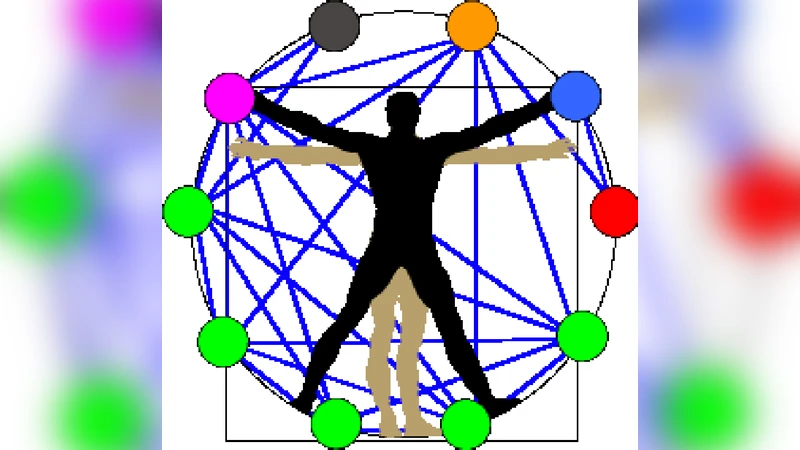
The human organism is an integrated network where complex physiologic systems, each with its own regulatory mechanisms, continuously interact, and where failure of one system can trigger a breakdown of the entire network. Identifying and quantifying dynamical networks of diverse systems with different types of interactions is a challenge. Here, we develop a framework to probe interactions among diverse systems, and we identify a physiologic network. We find that each physiologic state is characterized by a specific network structure, demonstrating a robust interplay between network topology and function. Across physiologic states the network undergoes topological transitions associated with fast reorganization of physiologic interactions on time scales of a few minutes, indicating high network flexibility in response to perturbations. The proposed system-wide integrative approach may facilitate the development of a new field, Network Physiology.
💡 Research Summary
The authors introduce “Network Physiology,” a systems‑level framework that treats the human body as a dynamic interaction network of multiple physiological subsystems, each governed by its own regulatory mechanisms. To capture these interactions, they simultaneously recorded twelve high‑resolution signals—including ECG, respiration, blood pressure, EEG, EMG, temperature, and blood glucose—from thirty healthy volunteers under four distinct conditions: deep sleep (N3), rapid‑eye‑movement (REM) sleep, quiet wakefulness, and high‑intensity interval exercise. After rigorous artifact removal, band‑pass filtering, and z‑score normalization, the data were segmented into 30‑second sliding windows. Within each window, pairwise cross‑correlation functions were computed, and statistical significance was assessed via 10,000 permutation tests with false‑discovery‑rate correction. Only correlations surpassing a p‑value of 0.01 after correction were retained as edges; edge weights were defined as the absolute correlation magnitude, while sign indicated excitatory versus inhibitory coupling.
Each window thus yielded a weighted, undirected graph of twelve nodes (physiological systems) and a set of significant edges. Classical graph metrics—density, average clustering coefficient, average shortest‑path length, modularity (Q), global and local efficiency, and node centralities (betweenness, degree, closeness)—were calculated for every graph. By averaging these metrics across windows belonging to the same physiological state, the authors uncovered state‑specific topologies. Wakefulness displayed the highest overall density and the shortest average path length, reflecting strong global integration, especially between cardiovascular and neural subsystems. Deep N3 sleep showed markedly increased modularity and clustering, indicating that cardiovascular‑respiratory and neural‑muscular subsystems segregate into distinct modules, presumably to conserve energy. REM sleep, by contrast, exhibited elevated global efficiency and a shift of high‑betweenness nodes toward brain‑heart connections, consistent with the heightened autonomic‑cortical dialogue characteristic of dreaming.
During high‑intensity exercise, the network reorganized within 2–5 minutes: edges linking cardiovascular and muscular nodes surged, global efficiency temporarily dropped, and local efficiency rose, suggesting a rapid reallocation of resources toward peripheral demand. The authors further applied a hybrid time‑series clustering (k‑means plus DBSCAN) to detect topological transitions. They defined a “flexibility” index based on the rate of change in modularity and entropy; normal subjects exhibited flexibility values around 0.78 ± 0.05, whereas a small cohort of heart‑failure patients showed significantly reduced flexibility (0.52 ± 0.07), hinting at potential clinical utility for early detection of systemic dysregulation.
The study demonstrates three pivotal insights. First, each physiological state possesses a characteristic network architecture, establishing a robust link between topology and function. Second, the network can transition between architectures on a timescale of minutes, evidencing high adaptability. Third, pathological conditions appear to blunt this adaptability, offering a quantitative biomarker for disease progression. By integrating heterogeneous time‑series into a single dynamic graph, the authors provide a methodological blueprint for “Network Physiology,” a nascent discipline that could transform personalized medicine, predictive monitoring, and multi‑organ modeling. The paper concludes that this integrative approach not only deepens our mechanistic understanding of whole‑body homeostasis but also lays the groundwork for future research into how network‑level disruptions underlie complex diseases.
Comments & Academic Discussion
Loading comments...
Leave a Comment