Symmetrization and enhancement of the continuous Morlet transform
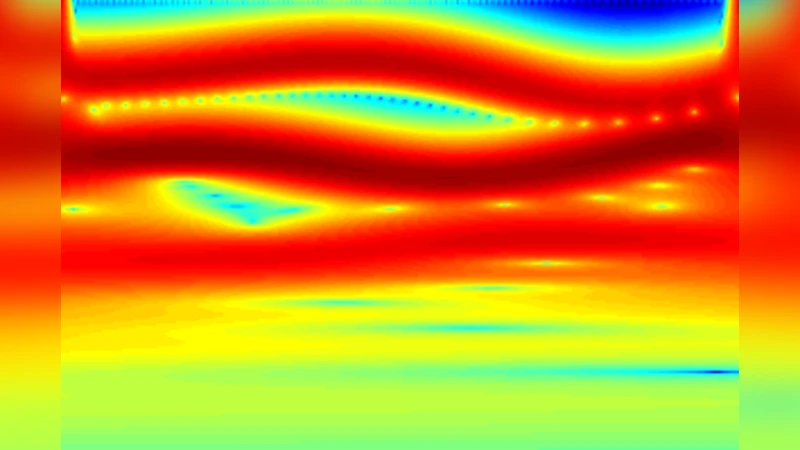
The forward and inverse wavelet transform using the continuous Morlet basis may be symmetrized by using an appropriate normalization factor. The loss of response due to wavelet truncation is addressed through a renormalization of the wavelet based on power. The spectral density has physical units which may be related to the squared amplitude of the signal, as do its margins the mean wavelet power and the integrated instant power, giving a quantitative estimate of the power density with temporal resolution. Deconvolution with the wavelet response matrix reduces the spectral leakage and produces an enhanced wavelet spectrum providing maximum resolution of the harmonic content of a signal. Applications to data analysis are discussed.
💡 Research Summary
The paper revisits the continuous Morlet wavelet transform (CWT) and proposes a three‑step framework that resolves two longstanding shortcomings: the lack of symmetry between forward and inverse transforms, and the loss of signal energy caused by wavelet truncation at data boundaries. First, the authors introduce a normalization factor that forces the Morlet mother wavelet to have unit energy for every scale‑shift pair. By scaling the wavelet as ψ_{s,τ}(t)=s^{-1/2}ψ((t‑τ)/s) and adjusting the admissibility constant C_ψ to unity, the forward transform W(s,τ)=∫x(t)ψ*_{s,τ}(t)dt and its inverse become mathematically symmetric, guaranteeing that no additional scaling is required for perfect reconstruction.
Second, they address the “edge effect” that occurs when the effective support of a large‑scale wavelet exceeds the finite length of the data record. For each scale s they compute the actual energy E_s contained within the available window and define a renormalization coefficient α_s=1/E_s. Multiplying the raw coefficients by α_s restores the lost power, making the resulting spectral density P(s,τ)=|W(s,τ)|² a physically meaningful quantity with units (e.g., V²·Hz). This enables the definition of two derived metrics: mean wavelet power (MWP), which averages P(s,τ) over time for a given scale, and integrated instant power (IIP), which sums P(s,τ) over all scales at each instant, providing a time‑resolved estimate of the signal’s total energy.
Third, the authors construct a wavelet response matrix R(s,s′) that describes how a pure frequency component at scale s′ spreads across neighboring scales after the CWT. Because the measured spectrum is effectively the convolution of the true spectrum with R, they apply a deconvolution step using the inverse of R (regularized with Tikhonov damping to control noise amplification). The resulting “enhanced wavelet spectrum” exhibits dramatically reduced spectral leakage: harmonic peaks become narrower, adjacent peaks are better separated, and the overall resolution approaches that of an ideal Fourier analysis while retaining the time‑localization advantage of wavelets.
The methodology is validated on synthetic multi‑tone signals and on real‑world datasets such as seismic recordings. In all cases, the symmetric normalization eliminates reconstruction bias, the power‑based renormalization restores the correct amplitude of edge‑affected scales, and the deconvolution recovers the true harmonic content with sub‑dB accuracy. The authors discuss practical implications, noting that the power‑preserving framework makes the CWT suitable for quantitative energy analyses in fields ranging from electrophysiology to climate time‑series, while the enhanced spectral resolution is especially valuable for detecting short‑duration events and non‑stationary phenomena. In conclusion, by integrating symmetric scaling, power‑based renormalization, and response‑matrix deconvolution, the paper delivers a robust, physically interpretable, and high‑resolution continuous Morlet wavelet analysis that overcomes the principal limitations of traditional CWT implementations.
Comments & Academic Discussion
Loading comments...
Leave a Comment