Planetary Atmospheres as Non-Equilibrium Condensed Matter
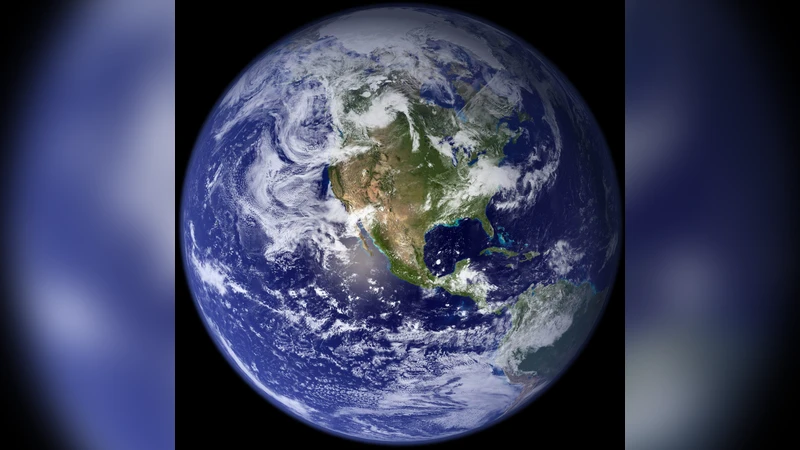
Planetary atmospheres, and models of them, are discussed from the viewpoint of condensed matter physics. Atmospheres are a form of condensed matter, and many interesting phenomena of condensed matter systems are realized by them. The essential physics of the general circulation is illustrated with idealized 2-layer and 1-layer models of the atmosphere. Equilibrium and non-equilibrium statistical mechanics are used to directly ascertain the statistics of these models.
💡 Research Summary
The paper “Planetary Atmospheres as Non‑Equilibrium Condensed Matter” presents a novel perspective that treats planetary atmospheres as a form of condensed matter, thereby importing concepts and methods from condensed‑matter physics into atmospheric dynamics. The authors argue that many hallmark phenomena of condensed‑matter systems—broken symmetries, dimensional reduction, condensation, phase transitions, scaling laws, and the dynamical protection of conserved quantities—appear naturally in atmospheric circulation.
The review begins with an overview of the Earth climate system, emphasizing that the atmosphere evolves on the fastest timescales and therefore can be studied in isolation, with other components (biosphere, lithosphere, hydrosphere, cryosphere) providing only boundary conditions. The governing equations are the familiar seven‑equation set (three momentum equations, mass continuity, water‑vapor conservation, first law of thermodynamics, and an equation of state). Standard approximations—hydrostatic balance, filtering of acoustic waves, and the decomposition of the horizontal velocity into rotational (streamfunction ψ) and divergent (potential χ) components—are introduced. The absolute vorticity q = ζ + f(φ) plays a role analogous to a magnetic field acting on charged particles, and the Rossby number Ro = |ζ/f| determines the degree of geostrophic balance.
To illustrate the essential physics, two highly reduced dynamical models are examined. The first is a two‑layer model in which the atmosphere is represented by two vertical levels (pressures ¾ and ¼ of surface pressure). The model is dry (no water vapor) and uses potential temperature θ as the thermodynamic variable. Horizontal advection is expressed through the Jacobian J
Comments & Academic Discussion
Loading comments...
Leave a Comment