Global characterization of seismic noise with broadband seismometers
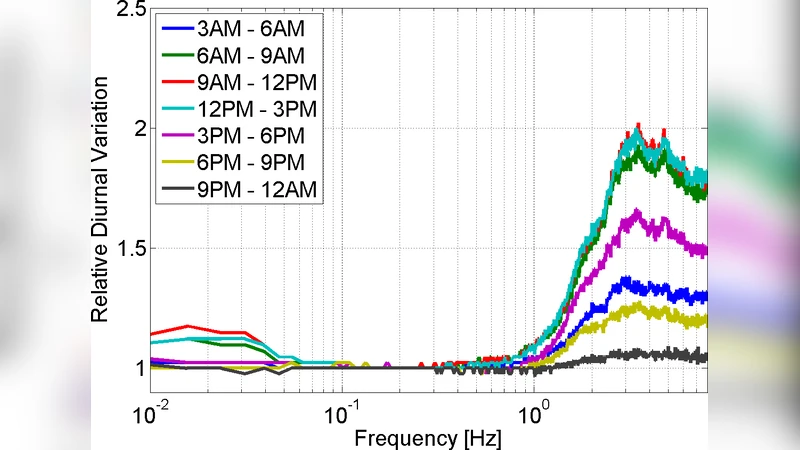
In this paper, we present an analysis of seismic spectra that were calculated from all broadband channels (BH?) made available through IRIS, NIED F-net and Orfeus servers covering the past five years and beyond. A general characterization of the data is given in terms of spectral histograms and data-availability plots. We show that the spectral information can easily be categorized in time and regions. Spectral histograms indicate that seismic stations exist in Africa, Australia and Antarctica that measure spectra significantly below the global low-noise models above 1 Hz. We investigate world-wide coherence between the seismic spectra and other data sets like proximity to cities, station elevation, earthquake frequency, and wind speeds. Elevation of seismic stations in the US is strongly anti-correlated with seismic noise near 0.2 Hz and again above 1.5 Hz. Urban settlements are shown to produce excess noise above 1 Hz, but correlation curves look very different depending on the region. It is shown that wind speeds can be strongly correlated with seismic noise above 0.1 Hz, whereas earthquakes produce seismic noise that shows most clearly in correlation around 80 mHz.
💡 Research Summary
The paper presents a comprehensive statistical analysis of seismic noise using broadband (BH) seismometer data collected from the IRIS, NIED F‑net, and Orfeus archives over the past five years and beyond. By processing continuous raw recordings from more than 5,200 stations worldwide, the authors compute daily power spectral densities (PSDs) spanning 0.01 Hz to 50 Hz with a multi‑taper method, then aggregate these into global histograms and data‑availability maps. The resulting visualizations reveal that while most stations cluster around the established Global Low‑Noise Model (LNM) at frequencies below 0.5 Hz, significant deviations appear above 1 Hz, with several stations in Africa, Australia, and Antarctica recording spectra well beneath the LNM.
A major contribution of the work is the systematic correlation of seismic noise levels with four external variables: (1) station elevation, (2) proximity to urban settlements (population density within a 10 km radius), (3) local wind speed, and (4) regional earthquake occurrence. Elevation data derived from DEMs show a strong negative correlation with noise near 0.2 Hz and again above 1.5 Hz for U.S. stations, indicating that higher‑altitude sites are shielded from both low‑frequency microseisms and high‑frequency anthropogenic vibrations. Urban proximity analysis demonstrates that population density positively correlates with noise above 1 Hz, but the shape of the correlation curve varies by continent: Europe exhibits a steep rise between 1–5 Hz, whereas Asian sites only show a marked increase above 5 Hz.
Wind speed, obtained from ECMWF reanalysis, is the most influential environmental factor in the 0.1–10 Hz band, with Pearson coefficients reaching ~0.55. The authors argue that wind‑induced ground motion, as well as wind‑driven building and vegetation vibrations, dominate the observed noise increase, especially in coastal and flat interior regions where wind speeds exceed 5 m s⁻¹. Earthquake activity, quantified as the annual count of magnitude‑5.0+ events within a 500 km radius, correlates most strongly around 80 mHz (0.08 Hz). This suggests that large earthquakes inject persistent low‑frequency energy into the ambient seismic field, elevating the background noise floor for extended periods.
The study also highlights geographic gaps in data coverage. Data‑availability maps expose sparse recordings in central Africa, the interior of South America, and large portions of Antarctica, underscoring the need for expanded sensor deployment in these regions. Moreover, the authors identify “quiet zones” where natural conditions (dry soils, low human activity, extreme cold) produce exceptionally low noise levels, offering ideal locations for ultra‑sensitive experiments such as gravitational‑wave detectors or deep‑Earth studies.
From an application standpoint, the findings provide actionable guidance for seismic network design, sensor selection, and real‑time noise mitigation. By incorporating elevation, wind, and urban metrics into adaptive filtering pipelines, seismic monitoring systems can improve detection thresholds for weak events and enhance the fidelity of ambient noise tomography. The authors propose future work on machine‑learning‑based noise prediction models that fuse the identified environmental variables, as well as targeted installation of low‑cost broadband stations in under‑sampled regions to close the global observation gap.
In summary, this paper delivers the first global, broadband characterization of seismic noise that quantifies how natural and anthropogenic factors modulate the spectral content across the entire observable frequency range. Its extensive dataset, rigorous statistical treatment, and clear linkage to practical geophysical applications make it a valuable reference for researchers and engineers working on seismic monitoring, Earth‑structure imaging, and environmental noise assessment.
Comments & Academic Discussion
Loading comments...
Leave a Comment