Uncovering Evolutionary Ages of Nodes in Complex Networks
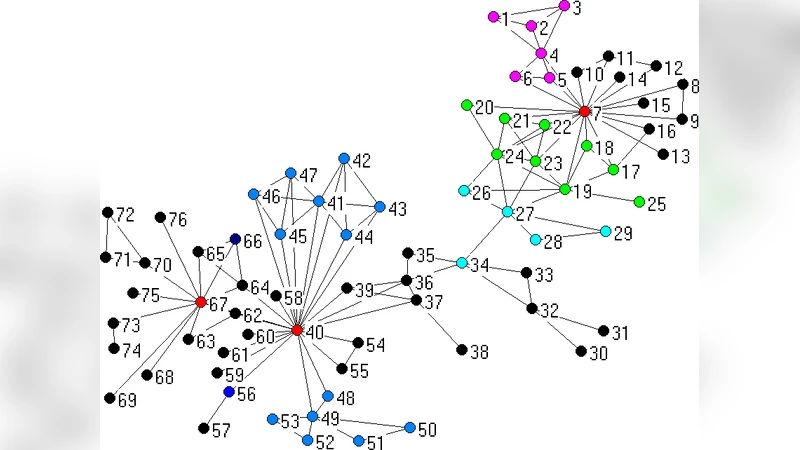
In a complex network, different groups of nodes may have existed for different amounts of time. To detect the evolutionary history of a network is of great importance. We present a general method based on spectral analysis to address this fundamental question in network science. In particular, we argue and demonstrate, using model and real-world networks, the existence of positive correlation between the magnitudes of eigenvalues and node ages. In situations where the network topology is unknown but short time series measured from nodes are available, we suggest to uncover the network topology at the present (or any given time of interest) by using compressive sensing and then perform the spectral analysis. Knowledge of ages of various groups of nodes can provide significant insights into the evolutionary process underpinning the network.
💡 Research Summary
The paper proposes a general framework for inferring the evolutionary ages of nodes in complex networks by exploiting the spectral properties of the network Laplacian matrix. The authors argue that, as a network grows, information about the time of node addition becomes encoded in the eigenvalues and eigenvectors of its Laplacian. In particular, eigenvectors associated with large eigenvalues are highly localized and therefore sensitive to perturbations affecting a small set of nodes, while those linked to small eigenvalues are delocalized and respond to global changes. Because older nodes tend to acquire more connections during preferential attachment or other growth processes, they dominate the high‑eigenvalue modes. Consequently, a positive correlation should exist between the magnitude of an eigenvalue and the average age of the nodes that contribute most strongly to its eigenvector.
To validate this hypothesis, three families of networks are examined. First, synthetic scale‑free networks generated by the Barabási‑Albert preferential‑attachment rule (N = 2000) are used. Node age is defined as N − i + 1, where i is the order of addition. For each eigenvector the authors compute a weighted average age (weights given by the absolute components of the eigenvector). Plots of average age versus eigenvalue index show a clear monotonic increase: higher eigenvalues correspond to older node groups. The same trend holds for the weighted average degree, confirming that high‑eigenvalue modes are dominated by high‑degree (hence older) nodes. Moreover, the size of the eigenvectors (number of nodes with components above a small threshold) tends to shrink as eigenvalues grow, indicating that only a few very old nodes dominate the largest eigenvalues.
Second, a duplication‑divergence model mimicking protein‑protein interaction (PPI) networks is studied. Starting from a small seed, a randomly chosen protein is duplicated at each step; the duplicate inherits all links of its parent, then each inherited link is removed with probability p and new links are added with probability q. Networks of comparable size (≈ 2200 nodes, average degree ≈ 10) are generated. Again, a strong positive correlation between eigenvalue magnitude and average node age is observed, while the relationship between degree and age is highly noisy, demonstrating that degree alone cannot recover age information in such biologically motivated networks.
Third, the method is applied to a real‑world PPI network of the baker’s yeast (Saccharomyces cerevisiae). After filtering for high‑confidence interactions, the largest connected component contains 2235 proteins. Evolutionary ages are assigned based on phylogenetic groups (prokaryotes = 4, eukaryotes = 3, fungi = 2, yeast = 1). Spectral analysis of the Laplacian reproduces the patterns seen in the synthetic examples: eigenvectors with large eigenvalues are dominated by proteins with high evolutionary ages, while degree shows no systematic relationship with age. This confirms that the eigenvalue‑age correlation is not an artifact of synthetic construction but holds for a genuine biological system.
The authors also address the more challenging scenario where the network topology is unknown but time‑series data from the nodes are available. They employ a recently developed compressive‑sensing based reverse‑engineering technique that reconstructs the adjacency matrix from short, possibly undersampled, time series. Once the adjacency matrix is recovered, the Laplacian can be formed and the same spectral analysis applied. Simulations demonstrate that the reconstructed Laplacian’s eigenvalues retain the age‑eigenvalue correlation, showing that the approach works even when only dynamical observations are at hand.
Limitations are explicitly discussed. The method requires that node ages be reflected in the eigenmodes; networks where age does not influence connectivity (e.g., citation networks, rapidly evolving social media graphs) will not exhibit the necessary correlation. In purely scale‑free networks generated by pure preferential attachment, age can be inferred directly from degree, making the spectral approach unnecessary. Moreover, the current work focuses on unweighted, undirected graphs; extensions to weighted, directed, or multilayer networks remain open.
In summary, the paper establishes that the spectral characteristics of the Laplacian matrix provide a robust proxy for node evolutionary ages in a broad class of networks where growth processes imprint age information onto connectivity patterns. By linking large eigenvalues to small, old node clusters, the method offers a systematic way to uncover the temporal layering of complex systems, with potential applications ranging from biology (identifying ancient core proteins) to infrastructure (detecting legacy components). Future directions include theoretical modeling of the eigenvalue‑age relationship, handling of weighted and multilayer structures, and integration with more sophisticated dynamical inference techniques.
Comments & Academic Discussion
Loading comments...
Leave a Comment