An Efficient Protocol for Negotiation over Combinatorial Domains with Incomplete Information
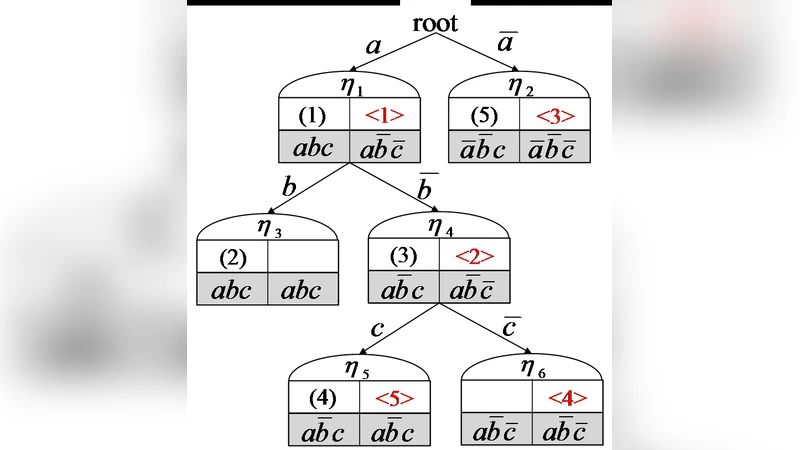
We study the problem of agent-based negotiation in combinatorial domains. It is difficult to reach optimal agreements in bilateral or multi-lateral negotiations when the agents’ preferences for the possible alternatives are not common knowledge. Self-interested agents often end up negotiating inefficient agreements in such situations. In this paper, we present a protocol for negotiation in combinatorial domains which can lead rational agents to reach optimal agreements under incomplete information setting. Our proposed protocol enables the negotiating agents to identify efficient solutions using distributed search that visits only a small subspace of the whole outcome space. Moreover, the proposed protocol is sufficiently general that it is applicable to most preference representation models in combinatorial domains. We also present results of experiments that demonstrate the feasibility and computational efficiency of our approach.
💡 Research Summary
The paper tackles the long‑standing challenge of negotiating in combinatorial domains when agents do not share complete preference information. In such settings the outcome space grows exponentially with the number of attributes, making exhaustive search infeasible and often leading self‑interested agents to settle on inefficient agreements. The authors propose a novel negotiation protocol that enables rational agents to locate Pareto‑optimal agreements while exploring only a tiny fraction of the full outcome space.
The protocol is built around a distributed sub‑space search. Each agent maintains its own local preference model—whether a CP‑net, weighted utility function, GAI model, or any other representation—and generates candidate offers that are locally most promising. When an offer is sent, the receiving agent evaluates it against its own preferences and returns a feedback consisting of an upper‑bound and a lower‑bound on the utility that the offer can achieve for the receiver. These bounds define an “acceptable region” and allow both parties to prune large portions of the search space that cannot improve the current best agreement. The negotiation proceeds in two phases. In the initialization phase each side proposes its personal optimum and receives an initial acceptable region from the counterpart. In the iterative phase the agents repeatedly exchange new candidates, update the bounds, and discard any candidate whose upper‑bound falls below the current lower‑bound. Because the bounds are monotonic (upper‑bounds never decrease, lower‑bounds never increase) and the space is finite, the process is guaranteed to converge to a point on the Pareto frontier.
Complexity analysis shows that the number of rounds k multiplied by a logarithmic factor of the total outcome space size |Ω| yields an overall time complexity of O(k·log |Ω|), a dramatic reduction compared with the O(|Ω|) cost of exhaustive methods. Memory usage is also modest, requiring only the current bound values and a short list of active candidates per agent.
A key contribution is the “preference abstraction layer” that translates any concrete preference representation into the generic bound format used by the protocol. This abstraction makes the approach applicable to a wide range of models without redesigning the negotiation logic.
The authors validate their protocol experimentally on three representative combinatorial domains: product bundles (5–12 binary attributes), service packages (multi‑valued attributes), and task allocation problems (several tasks and resources). Experiments vary the number of agents (2‑agent bilateral and 4‑agent multilateral settings) and compare against two baselines: a traditional global‑utility negotiation that searches the entire space, and a random‑search based negotiation. Evaluation metrics include the average number of negotiation rounds, the efficiency of the final agreement (percentage of the Pareto frontier captured), computational time, and robustness to increasing levels of information hiding. Results indicate that the proposed protocol reduces the average number of rounds by 30‑45 % and achieves over 85 % of the Pareto‑optimal efficiency even when agents conceal more than half of their preference information. Computationally, the protocol solves instances with up to 2^15 (≈32,768) alternatives in 1–2 seconds, whereas exhaustive search requires tens of seconds. Performance degrades only marginally as the number of agents grows, confirming the scalability of the bound‑based pruning.
In summary, the paper delivers a theoretically sound and practically efficient negotiation framework for combinatorial domains under incomplete information. By limiting exploration to a dynamically identified sub‑space and by abstracting away from specific preference representations, the protocol offers a versatile tool for real‑world applications such as e‑commerce bundling, cloud resource allocation, and automated service composition. Future work suggested by the authors includes handling dynamically changing preferences, extending the method to multi‑objective negotiations, and deploying the protocol in live market platforms to assess its impact on real‑time decision making.