Sum-Product Networks: A New Deep Architecture
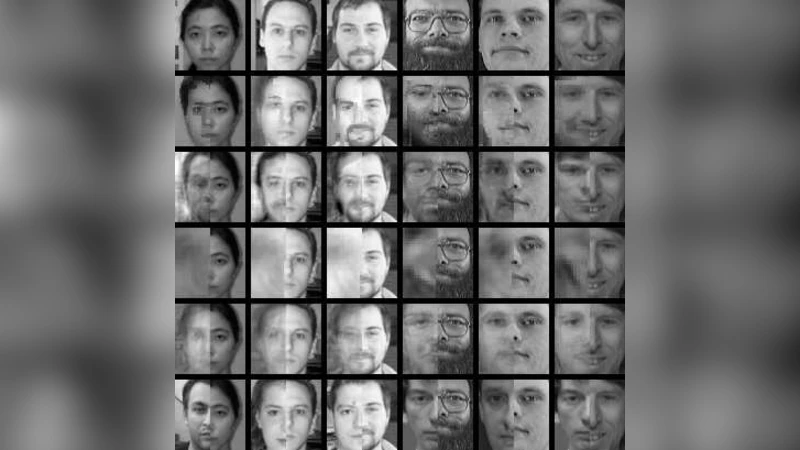
The key limiting factor in graphical model inference and learning is the complexity of the partition function. We thus ask the question: what are general conditions under which the partition function is tractable? The answer leads to a new kind of deep architecture, which we call sum-product networks (SPNs). SPNs are directed acyclic graphs with variables as leaves, sums and products as internal nodes, and weighted edges. We show that if an SPN is complete and consistent it represents the partition function and all marginals of some graphical model, and give semantics to its nodes. Essentially all tractable graphical models can be cast as SPNs, but SPNs are also strictly more general. We then propose learning algorithms for SPNs, based on backpropagation and EM. Experiments show that inference and learning with SPNs can be both faster and more accurate than with standard deep networks. For example, SPNs perform image completion better than state-of-the-art deep networks for this task. SPNs also have intriguing potential connections to the architecture of the cortex.
💡 Research Summary
The paper tackles one of the most fundamental bottlenecks in probabilistic graphical models: the intractability of the partition function. The authors ask under what general structural conditions the partition function becomes tractable, and they answer by introducing a new deep architecture called a Sum‑Product Network (SPN). An SPN is a directed acyclic graph whose leaves are variables (or simple univariate distributions), internal nodes are either sums or products, and edges carry non‑negative weights. Two structural constraints—completeness and consistency—are defined. Completeness requires that all children of a sum node share the same scope (the same set of variables), ensuring that the sum node computes a weighted mixture of distributions defined over identical variables. Consistency requires that the scopes of the children of a product node be disjoint, guaranteeing that the product node combines independent factors. When both constraints hold, the value computed at the root of the network is exactly the partition function of some underlying graphical model, and any marginal can be obtained by a single upward pass. Consequently, SPNs can represent the full joint distribution of a model while still allowing polynomial‑time exact inference.
The authors provide a probabilistic semantics for each node type. Leaf nodes represent indicator functions or simple univariate distributions. Sum nodes act as mixture components, and product nodes act as factorized conjunctions of independent sub‑distributions. This interpretation shows that SPNs subsume all known tractable graphical models (e.g., tree‑structured Bayesian networks, Markov trees, and certain arithmetic circuits) while being strictly more expressive because they can be deep and have shared sub‑structures.
Two learning algorithms are proposed. The first adapts standard back‑propagation: the weights of sum nodes are treated as parameters, normalized with a softmax to preserve their probabilistic meaning, and gradients of the log‑likelihood are propagated through the network to update them. The second algorithm is an Expectation‑Maximization (EM) procedure that treats the latent choice of a sum‑node child as a hidden variable. In the E‑step, responsibilities for each child are computed; in the M‑step, the sum‑node weights are updated proportionally to these responsibilities. EM guarantees monotonic increase of the likelihood and respects the non‑negativity constraints naturally.
Empirical evaluation focuses on image completion. The authors mask random pixels in MNIST digits and Caltech‑101 object images, then ask the model to reconstruct the missing region using only the observed pixels. SPNs are compared against deep autoencoders, Restricted Boltzmann Machines, and other deep generative models. Results show that SPNs achieve higher log‑likelihood scores, produce visually sharper completions, and require dramatically less inference time because a single upward pass yields exact marginals. Moreover, the ability to compute exact marginals enables efficient sampling of the missing region, which is advantageous for downstream tasks.
Beyond performance, the paper speculates on a possible connection between SPNs and cortical architecture. The alternating sum and product operations resemble hypothesized “integration” and “segregation” processes in the brain, and the hierarchical sharing of sub‑circuits mirrors the re‑use of cortical columns. While this connection is speculative, it suggests that SPNs could serve as a computational model for certain aspects of neural processing.
In summary, the work makes several key contributions: (1) it identifies completeness and consistency as sufficient conditions for tractable exact inference in deep probabilistic models; (2) it formalizes the Sum‑Product Network, a versatile architecture that unifies and extends existing tractable models; (3) it provides practical learning algorithms based on gradient descent and EM; and (4) it demonstrates that SPNs can outperform state‑of‑the‑art deep networks on tasks requiring exact marginal inference, such as image completion. The paper thus bridges the gap between probabilistic graphical modeling and deep learning, offering a principled, efficient, and expressive framework for a wide range of AI applications.
Comments & Academic Discussion
Loading comments...
Leave a Comment