The Myth of Global Science Collaboration - Collaboration patterns in epistemic communities
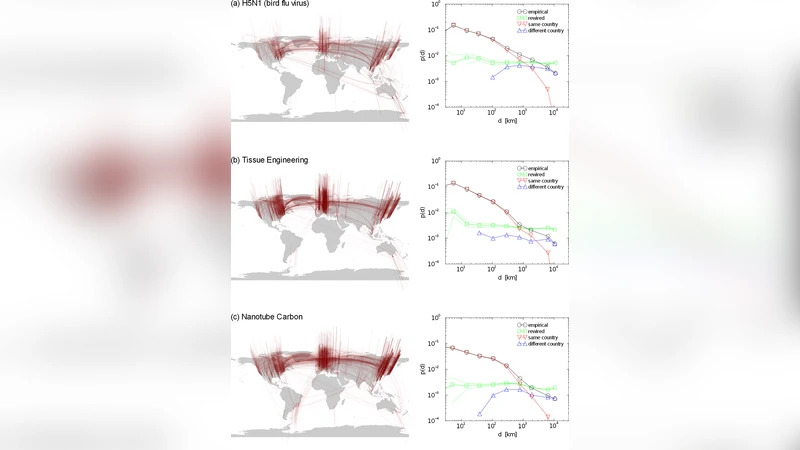
Scientific collaboration is often perceived as a joint global process that involves researchers worldwide, regardless of their place of work and residence. Globalization of science, in this respect, implies that collaboration among scientists takes place along the lines of common topics and irrespective of the spatial distances between the collaborators. The networks of collaborators, termed ’epistemic communities’, should thus have a space-independent structure. This paper shows that such a notion of globalized scientific collaboration is not supported by empirical data. It introduces a novel approach of analyzing distance-dependent probabilities of collaboration. The results of the analysis of six distinct scientific fields reveal that intra-country collaboration is about 10-50 times more likely to occur than international collaboration. Moreover, strong dependencies exist between collaboration activity (measured in co-authorships) and spatial distance when confined to national borders. However, the fact that distance becomes irrelevant once collaboration is taken to the international scale suggests a globalized science system that is strongly influenced by the gravity of local science clusters. The similarity of the probability functions of the six science fields analyzed suggests a universal mode of spatial governance that is independent from the mode of knowledge creation in science.
💡 Research Summary
The paper “The Myth of Global Science Collaboration – Collaboration patterns in epistemic communities” investigates whether scientific collaboration truly transcends geographic distance, as the popular narrative of a globalized science system suggests. Using the SCI‑Expanded database, the authors extracted publications from six distinct research fields—Bluetooth technology, image compression algorithms, heart valve engineering, H5N1 avian‑influenza, tissue engineering, and carbon nanotubes—covering the period 2004‑2008. For each paper, they identified the institutional affiliations of all co‑authors, constructed undirected networks where nodes represent organizations and edges represent at least one co‑authored paper between two organizations, and geo‑coded each node to obtain latitude and longitude.
The core methodological contribution is a distance‑dependent probability analysis. For every existing edge they computed the great‑circle distance between the two institutions, binned distances logarithmically, and counted edges per bin (c₁(d)). They also computed the total number of possible organization pairs in each distance bin (cₐ(d)) and defined the empirical collaboration probability as p(d)=c₁(d)/cₐ(d). To assess whether observed patterns differ from random expectations, they generated 100 degree‑preserving randomised networks (Maslov‑Sneppen rewiring) that destroy any spatial structure while keeping the degree distribution intact. The same binning procedure applied to the random networks yields a flat baseline probability independent of distance.
Results reveal three robust patterns across all six fields. First, intra‑national collaborations show a steep negative relationship with distance: the probability of co‑authorship drops by roughly two orders of magnitude when moving from ~10 km to ~10 000 km. This confirms a strong “gravity” effect of local scientific clusters. Second, international collaborations are essentially distance‑neutral; once a partner outside the home country is selected, the exact geographic location does not affect the likelihood of collaboration. Third, the overall volume of international co‑authorships is 10–50 times lower than that of domestic collaborations, indicating that the global scientific system is still dominated by national structures.
Importantly, the six fields—despite representing different modes of knowledge production (synthetic/equipment‑driven, data‑driven, mixed, analytic)—exhibit remarkably similar probability curves. After normalising for network density (p*(d)=p(d)·N(N‑1)/(2L)), the curves collapse onto a universal shape, suggesting a field‑independent spatial governance mechanism. The authors argue that policy, funding, and institutional incentives, which are typically organised at the national level, are the primary drivers of this pattern, outweighing the role of improved communication technologies or cognitive proximity.
The paper concludes that the notion of a borderless, globally integrated scientific community is more myth than reality. While international collaborations do occur, they are a small, distance‑agnostic subset of a much larger, distance‑dependent domestic network. The findings call for science policy that explicitly addresses national‑level barriers—such as funding allocation, mobility restrictions, and the reinforcement of regional research clusters—if the goal is to foster truly global scientific collaboration. Future work could extend the analysis temporally, explore additional disciplines, or incorporate individual‑level network data to refine our understanding of how spatial constraints shape the evolution of scientific knowledge.
Comments & Academic Discussion
Loading comments...
Leave a Comment