Cosmic Explosions (Optical Transients)
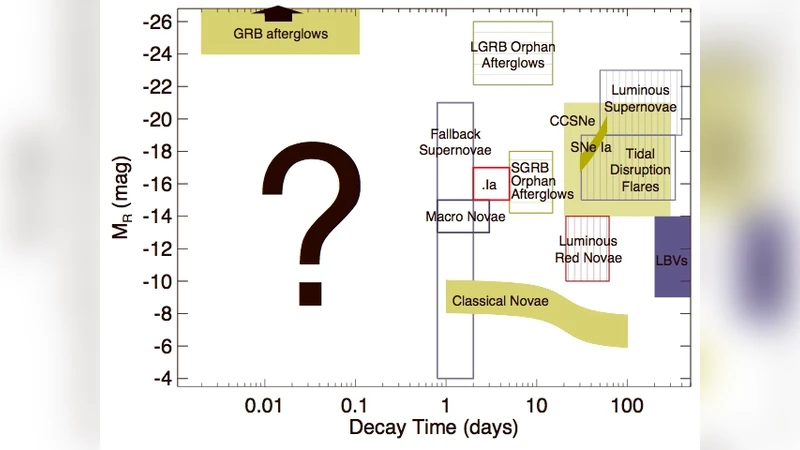
This paper is an extended summary of the talk I gave at IAU Symposium “New Horizons in Time Domain Astronomy” (Oxford, 2011). I first review the history of transients (which is intimately related to the advent of wide-field telescopic imaging; I then summarize wide field imaging projects. The motivations that led to the design of the Palomar Transient Factory (PTF) followed by a summary of the astronomical returns from PTF. I review the lessons learnt from PTF. I conclude that, during this decade, optical transient searches will continue to flourish and may even accelerate as surveys at other wavelengths – notably radio, UV and X-ray – come on line. As a result, I venture to suggest that specialized searches for transients will continue – even into the LSST era. I end the article by discussing the importance of follow-up telescopes for transient object studies – a topical issue given that in the US the Portfolio Review is under away.
💡 Research Summary
The paper provides a comprehensive overview of the development and future prospects of optical transient astronomy, drawing on material presented at the 2011 IAU Symposium “New Horizons in Time‑Domain Astronomy.” It begins with a historical perspective, showing how the discovery of transient phenomena—objects whose brightness changes on timescales from seconds to months—has been tightly coupled to advances in wide‑field imaging. Early surveys were limited by photographic plates and narrow fields of view, restricting detections to rare, bright supernovae. The advent of large‑format CCDs, automated telescopes, and real‑time data pipelines in the late‑1990s opened the door to systematic, high‑cadence surveys.
The author then surveys the major wide‑field projects that followed, including the Sloan Digital Sky Survey, Pan‑STARRS, and the Catalina Real‑Time Transient Survey. Each of these initiatives optimized a different combination of sky coverage, depth, and cadence, and together they demonstrated the power of machine‑learning classifiers, image‑subtraction pipelines, and rapid alert distribution. These technical lessons set the stage for the Palomar Transient Factory (PTF), which is presented as the centerpiece of the article.
PTF was built around the 48‑inch Samuel Oschin Schmidt telescope equipped with a 7.8‑square‑degree camera. Its design philosophy—“fast detection, immediate follow‑up”—was realized through a fully automated system that performed nightly scans of >2,000 deg² to a limiting magnitude of ≈20.5, generated difference images in real time, filtered candidates with a combination of statistical cuts and machine‑learning classifiers, and triggered robotic follow‑up telescopes for photometry and spectroscopy. Between 2010 and 2015 PTF discovered roughly 2,000 supernovae, several hundred fast, luminous optical transients (often dubbed “Fast Blue Optical Transients”), and a host of other variable phenomena. The survey’s most important scientific contribution was the identification of a population of low‑luminosity, high‑velocity explosions that had been missed by earlier, shallower searches, forcing theorists to revise models of massive‑star evolution, mass‑loss, and black‑hole formation.
Operational experience with PTF yielded several hard‑won lessons. Data quality control and accurate image calibration proved essential to avoid systematic biases in difference imaging. Candidate selection algorithms exhibited selection effects that could suppress certain classes of transients; the solution was a multi‑stage vetting process that combined automated scoring with human inspection. Perhaps most critically, the bottleneck for scientific return lay in securing rapid, multi‑wavelength follow‑up. The paper argues that dedicated small‑aperture robotic telescopes, coordinated spectroscopic facilities, and a robust data‑sharing infrastructure are indispensable for maximizing the impact of any wide‑field survey.
Looking ahead, the author predicts that the next decade will see an acceleration of time‑domain astronomy across the electromagnetic spectrum. New radio facilities (ASKAP, MeerKAT), UV missions (ULTRASAT), and X‑ray surveys (eROSITA) will operate in concert with optical projects such as the Zwicky Transient Facility (ZTF) and, ultimately, the Large Synoptic Survey Telescope (LSST). Even after LSST comes online, specialized transient searches will remain valuable because they can target specific cadence regimes, depth ranges, or wavelength bands that LSST cannot cover optimally. The paper concludes by emphasizing the strategic importance of follow‑up infrastructure, especially in the context of the U.S. Astronomy Portfolio Review, which is evaluating funding priorities. Sustained investment in robotic follow‑up telescopes, dedicated spectrographs, and community data platforms will be crucial to keep optical transient science at the forefront of astrophysics in the LSST era and beyond.