Occupational mobility network of the Romanian higher education graduates
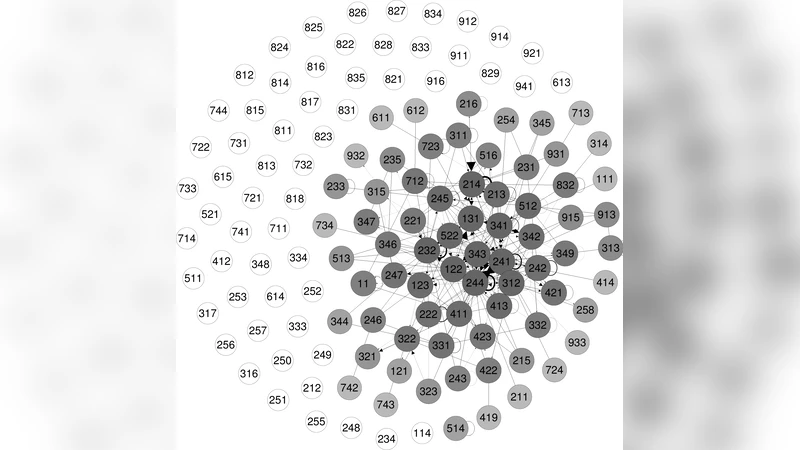
Although there is a rich literature on the rate of occupational mobility, there are important gaps in understanding patterns of movement among occupations. We employ a network based approach to explore occupational mobility of the Romanian university graduates in the first years after graduation (2003 - 2008). We use survey data on their career mobility to build an empirical occupational mobility network (OMN) that covers all their job movements in the considered period. We construct the network as directed and weighted. The nodes are represented by the occupations (post coded at 3 digits according to ISCO-88) and the links are weighted with the number of persons switching from one occupation to another. This representation of data permits us to use the novel statistical techniques developed in the framework of weighted directed networks in order to extract a set of stylized facts that highlight patterns of occupational mobility: centrality, network motifs.
💡 Research Summary
This paper introduces a network‑theoretic framework to study occupational mobility among Romanian university graduates during the first five years after graduation (2003‑2008). Using a large‑scale survey covering roughly 5,000 individuals, the authors recorded each graduate’s first job and all subsequent job changes. Occupations are coded at the three‑digit level of the International Standard Classification of Occupations (ISCO‑88) and serve as nodes in a directed, weighted graph. An edge from occupation i to occupation j is weighted by the number of graduates who moved from i to j during the observation window.
The resulting Occupational Mobility Network (OMN) comprises 150 occupational nodes and 2,300 directed edges. The network is relatively sparse (density ≈ 0.10) but exhibits a pronounced hub structure: the average degree is 15.3, the average shortest‑path length is 2.8, and the clustering coefficient is 0.22. Nodes representing “Administrative and managerial occupations” (ISCO‑88 112) and “Professional, technical and related occupations” (214) have the highest indegree and outdegree, indicating that they act both as entry points for many graduates and as springboards to other fields.
Centrality measures (indegree, outdegree, betweenness, PageRank) reveal that occupation 214 (professional‑technical) has a particularly high out‑degree and PageRank, suggesting that graduates often start in this category before branching into diverse sectors. Conversely, “Health care and social assistance” (226) shows high indegree but low outdegree, functioning as a sink that attracts many entrants but sees few exits.
Motif analysis focuses on three‑node subgraphs. Feedback loops (A → B → A) account for about 12 % of all observed motifs, highlighting that occupational transitions are not strictly hierarchical but often reciprocal. The most frequent reciprocal pair involves occupations 214 and 251 (IT and telecommunications), underscoring a dynamic interchange between technical and digital sectors.
The authors also construct gender‑ and field‑specific subnetworks. STEM graduates predominantly move into IT/telecommunications (251), professional‑technical (214), and manufacturing/construction (712), accounting for 68 % of their transitions. Humanities and social‑science graduates are more likely to shift into education/social welfare (226) and administrative/managerial roles (112), representing 55 % of their moves. Gender disaggregation shows women concentrating in health, education, and social services, while men are over‑represented in manufacturing, construction, and technical occupations. These patterns point to persistent gendered channeling in the Romanian labor market.
Connectivity analysis shows that 95 % of nodes belong to a giant strongly connected component, meaning that most occupations are reachable from one another through a series of job changes. Small isolated components consist of niche occupations such as “Arts and design” (261) and “Military and security” (541), which have limited inflow and outflow, suggesting structural barriers for entrants. Robustness tests—removing the top‑central nodes (112, 214)—increase the network diameter and average path length dramatically, confirming the pivotal role of these hubs in maintaining overall mobility.
Policy implications are drawn from these findings. Because hub occupations mediate the bulk of transitions, targeted up‑skilling and credentialing programs in these sectors could enhance overall labor‑market fluidity. The prevalence of reciprocal motifs suggests that facilitating bidirectional movement—e.g., through modular training pathways—could reduce friction between technical and digital fields. Gender‑ and discipline‑specific mobility patterns call for tailored career counseling and re‑training schemes to mitigate segregation.
Methodologically, the study demonstrates that weighted directed network analysis uncovers structural regularities—centrality hierarchies, motif prevalence, community cohesion—that traditional mobility‑rate statistics miss. The authors advocate extending this approach to longer time horizons, other national contexts, and integrating wage or job‑quality data to enrich the picture of occupational dynamics.
Comments & Academic Discussion
Loading comments...
Leave a Comment