Estimations of the Distances of Stellar Collapses in the Galaxy by Analyzing the Energy Spectrum of Neutrino Bursts
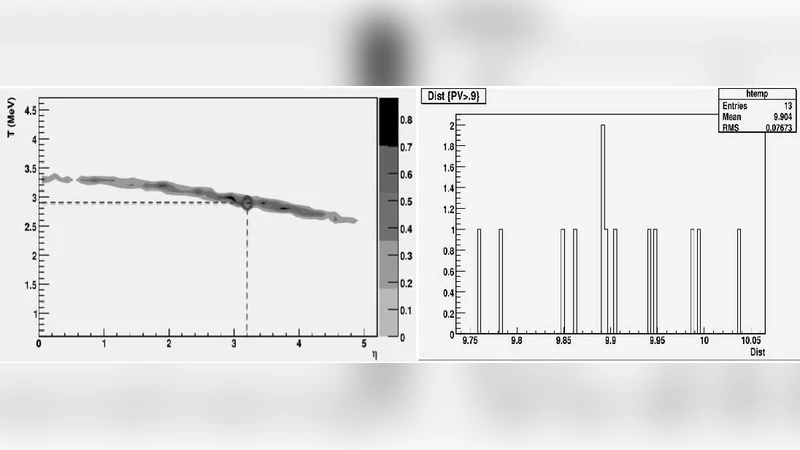
The neutrino telescopes of the present generation, depending on their specific features, can reconstruct the neutrino spectra from a galactic burst. Since the optical counterpart could be not available, it is desirable to have at hand alternative methods to estimate the distance of the supernova explosion using only the neutrino data. In this work we present preliminary results on the method we are proposing to estimate the distance from a galactic supernova based only on the spectral shape of the neutrino burst and assumptions on the gravitational binding energy released an a typical supernova explosion due to stellar collapses.
💡 Research Summary
The paper addresses a practical problem in modern astrophysics: estimating the distance to a Galactic core‑collapse supernova (CCSN) when no electromagnetic counterpart is available. Contemporary neutrino observatories—such as Super‑Kamiokande, IceCube, JUNO, and the forthcoming Hyper‑Kamiokande—are capable of recording thousands to tens of thousands of neutrino interactions over a burst lasting several tens of seconds. These detectors differ in target material, energy resolution, and background conditions, but all provide enough information to reconstruct the energy spectrum of the incoming neutrinos.
The authors base their method on two well‑established assumptions. First, the total energy radiated in neutrinos during a CCSN is approximately 3 × 10⁵³ erg, which corresponds to about 99 % of the gravitational binding energy released in the collapse. This “standard neutrino energy” serves as a reference value for the total emitted flux. Second, the shape of the emitted spectrum can be described by a parametric form such as a pinched thermal (α‑fit) distribution: ϕ(E) ∝ E^α exp(−E/T), where T is an effective temperature and α quantifies the degree of pinching.
The distance estimation proceeds in two steps. In the first step, the observed spectrum is fitted with the chosen parametric model after convolution with the detector response function. This yields an estimate of the total number of emitted neutrinos (Nν) and the average neutrino energy ⟨Eν⟩. In the second step, the inferred total emitted energy E_total = Nν × ⟨Eν⟩ is compared with the standard neutrino energy, and the distance D is obtained from the inverse‑square law:
D = √